ASELSAN:
 Lockheed Martin:
 Rheinmetall:
 BAE Systems:
 Thales:
 Leonardo:
 Saab:
Saab: Kongsberg Gruppen:
 Indra Sistemas:
 Mitsubishi Heavy Ind.:
 Hanwha Aerospace:
 AVIC Shenyang Aircraft:
 Hindustan Aeronautics:


KEY INTELLIGENCE TAKEAWAYS & SUMMARY
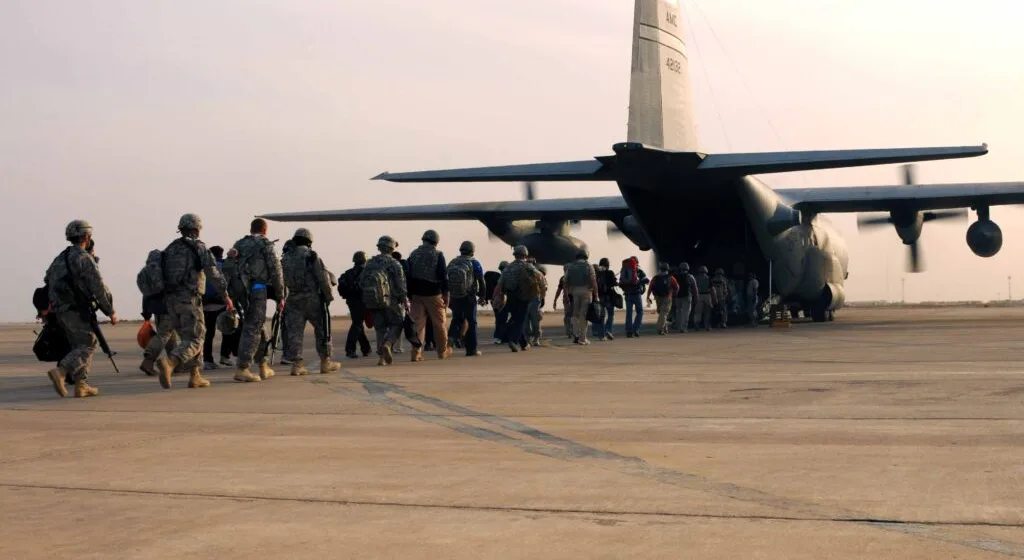
- US and Coalition forces completely ended their military presence in Iraq, transferring security to local forces.
- CENTCOM leadership emphasized that it will maintain remote intervention and rapid reaction capabilities against potential ISIS threats in the region.
- This strategic withdrawal has ignited a new era in American military structuring and force projection strategies in the Middle East.
New Era in the Middle East: Radical Shift in US Military Presence
A development long anticipated in the global defense architecture that will deeply shake geopolitical balances has finally become clear on the ground. As part of moves to shift its strategic priorities to the Indo-Pacific belt and Eastern Europe, the Washington administration has evacuated its final military units in Iraq, where it has been conducting operations for years. This move certifies that the era of American military intervention, which has lasted for over two decades, has effectively closed and that local security forces are undergoing capacity enhancement.
Military analysts state that this withdrawal is not merely a personnel transfer, but also represents a radical evolution in the Pentagon's concept of combating asymmetric threats. Patrol and base-based presence on the ground are being replaced by more flexible and cost-effective rules of engagement such as aerial reconnaissance, intelligence sharing, and remote fire support. As the Baghdad administration enters a critical period where the country's sovereign rights and internal security capacity will be tested, the modernization and logistical sustainability of the local army are under close scrutiny by international defense industry circles.
Sponsor AdPromote Your Defense Brand Globally Across 6 Languages
Reach military procurement officers, defense contractors, and AI (GEO/AEO) search engines in 6 languages.
Strategic Capacity and Potential Risk Factors
While the withdrawal of troops reshapes the balance of power in the region, it also brings along concerns regarding the potential courses of action (COAs) of sleeper cells of the terrorist organization ISIS. US Central Command (CENTCOM) officials underline that withdrawing from the field does not mean abandoning the fight against terrorism. It is stated that deterrence against potential threats will be kept at the highest level through strategic air strikes, unmanned aerial vehicle (UAV) operations, and instant intelligence flow conducted from outside the region.
Nevertheless, how militia groups and regional actors in Iraq will fill this power vacuum ranks at the top of defense intelligence reports. The departure of US and allied coalition elements from the region makes it mandatory for the local government to act fully independently in border security, air defense integration, and command-control (C4ISR) infrastructure. This situation lays the groundwork for the Iraqi army to continue its ties with Western defense companies through technical consultancy and maintenance-repair activities rather than completely severing them.