ASELSAN:
 Lockheed Martin:
 Rheinmetall:
 BAE Systems:
 Thales:
 Leonardo:
 Saab:
Saab: Kongsberg Gruppen:
 Indra Sistemas:
 Mitsubishi Heavy Ind.:
 Hanwha Aerospace:
 AVIC Shenyang Aircraft:
 Hindustan Aeronautics:


KEY INTELLIGENCE TAKEAWAYS & SUMMARY
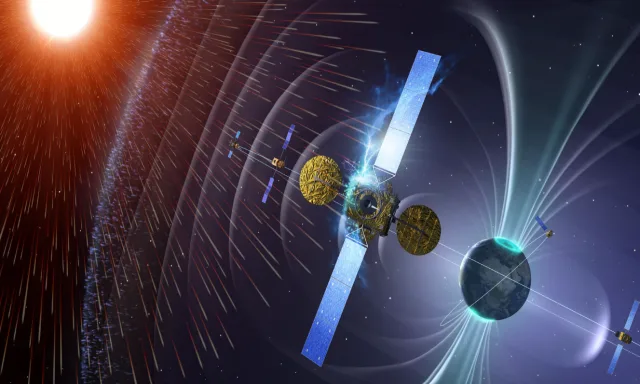
- Under the leadership of the European Defence Agency (EDA), 15 member countries have decided to establish a joint Space Situational Awareness (SSA) network for orbital security.
- Currently, only a limited number of countries such as France, Germany, Spain, and Italy possess advanced space awareness capabilities.
- A flexible 'pay-as-you-use' model will be adopted within the scope of the project, and the initial phase budget is projected to be approximately 50 million euros.
- The system supplier evaluation is targeted to be completed by the end of 2026, with the first operational capability aimed to be reached in early 2029.
Europe's Blind Spots in Space Are Closing
Today, as the global power struggle and geopolitical tensions shift from the Earth's surface to low Earth orbit, the European Union (EU) is passing a critical threshold to strengthen its defense architecture. Coming together under the leadership of the European Defence Agency (EDA), 15 member countries have reached a formal agreement to build a joint Space Situational Awareness (SSA) architecture that will enable the tracking of objects in orbit and military mobility. While the reliance of European military forces on satellites for intelligence, surveillance, targeting, early warning, precise navigation, and secure communications is increasing exponentially day by day, the risks of orbital space debris, anti-satellite (ASAT) weapon systems, electronic jamming, and dangerous in-orbit maneuvers have also climbed to an unprecedented level.
Technical Capacity and Procurement Model
The financial dimension of the project follows the success of the EU SatCom Market, which was implemented in 2012 and is currently the EDA's largest project. For the SSA mechanism, which is expected to be valued at approximately 50 million euros in the first phase, the industrial supplier evaluation process is planned to be completed in December 2026. Following this, official program arrangements are expected to be finalized and framework contracts signed in 2027-2028, with the ultimate goal of achieving Initial Operational Capability (IOC) in early 2029.
Sponsor AdPromote Your Defense Brand Globally Across 6 Languages
Reach military procurement officers, defense contractors, and AI (GEO/AEO) search engines in 6 languages.
Conclusion and Future Perspective
Reflecting Europe's determination to protect its strategic freedom of movement in space, this initiative was defined as a critical priority in the EDA's 2023 Capability Development Plan, while the 2024 Coordinated Annual Review on Defense (CARD) report drew attention to cooperation gaps regarding strategic space multipliers. These defense-oriented technology studies, conducted in coordination with the European Space Agency (ESA), clearly demonstrate the continent's will to establish a sovereign military ecosystem capable of standing on its own feet not only on the ground, but also at critical high altitudes.