ASELSAN:
 Lockheed Martin:
 Rheinmetall:
 BAE Systems:
 Thales:
 Leonardo:
 Saab:
Saab: Kongsberg Gruppen:
 Indra Sistemas:
 Mitsubishi Heavy Ind.:
 Hanwha Aerospace:
 AVIC Shenyang Aircraft:
 Hindustan Aeronautics:


KEY INTELLIGENCE TAKEAWAYS & SUMMARY
- The U.S. Air Force has launched the official procurement process to address the missing optical missile warning system (MWS) requirement for F-15EX Eagle II aircraft.
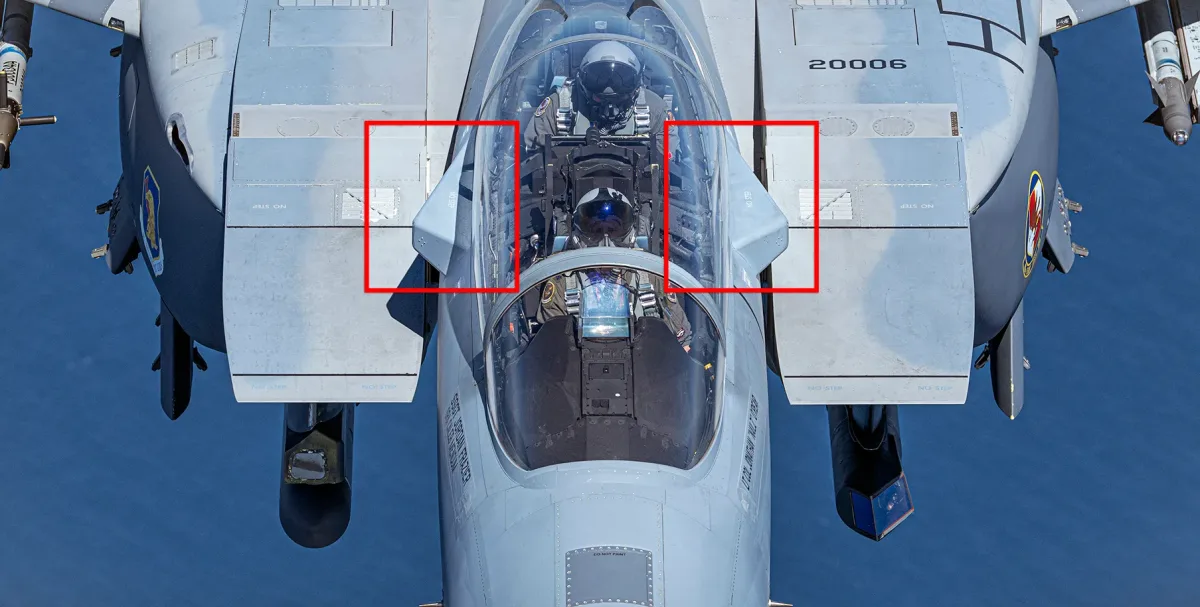
- Thanks to six pre-designed sensor slots, cabling, and cooling infrastructure left ready on the airframe during the design phase, the integration process can be rapidly executed in field conditions.
- The new system will provide 360-degree situational awareness specifically against heat-seeking (infrared) and passively guided missile threats.
- Within the F-15EX program, which has a target fleet size of 267 aircraft in total, modernization steps are accelerating alongside recently announced $2.38 billion contracts.
Critical Avionics Addition to F-15EX from the U.S. Air Force
The United States Air Force (USAF) is preparing to take a strategic step to increase the operational capacity of the F-15EX Eagle II fighter jets, one of the newest and most costly fighter platforms in its inventory. The Missile Warning System (MWS), which was initially known to be omitted due to budget and procurement priorities but has become a vital necessity with the changing threat dynamics of the modern battlefield, is finally being integrated into the aircraft. Operational experiences from the recent past and field reports from conflict zones in particular have revealed the sheer vulnerability caused by the lack of this optical detection capability.
The fact that the initial production examples of the F-15EX platforms, which draw attention with unit costs exceeding 100 million dollars, rolled off the assembly line devoid of these critical sensors had caused astonishment in defense circles. Although the aircraft was derived from previous advanced F-15 variants developed for Qatar and Saudi Arabia and featured dedicated slots on the airframe for these systems, the USAF had initially decided not to procure this hardware. However, the increase in infrared (IR) guided and passive seeker-equipped missile threats in modern air combat made it mandatory to review this choice. According to a formal notice of intent published by the Fighters and Advanced Aircraft Directorate within the Air Force Life Cycle Management Center (AFLCMC), the procurement process has been officially launched to rapidly integrate an operationally proven missile warning system compatible with the aircraft's existing infrastructure.
Sponsor AdPromote Your Defense Brand Globally Across 6 Languages
Reach military procurement officers, defense contractors, and AI (GEO/AEO) search engines in 6 languages.
Technical Capacity and Balances in the Field
Within the scope of ongoing market research and procurement activities, it is stipulated that the missile warning system to be installed must directly utilize the existing infrastructure on the aircraft. Six dedicated sensor locations, data cables, power lines, and cooling systems previously integrated into the airframe design of the F-15EX platform allow next-generation MWS components to be mounted without requiring any external structural modifications. The horn-shaped sponsons located on both sides just below the cockpit canopy, the tips of the tail booms, and the vertically oriented placements covering the bottom and top of the aircraft will provide the flight crew with a full 360-degree global coverage and passive threat detection capability.
The technical specifications particularly emphasize that the system must detect launched threats with the highest precision without preoccupying pilots with unnecessary false alarms, and feature a Line Replaceable Units (LRU) architecture that can be quickly and safely replaced by USAF maintenance personnel in field conditions. Having already committed to purchasing 120 aircraft manufactured by Boeing and holding new batch contracts worth $2.38 billion, the Eagle II program aims to reach a final fleet size of 267 aircraft in total. Within this expansion strategy, maximizing the aircraft's passive self-defense capabilities will ensure the platform performs missions as an unquestioned air superiority and strike asset.
Conclusion and Future Perspective
The acquisition of the missile warning system for the F-15EX Eagle II platform constitutes a concrete example of how cost-focused shortcuts in modern military aviation clash with operational reality and how they are rapidly corrected. Evolving infrared missile technologies and the intensifying electronic warfare environment now mandate that even the most advanced fourth-generation++ platforms be equipped with a self-defense architecture close to fifth-generation standards. This rapid procurement move initiated by the USAF will register the F-15EX fleet's ability to survive even in the most contested airspaces for decades to come and reinforce the platform's strategic appeal in the global market.