ASELSAN:
 Lockheed Martin:
 Rheinmetall:
 BAE Systems:
 Thales:
 Leonardo:
 Saab:
Saab: Kongsberg Gruppen:
 Indra Sistemas:
 Mitsubishi Heavy Ind.:
 Hanwha Aerospace:
 AVIC Shenyang Aircraft:
 Hindustan Aeronautics:


KEY INTELLIGENCE TAKEAWAYS & SUMMARY
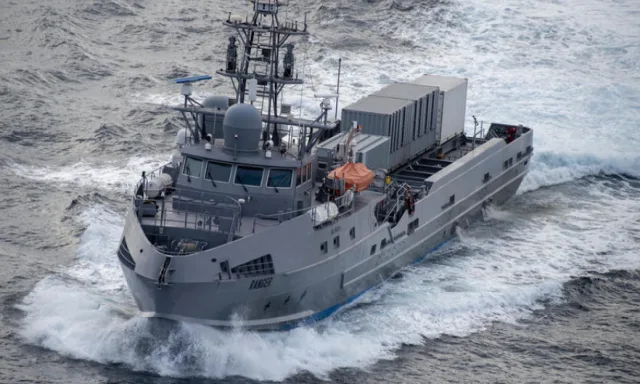
- The U.S. Navy has contracted Galliano Marine Services, HII, and Saronic Technologies for the procurement of 30 Medium Unmanned Surface Vehicles (MUSVs).
- The average cost of each autonomous platform has been set at $40 million, with initial deliveries planned to be completed by the end of fiscal year 2027.
- The project is part of the Navy's strategic transformation aimed at minimizing operational risks and rapidly increasing autonomous naval warfare capabilities.
New Era in Autonomous Naval Warfare and Strategic Objectives
While increasing geopolitical competition and asymmetric threats in global seas are rapidly accelerating naval investments in unmanned systems, the U.S. Navy has crossed a historical threshold in this field. Following the successfully completed phase one sea trials, a comprehensive procurement program has been initiated to integrate autonomous naval warfare capabilities into the operational field. Projects implemented within this scope clearly demonstrate that critical technologies shaping the future of naval power have transitioned to the mass production phase. Equipped with advanced sensor packages, flexible mission modules, and artificial intelligence-supported navigation capabilities, these platforms aim to be one of the main elements in future naval warfare.
Technical Capacity and Production Model
Within the framework of the procurement program, strategic partnerships have been established with leading defense and maritime companies of the industry. In accordance with the Production Other Transaction Authority agreements signed with Galliano Marine Services, HII, and Saronic Technologies, each contractor company will construct ten Medium Unmanned Surface Vehicles. These platforms, with an anticipated average unit cost of $40 million, are planned to enter the navy inventory before the end of fiscal year 2027. During the phase one tests, the capabilities of the vehicles to perceive complex maritime environments, fully comply with international maritime rules and collision avoidance regulations, and execute long-duration missions autonomously were rigorously verified.
Sponsor AdPromote Your Defense Brand Globally Across 6 Languages
Reach military procurement officers, defense contractors, and AI (GEO/AEO) search engines in 6 languages.
Conclusion and Future Perspective
The transition of the U.S. Navy's autonomous surface vehicles from the experimental phase to scalable mass production and operational use indicates a fundamental paradigm shift in naval warfare doctrine. These distributed and adaptable systems, which minimize the risks exposed to manned platforms, provide commanders with operational flexibility. These platforms, which can be equipped with new sensors and weapon payloads in the future, prove that autonomous marine technologies will increasingly assert their weight in the defense industry and continue to play a key role in the strategic superiority race of naval forces.