ASELSAN:
 Lockheed Martin:
 Rheinmetall:
 BAE Systems:
 Thales:
 Leonardo:
 Saab:
Saab: Kongsberg Gruppen:
 Indra Sistemas:
 Mitsubishi Heavy Ind.:
 Hanwha Aerospace:
 AVIC Shenyang Aircraft:
 Hindustan Aeronautics:


KEY INTELLIGENCE TAKEAWAYS & SUMMARY
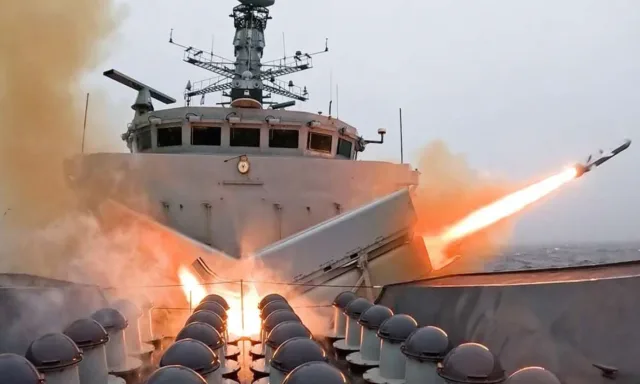
- The frigate HMS Portland carried out its first successful firing with the Naval Strike Missile (NSM) against the decommissioned target ship USS Klakring.
- A Wildcat helicopter belonging to the 815 Naval Air Squadron fired the Sea Venom missile in an operational configuration for the first time, completing a full maritime attack cycle.
- The Royal Navy is increasing its long-range deterrence capacity and allied interoperability with these next-generation systems replacing Harpoon missiles.
Next-Generation Weapon Systems Take the Stage in Critical Naval Exercise
The UK Royal Navy has passed another strategically important threshold with the goal of increasing its deterrence capacity in the naval warfare domain. Within the framework of ongoing comprehensive operational activities, newly inventoried strike assets were tested with live ammunition for the first time. The exercise, conducted in the Hebrides range northwest of Scotland, went on record as the initial field test of systems preparing to play a transformative role in the navy's attack capabilities.
Technical Capacity and Field Balances
At the center of the firing tests conducted within the scope of the Atlantic Thunder 26 exercise were the Type 23 frigate HMS Portland and its assigned units. Within the scenario executed, the decommissioned former US Navy frigate USS Klakring was made a target for both surface and air units. The Naval Strike Missile (NSM) fired from HMS Portland drew attention with its flight profile very close to the sea surface and high maneuverability.
Sponsor AdPromote Your Defense Brand Globally Across 6 Languages
Reach military procurement officers, defense contractors, and AI (GEO/AEO) search engines in 6 languages.
Weighing approximately 400 kilograms, the NSM cruised at a speed close to the speed of sound, proving its capacity to destroy targets at distances exceeding 100 nautical miles. Integrated into Type 23 frigates and Type 45 destroyers as part of a cooperation project carried out with the Norwegian government, this system replaces the retired Harpoon missiles. Furthermore, this munition will assume a complementary role to the heavy-class long-range missiles to be used in the future on Type 26 and Type 31 platforms equipped with Mk41 vertical launch systems.
In another critical leg of the operation, a Wildcat helicopter attached to the 815 Naval Air Squadron participated. Taking off from HMS Portland, the helicopter fired Sea Venom missiles, which are designed to neutralize corvette-class targets and inflict heavy damage on larger surface platforms such as frigates and destroyers. These missiles, of which a Wildcat platform can carry up to four, were successfully tested within a complete naval strike cycle covering target detection, identification, and engagement processes.
Conclusion and Future Perspective
These live ammunition firings carried out by the Royal Navy not only tested the technical maturity of the new weapon systems but also demonstrated joint operational capability among allied forces. The exercise, in which surface and air elements coordinated in an integrated manner, constitutes a key reference point in shaping the navy's future warfare doctrines. The modern munitions replacing retired systems concretely prove the UK's determination to protect its overseas interests and its strategy to maintain technological superiority.