ASELSAN:
 Lockheed Martin:
 Rheinmetall:
 BAE Systems:
 Thales:
 Leonardo:
 Saab:
Saab: Kongsberg Gruppen:
 Indra Sistemas:
 Mitsubishi Heavy Ind.:
 Hanwha Aerospace:
 AVIC Shenyang Aircraft:
 Hindustan Aeronautics:


KEY INTELLIGENCE TAKEAWAYS & SUMMARY
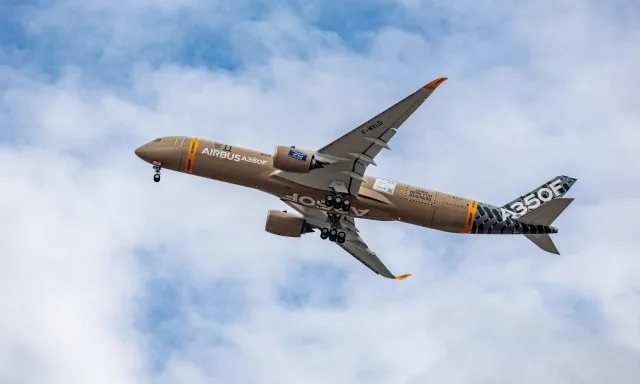
- The Airbus A350F (MSN 700) completed a successful maiden flight lasting 4 hours and 10 minutes with dedicated test instrumentation.
- With over 70 percent of its fuselage built from advanced materials, the aircraft offers a takeoff weight 46 tons lighter compared to similar models.
- Equipped with Rolls-Royce Trent XWB-97 engines, the aircraft provides up to 40 percent fuel savings and carbon emission reductions compared to rival platforms.
- The project holds the distinction of being the first new-generation freighter that fully complies with ICAO's strictest CO₂ emission standards.
Evaluated as a strategic turning point in the field of global aviation and defense logistics, the Airbus A350F new-generation freighter has successfully left its first test flight behind. The first prototype aircraft, bearing the tail number MSN 700, took off equipped with specialized flight test instrumentation and reached an altitude level of 25,000 feet during an operation that lasted approximately 4 hours and 10 minutes. This critical flight was carried out by a dedicated test team to verify the aircraft's basic airworthiness, core flight characteristics, and the performance of flight systems. This move also marks the official beginning of a comprehensive flight test campaign expected to last for more than the next nine months.
Technical Capacity and Field Dynamics
Designed to meet evolving demands in the aviation market, the A350F was developed to provide operational flexibility in long-range strategic transport missions. Equipped with a range capacity of up to 8,700 kilometers and a payload capacity of up to 111 tons, the platform stands out as a heavyweight player in international logistics networks. The use of advanced technology composite and lightweight materials in more than 70 percent of the fuselage structure makes the aircraft's takeoff weight 46 tons lighter compared to rival platforms. This lightness directly reflects on fuel efficiency.
Sponsor AdPromote Your Defense Brand Globally Across 6 Languages
Reach military procurement officers, defense contractors, and AI (GEO/AEO) search engines in 6 languages.
Powered by state-of-the-art Rolls-Royce Trent XWB-97 engines, the new-generation freighter promises up to a 40 percent reduction in fuel consumption and carbon emissions when compared to existing competitors with similar payload and range capacities. Furthermore, the project holds the title of being the first new-generation freighter to fully comply with the International Civil Aviation Organization's (ICAO) latest and strictest CO₂ emission standards. In terms of global supply chains and defense logistics, this low environmental footprint offers a critical advantage for sustainable military and civil operations.
Conclusion and Future Perspective
Having secured 115 firm orders from 14 different customers as of the end of August and capturing a 59 percent market share in the large freighter category, the A350F has positioned itself in an assertive place within the global aviation market. The fact that the second prototype, MSN 701, is in the final assembly stages and is set to enter the paint shop in the coming weeks demonstrates that the program remains faithful to its production schedule. Having a transformative potential for both civil transport and strategic military logistics needs, this platform will continue to set standards in future air cargo corridors.