ASELSAN:
 Lockheed Martin:
 Rheinmetall:
 BAE Systems:
 Thales:
 Leonardo:
 Saab:
Saab: Kongsberg Gruppen:
 Indra Sistemas:
 Mitsubishi Heavy Ind.:
 Hanwha Aerospace:
 AVIC Shenyang Aircraft:
 Hindustan Aeronautics:


KEY INTELLIGENCE TAKEAWAYS & SUMMARY
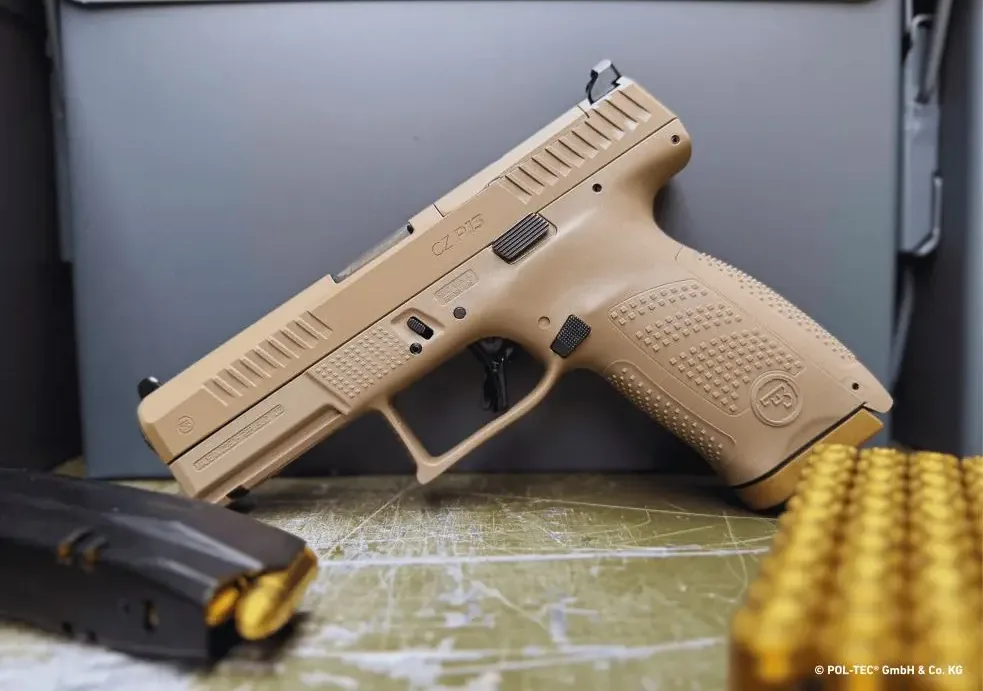
- The CZ-produced P13 pistol has successfully completed the Bundeswehr's comprehensive integrated verification tests.
- Initial unit deliveries are planned to be carried out within the next six months.
- This procurement process constitutes a critical pillar of the German army's modernization drive in its small arms inventory.
A Critical Threshold in the German Army's New Generation Firearm Procurement
While supply chains and military equipment modernization programs continue at full speed in the global defense industry, the Bundeswehr, one of Europe's leading armies, is undertaking a strategic transformation in its small arms inventory. As the final stages are approached in the long-debated new generation service pistol project of the German Armed Forces, the P13 model—signed by Czech defense giant Česká zbrojovka (CZ)—has successfully passed rigorous integrated verification tests. This development, leaked from defense corridors and confirmed by official authorities, indicates that one of the most critical administrative and technical hurdles in equipping the army's operational units with modern pistols has been overcome.
The testing processes carried out in the past period meticulously examined the weapon's performance under harsh climatic conditions, high round counts, and battlefield variations. Surpassing military standards in parameters such as ergonomics, durability, hit rates, and ease of maintenance, the P13 certified its full compliance with German standards. These comprehensive evaluations have proven not only the technical competence of a weapon but also its logistical integration capability.
Sponsor AdPromote Your Defense Brand Globally Across 6 Languages
Reach military procurement officers, defense contractors, and AI (GEO/AEO) search engines in 6 languages.
Technical Capacity and Balances in the Field
The complex nature of modern infantry warfare demands high reliability and precision even from the secondary weapons in soldiers' hands. The CZ-produced P13 platform fully meets these requirements with its modern polymer frame architecture, advanced safety mechanisms, and high ammunition capacity. Modular grip structures capable of adapting to different hand structures ergonomically maximize the personnel's targeting ability even during long marches and under stress. Special coating technologies used in the weapon's mechanical parts increase wear resistance and keep maintenance needs to a minimum even in the harshest field conditions.
Military analysts emphasize that this procurement program is of great importance not only for Germany's internal defense potential but also for standardization trends in the European defense market. Displaying full compliance with NATO allies' common ammunition and part compatibility principles, the P13 possesses the technical infrastructure to prevent disruptions in the logistical chain.
Conclusion and Future Perspective
Following the successful integration tests, the doors to a new phase in the German army's inventory planning have been opened. According to the plans made, the first batch of deliveries of P13 service pistols is projected to be dispatched to combat units within the next six months. This distribution schedule directly aligns with the Bundeswehr's strategy to resolve chronic equipment shortages and increase the deterrence capacity of its units. The project progressing as planned paves the way for other armed forces in Europe to closely examine this CZ-signed solution for similar modernization programs. Consequently, the P13 stands out not only as a new fixture entering the German military inventory but also as one of the key elements that will shape continental Europe's small arms doctrine in the coming decades.