ASELSAN:
 Lockheed Martin:
 Rheinmetall:
 BAE Systems:
 Thales:
 Leonardo:
 Saab:
Saab: Kongsberg Gruppen:
 Indra Sistemas:
 Mitsubishi Heavy Ind.:
 Hanwha Aerospace:
 AVIC Shenyang Aircraft:
 Hindustan Aeronautics:


KEY INTELLIGENCE TAKEAWAYS & SUMMARY
- China has officially operationalized its third overseas military base globally and its second in Southeast Asia, centered around the Ban Keun Airport facility.
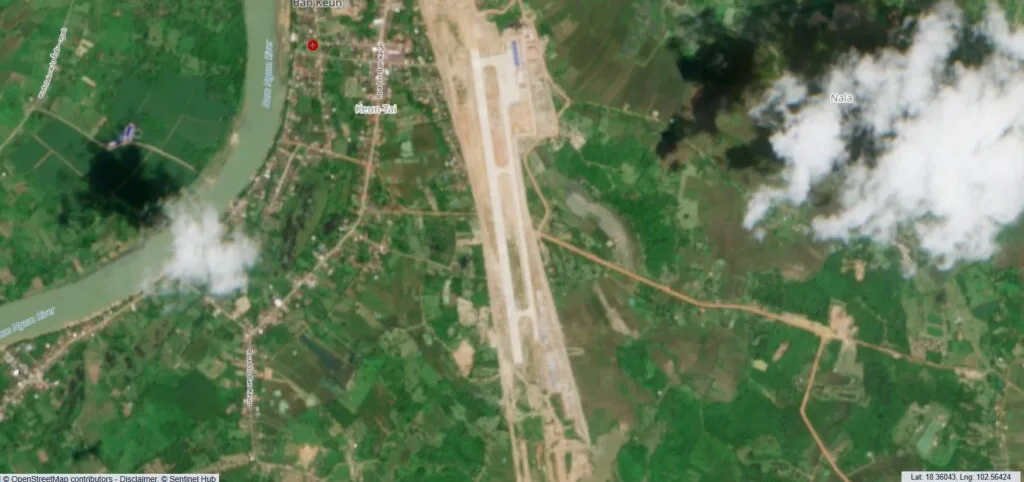
- Featuring a runway approximately 2,000 meters long, an aircraft parking apron, and modern hangars, the facility will be jointly operated for the training of Laotian pilots.
- The transformation of the Lima Site 44 area, which dates back to US operations during the historical Vietnam War era, stands out as a symbolic dimension of geopolitical rivalry.
- While Beijing defends that the facility complies with international law and targets no third party, analysts predict that the move will alter regional power balances.
New Step in Global Power Projection: The Laos Base
Leaving behind another critical threshold in its defense and foreign policy strategy, the Beijing administration has officially opened the doors of the new air facility built on Laotian territory. According to official statements made by the China Ministry of Defense, the China-Laos Joint Support and Training Center and the China-Laos Friendship Aviation Academy, positioned at Ban Keun Airport approximately 40 kilometers north of the capital Vientiane, have commenced operational activities. Based on the domestic laws of both states, international law norms, and the principle of mutual equality, this move constitutes the latest link in Beijing's strategy of establishing a permanent military presence in distant geographies.
Military analysts and defense intelligence experts state that this new facility will play a key role in enhancing China's operational capabilities beyond its borders. Following the logistic support base established in Djibouti, East Africa, in 2017 and the Ream naval facility in Cambodia, this new air center in Laos is recorded as China's third official overseas military facility on a global scale and its second in Southeast Asia. Deepening its diplomatic and military influence in the region through such dual-use and jointly operated structures, China supports its long-term strategic development goals with military infrastructure.
Sponsor AdPromote Your Defense Brand Globally Across 6 Languages
Reach military procurement officers, defense contractors, and AI (GEO/AEO) search engines in 6 languages.
Technical Infrastructure and Operational Capacity in the Field
The region, which also draws attention with its historical background, was built upon a former airfield called Lima Site 44, used by the United States military and the Central Intelligence Agency (CIA) during the Vietnam War era. The opening ceremony, held with the participation of Laos Deputy Prime Minister and Minister of Defense Khamlieng Outhakayson, proved that the military integration between the two countries has reached a high level. Within the framework of the joint operation model, it is planned to train Laotian pilots in modern aviation techniques, while it is estimated that the logistical and technical administrative responsibilities in the background of the facility will be supported by Chinese experts.
Conclusion and Future Perspective
This new military training and support center opened by China in Laos reveals a silent yet profound aspect of geopolitical competition and power struggle in the Asia-Pacific basin. Although the Beijing administration emphasizes that the facility aims to protect regional stability and targets no third country, Western defense circles evaluate this move as a strategic gain of China's military projection extending beyond its surrounding seas. While the increasing Chinese influence in Southeast Asia causes other actors in the region to review their defense planning, whether the number of such joint bases will increase in the future remains one of the most curious topics of the global security architecture.