ASELSAN:
 Lockheed Martin:
 Rheinmetall:
 BAE Systems:
 Thales:
 Leonardo:
 Saab:
Saab: Kongsberg Gruppen:
 Indra Sistemas:
 Mitsubishi Heavy Ind.:
 Hanwha Aerospace:
 AVIC Shenyang Aircraft:
 Hindustan Aeronautics:


KEY INTELLIGENCE TAKEAWAYS & SUMMARY
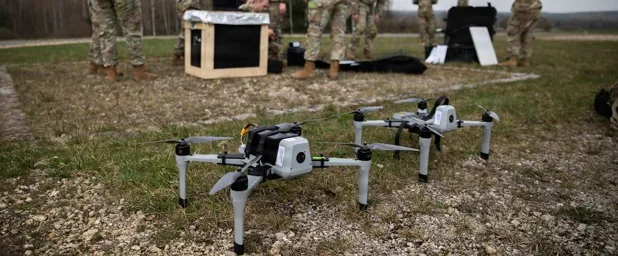
- The U.S. Army awarded indefinite-delivery/indefinite-quantity contracts totaling $4.15 billion to 10 companies to accelerate the procurement of UAVs and C-UAS (Counter-Unmanned Aircraft Systems).
- Leading defense companies in the sector, such as Allen Control Systems, DroneShield, L3Harris WESCAM, and RADA Technologies, received a share of the giant tenders.
- Thanks to the Pentagon's new marketplace model and automated processes, procurement times for allied countries have been reduced from months to days.
The emergence of unmanned aerial vehicles (UAVs) as a strategic element of superiority in the global theater of war is forcing armies to take urgent measures. The exponential increase of asymmetric threats in modern combat zones has radically changed the priorities of defense budgets. In this context, the U.S. defense bureaucracy, backed by fiscal year-end spending dynamics, has executed a massive financial move targeting unmanned systems and countermeasure technologies designed to neutralize them. Joint task forces within the Pentagon are reshaping their procurement mechanisms to increase operational flexibility against rapidly evolving airborne asymmetric threats.
Technical Capacity and Field Balances
The next-generation procurement strategy implemented by the U.S. Army covers a wide range, including command-and-control architectures, advanced sensor arrays, and kinetic and non-kinetic destruction weapons. This new procurement model, with a total ceiling limit of $4.15 billion, was crowned with indefinite-delivery/indefinite-quantity (IDIQ) contracts distributed among ten different defense companies. Industry-leading players such as Allen Control Systems, Digital Force Technologies, DroneShield, L3Harris WESCAM, Napatree Technology, RADA Technologies, and SRC were awarded ceiling packages of $500 million each, while innovative technology developers like Echodyne, PVP Advanced EO Systems, and SmartShooter also secured their places in this billion-dollar ecosystem.
Sponsor AdPromote Your Defense Brand Globally Across 6 Languages
Reach military procurement officers, defense contractors, and AI (GEO/AEO) search engines in 6 languages.
Experts point out that these systems are predominantly software-defined and hardware-supported in structure. The instantaneous shifting of the threat spectrum in the combat zone necessitates that the procured C-UAS platforms are continuously upgradeable. This situation triggers the establishment of long-term and accountable partnerships between the defense industry and the military procurement machine. On the other hand, not only U.S. forces, but also Washington's strategic allies can benefit from this massive procurement market in an integrated manner. Thanks to the automation of the Foreign Military Sales (FMS) process in the background, access times for allied countries to the C-UAS and UAV systems they need have been reduced from months to mere days.
Conclusion and Future Perspective
The Pentagon's updated UAV and counter-UAV marketplace approach not only increases the U.S. military readiness level but also paves the way for small and medium-sized defense technology companies to scale globally. Moving toward a final ceiling target of $7 billion in total, this process serves as a global example of how bureaucratic hurdles in defense procurement can be eliminated. Given that the future combat zone will be shaped by AI-supported autonomous swarm UAV attacks, such agile and software-oriented contract models will continue to play a vital role in maintaining the deterrence of armies.