ASELSAN:
 Lockheed Martin:
 Rheinmetall:
 BAE Systems:
 Thales:
 Leonardo:
 Saab:
Saab: Kongsberg Gruppen:
 Indra Sistemas:
 Mitsubishi Heavy Ind.:
 Hanwha Aerospace:
 AVIC Shenyang Aircraft:
 Hindustan Aeronautics:


KEY INTELLIGENCE TAKEAWAYS & SUMMARY
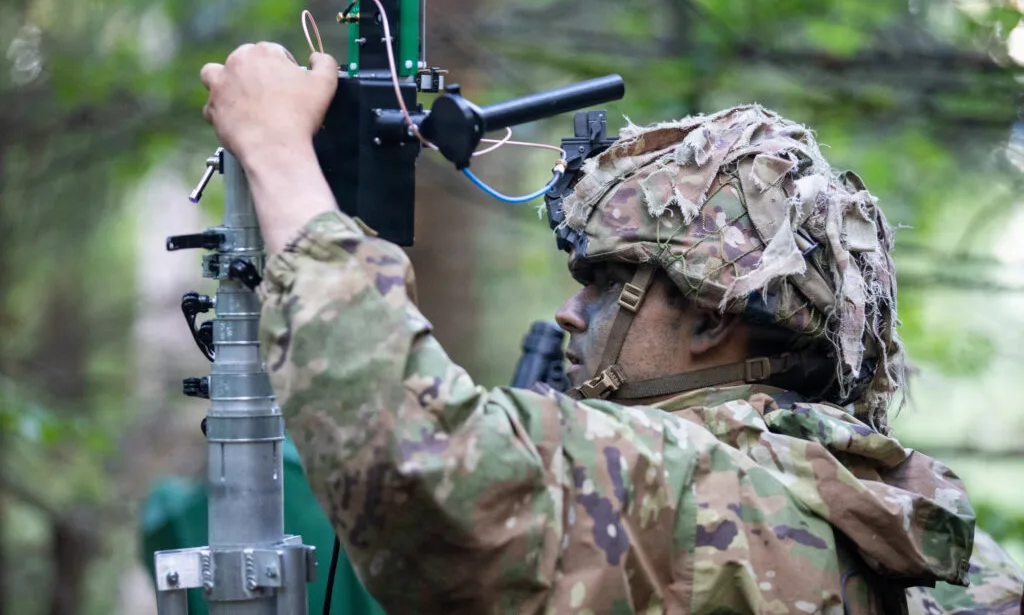
- The US Army signed a massive $7 billion IDIQ contract to consolidate C-UAS (Counter-UAS) technologies under a single roof.
- The procurement move covers advanced sensors, kinetic and non-kinetic effectors, and command and control (C2) systems.
- 10 different defense industry companies included in the project will develop modular solutions against asymmetric air threats.
New Nightmare in Global Security: Asymmetric UAV Threats
The dynamics of modern battlefields have fundamentally changed in recent years with the proliferation of cheap, accessible, and highly lethal unmanned aerial vehicles (UAVs). Especially in the protection of military units and critical infrastructure, the inability of traditional air defense architectures to remain cost-effective has driven global military authorities to urgently seek new-generation solutions. In this context, the US defense bureaucracy has implemented one of the most comprehensive procurement moves in history to neutralize asymmetric air threats.
Announced to the press by top figures in military procurement mechanisms, the new-generation strategic initiative draws attention with its massive financial scale reaching up to $7 billion. This comprehensive agreement, which provides diversified procurement rights, brings together 10 leading defense contractors of the industry under the same roof. The goal is to equip personnel operating in a wide range from armored units to base areas with an invisible shield against small and medium-class drone swarms.
Sponsor AdPromote Your Defense Brand Globally Across 6 Languages
Reach military procurement officers, defense contractors, and AI (GEO/AEO) search engines in 6 languages.
Technical Capacity and Balances on the Field
This massive financial package is not limited to just a single type of ammunition or radar. The program focuses on three main categories that are the fundamental building blocks of the multi-layered air defense concept: advanced early warning sensors providing precise detection, kinetic and non-kinetic effectors neutralizing the threat, and integrated command and control (C2) architectures ensuring these elements communicate within milliseconds.
To enable frontline units to adapt to the instantly changing threat environment, the 10 selected contractor companies will offer a wide range of technologies from artificial intelligence-supported targeting algorithms to directed energy weapons (DEW) and electronic warfare jamming systems. Designed with a modular architecture principle, these systems will provide uninterrupted protection both in fixed outposts and in moving convoys.
Conclusion and Future Perspective
It has now become clear that air superiority in the future conflict environment will be determined not only by combat aircraft, but also by tactical-level UAV and C-UAS superiority. This massive budget $7 billion procurement program implemented by the US Army is the most concrete indicator of the transition to modular, software-driven, and flexible systems in the defense industry. With the maturation of these technologies in the near future, asymmetric UAV attacks are expected to be largely neutralized against strategic deterrence.