ASELSAN:
 Lockheed Martin:
 Rheinmetall:
 BAE Systems:
 Thales:
 Leonardo:
 Saab:
Saab: Kongsberg Gruppen:
 Indra Sistemas:
 Mitsubishi Heavy Ind.:
 Hanwha Aerospace:
 AVIC Shenyang Aircraft:
 Hindustan Aeronautics:


KEY INTELLIGENCE TAKEAWAYS & SUMMARY
- The UAE has established a joint operational network in Africa with Aviacon Zitotrans, an airline that Russia has tried to isolate internationally due to the war in Ukraine.
- Investigations confirm that Soviet-built Ilyushin Il-76 cargo aircraft departed from UAE military bases to conduct flights to Sudan and other African regions.
- The same company is known for carrying out shipments of armored combat vehicles, attack helicopters, and ammunition on behalf of Russia.
- This situation brings to light the contradictions between the UAE's official security partnerships and its informal logistical preferences in the field.
While intrigues and strategic moves continue at full speed in the global defense and aviation ecosystem, recent findings reflected in the international intelligence pool decode the hidden partnerships behind the balance of power in the Gulf region. It has been determined that the United Arab Emirates, long positioned as a strategic security partner by Western allies, is closely cooperating in operations with the Russia-based airline Aviacon Zitotrans, which has been placed on sanction lists by the US, Canada, and Ukraine due to Moscow's military campaign in Ukraine. This picture, which emerged through the examination of thousands of flight records, leaked corporate correspondence, and aviation data, lays bare the scale of alternative logistics networks used to bypass global sanction regimes.
Strategic Routes and Use of Military Bases
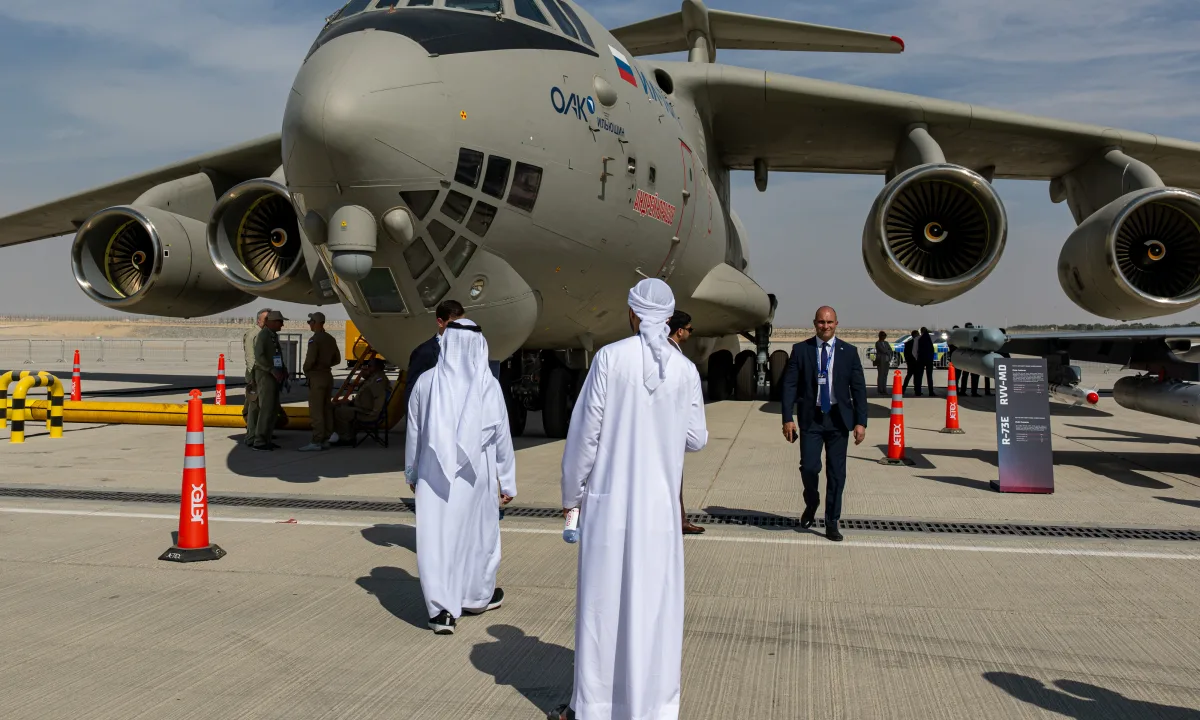
Data obtained indicates that Soviet-built Ilyushin Il-76 heavy transport aircraft belonging to the sanctioned Russian company have executed more than 100 missions on behalf of the UAE government and the royal family over the past year. The fact that a significant portion of these flights were carried out directly from UAE military bases rather than civilian airports points to state-level coordination of the operation. An examination of the tracked routes reveals that these heavy cargo aircraft used paths in the African continent that precisely overlap with logistical support lines provided to paramilitary forces, particularly in the Sudanese civil war. These flights, which do not appear in civil aviation records, clearly demonstrate how critical cargo networks play a role in sustaining proxy wars during regional crises.
Sponsor AdPromote Your Defense Brand Globally Across 6 Languages
Reach military procurement officers, defense contractors, and AI (GEO/AEO) search engines in 6 languages.
Technical Capacity and Field Balances
Ilyushin Il-76 platforms, which form the backbone of the Aviacon Zitotrans fleet, are known for their capabilities to operate in challenging geographical conditions and on short runways with inadequate infrastructure. Providing flexibility in military logistics, these aircraft can rapidly transport armored personnel carriers (APCs), military trucks, and heavy ammunition pallets thanks to their large cabin volume and rear loading ramp. In addition to its routine commercial activities, the company undertakes tasks with special exemptions in the global transfer of sensitive military equipment such as attack helicopters, armored vehicles, and missile warheads on behalf of the Russian Federation. The UAE's contact with a structure of this nature directly contradicts Western efforts to financially and logistically isolate Moscow, while proving that Gulf actors do not hesitate to form flexible alliances in line with their national security interests.
Conclusion and Future Perspective
From the perspective of defense and aviation dynamics, the use of non-state actors, ghost airlines, and sanctioned logistics networks has become an integral part of the modern warfare environment. The fact that the UAE signs billion-dollar contracts with Western defense industry giants while simultaneously involving Moscow's embargoed cargo planes in missions shows that multifaceted diplomatic games are being played on the geopolitical chessboard. In the upcoming period, how Washington- and Brussels-based oversight mechanisms will create an element of pressure against such secondary sanction violations and what route Gulf countries will follow in this delicate balance will remain one of the most critical topics in global defense policy.