ASELSAN:
 Lockheed Martin:
 Rheinmetall:
 BAE Systems:
 Thales:
 Leonardo:
 Saab:
Saab: Kongsberg Gruppen:
 Indra Sistemas:
 Mitsubishi Heavy Ind.:
 Hanwha Aerospace:
 AVIC Shenyang Aircraft:
 Hindustan Aeronautics:

KEY INTELLIGENCE TAKEAWAYS & SUMMARY
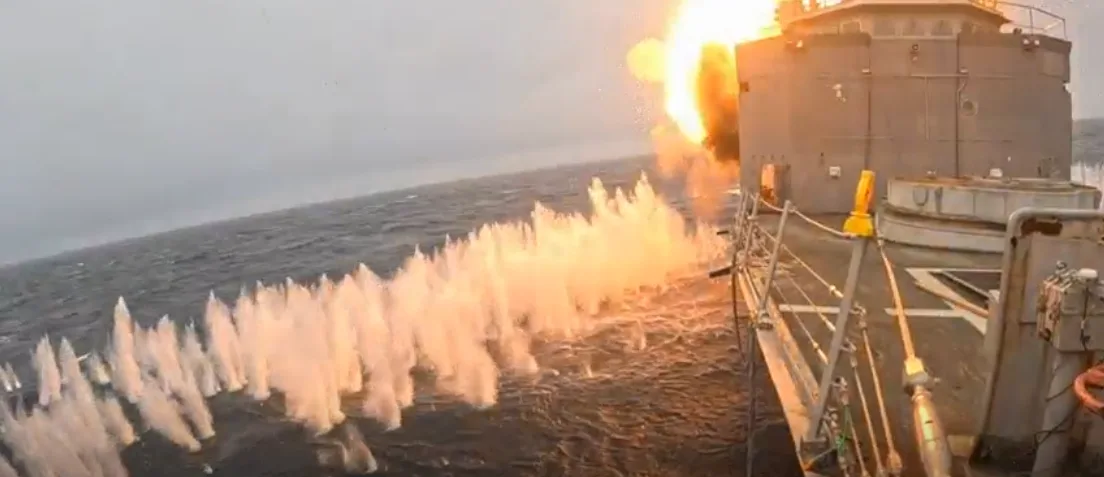
- The US and UK navies sank the retired frigate USS Klakring with joint firepower as part of the Atlantic Thunder exercise.
- The nuclear-powered Virginia-class attack submarine USS Massachusetts successfully struck the target with a Mk 48 Advanced Capability Torpedo.
- The exercise tested the surface-attack variant of the SM-6 air defense missile, as well as the Royal Navy's Naval Strike Missile and Sea Venom missiles.
At a time when global naval power balances are rapidly transforming, comprehensive exercises where allied navies test their joint operational capabilities continue to hold strategic importance. In this context, a high-level sinking exercise (SINKEX) conducted in the international waters of the North Atlantic, bringing together United States and United Kingdom naval and air elements, has been completed. This operation, in which a historic warship that served for decades was used as a target, both demonstrated allied interoperability and once again proved the destructive effects of modern munitions under real combat conditions.
Strategic Objective and Background of the Operation
The target of the exercise was the Oliver Hazard Perry-class guided-missile frigate USS Klakring, which was decommissioned in March 2013 and kept moored in Philadelphia for a long time. Named after Rear Admiral Thomas B. Klakring, a heroic submarine commander of World War II, and commissioned in 1983, this ship previously played an active role in protecting Kuwaiti oil tankers during the Iran-Iraq War. Following its retirement, the veteran hull was towed into the harsh waters of the Atlantic Ocean, becoming a final testing ground for the allied forces' most up-to-date strike systems.
Sponsor AdPromote Your Defense Brand Globally Across 6 Languages
Reach military procurement officers, defense contractors, and AI (GEO/AEO) search engines in 6 languages.
Technological Superiority and Firepower in the Field
The variety of munitions displayed during the exercise clearly demonstrated the complexity of modern naval warfare procedures. The final blow of the operation was delivered by the USS Massachusetts, a nuclear-powered, Block IV Virginia-class attack submarine that recently entered the navy's inventory. The submarine in question fired a Mk 48 Advanced Capability Torpedo equipped with an advanced guidance system, sending the old frigate to the depths of the waters. Additionally, Task Force elements attached to the US 6th Fleet and the Royal Navy provided intensive participation in the exercise.
The guided-missile destroyer USS Paul Ignatius fired the anti-surface attack variant of the Standard Missile 6 (SM-6) munition, confirming its maximum range and damage capacity. Simultaneously, the British Royal Navy deployed its newest generation anti-ship missiles, the Naval Strike Missile (NSM) and Sea Venom systems. These firings, coordinated with uncrewed underwater vehicles (UUVs), registered the allied navies' level of preparedness for the autonomous battlefield of the future.
Conclusion and Future Perspective
The Atlantic Thunder exercise carries a meaning far beyond the mere destruction of a scrapped ship. This high-level integration established between the US Navy and the Royal Navy proves that transoceanic deterrence will be maintained uninterrupted in potential global crises. The flawless harmony of advanced torpedos, multi-layered air defense missiles, and next-generation precision-strike weapons under the same scenario sheds light on the future of modern naval warfare. The allied forces' strategy of blending traditional platforms with autonomous systems will continue to be the key to establishing superiority in future naval battles.