ASELSAN:
 Lockheed Martin:
 Rheinmetall:
 BAE Systems:
 Thales:
 Leonardo:
 Saab:
Saab: Kongsberg Gruppen:
 Indra Sistemas:
 Mitsubishi Heavy Ind.:
 Hanwha Aerospace:
 AVIC Shenyang Aircraft:
 Hindustan Aeronautics:


KEY INTELLIGENCE TAKEAWAYS & SUMMARY
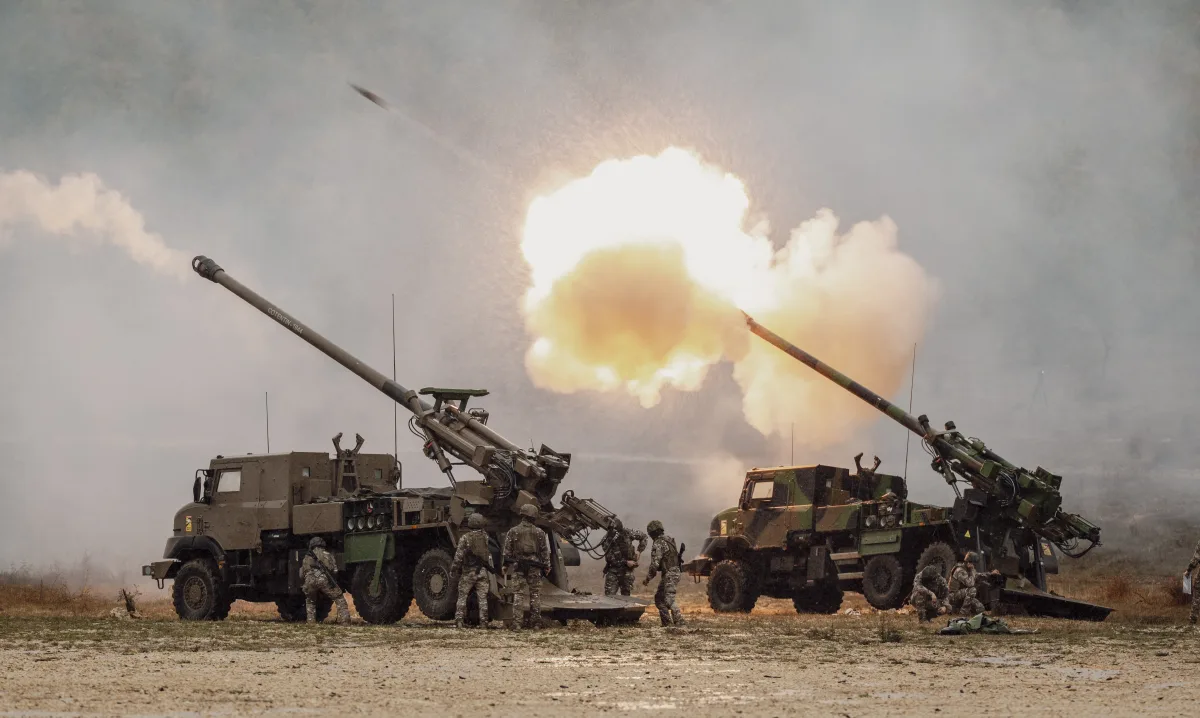
- The French 68th African Artillery Regiment is converting its Caesar howitzer batteries from four-gun systems into mobile groups of two.
- Thanks to the Atlas fire control system, intensive firepower is maintained despite the distributed structure.
- The newly established support section increases survivability through decoy targets, pre-positioned ammunition, and protective metal cages.
Increasing Drone Pressure on the Modern Battlefield
Critical lessons drawn from the conflict in Ukraine are prompting military headquarters worldwide to fundamentally question their traditional doctrines. Persistent airborne drone surveillance and advanced counter-battery radars have made classic artillery positions almost instantly destructible. Spearheading this strategic transformation, France has re-evaluated operational concepts within the 68th African Artillery Regiment. Work carried out by the regiment command reveals that mobility and stealth are now just as vital as firepower itself.
Tactical Flexibility and the New Distribution of Caesar Howitzers
As part of the current transformation, batteries equipped with 155mm KNDS-manufactured Caesar truck-mounted howitzers are being removed from their traditional four-gun structure and divided into three separate sections of two. In this model, which is being implemented gradually, the total number of vehicles remains the same while the footprint occupied by the units is reduced. The Atlas fire control system ensures that these smaller elements, operating independently, can coordinate to lock onto the same target and create intense fire pressure. The command echelon emphasizes that this counter-intuitively appearing separation actually maximizes response time and fire availability.
Sponsor AdPromote Your Defense Brand Globally Across 6 Languages
Reach military procurement officers, defense contractors, and AI (GEO/AEO) search engines in 6 languages.
Stealth Bubbles and Deception Tactics
The new specialized support section established within the regiment goes beyond classical reconnaissance elements, taking on tasks such as the preparation of firing positions, the installation of deception (decoy) systems, and the pre-determination of ammunition supply points. While 'transparency bubbles' that minimize electromagnetic emissions are designed for Caesar howitzers to wait in before deployment, protective metal cages into which howitzers can reverse-maneuver are integrated into positions. Successfully tested during the Orion 2026 exercise and harsh trials at the Canjuers military camp, this innovative concept will be permanently deployed in the first battery next year.
Conclusion and Future Perspective
This radical adaptation process of French artillery provides a clear prototype on how classical brigade-level artillery warfare must evolve in the age of drones. Combining once-autonomous firing teams under a holistic support section focused on survivability and deception aims to minimize casualties in future high-intensity conflict environments. Equipping KNDS-manufactured systems with these new tactical maneuver capabilities constitutes a critical threshold that will pave the way for similar reforms for NATO allies.