ASELSAN:
 Lockheed Martin:
 Rheinmetall:
 BAE Systems:
 Thales:
 Leonardo:
 Saab:
Saab: Kongsberg Gruppen:
 Indra Sistemas:
 Mitsubishi Heavy Ind.:
 Hanwha Aerospace:
 AVIC Shenyang Aircraft:
 Hindustan Aeronautics:


KEY INTELLIGENCE TAKEAWAYS & SUMMARY
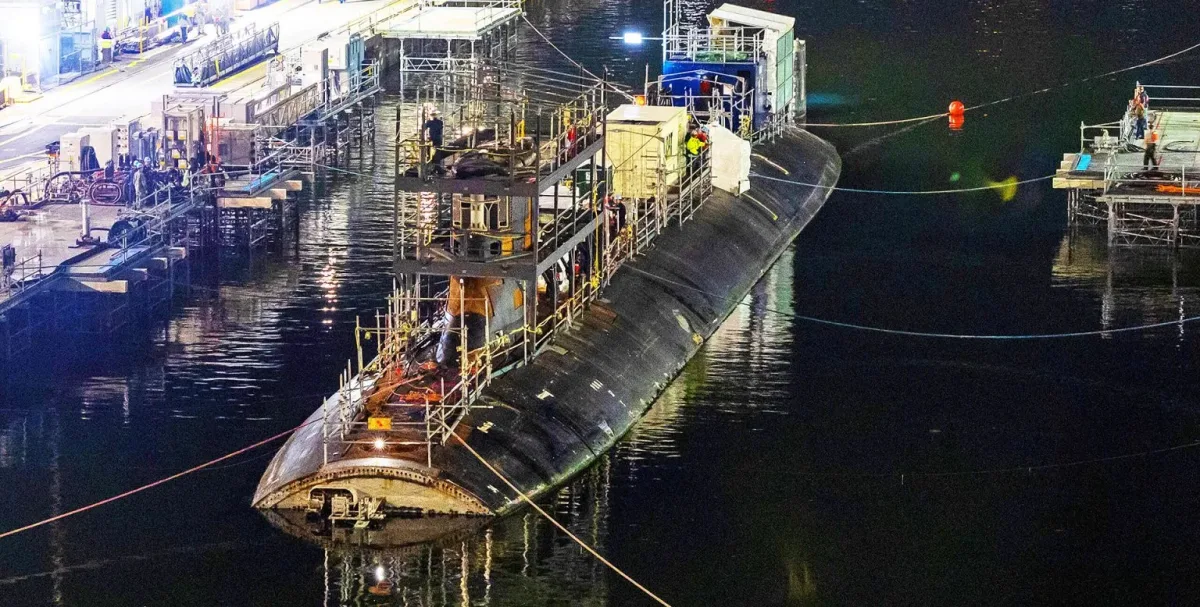
- USS Connecticut had sustained heavy damage to its bow and sonar dome as a result of a collision with an underwater mountain in the South China Sea in 2021.
- Puget Sound Naval Shipyard, conducting Extended Drydock Selected Restricted Availability (EDSRA) activities, has postponed the delivery date to the summer of 2027.
- The closed production line of the Seawolf class, of which only three units were built, and restrictions in spare parts procurement are among the main factors extending the repair process.
- The submarine, scheduled for retirement in 2031, will provide operational service for only four years after returning to its active fleet.
Critical Loss of a Strategic Class and the Accident Process
The return schedule to the operational field for the USS Connecticut (SSN 22), a Seawolf-class nuclear attack submarine in the US Navy's inventory known for its technological superiority, has been postponed once again. The platform, which collided with an unmapped underwater mountain during a transit in the South China Sea in October 2021, sustained heavy damage particularly in the bow region, sonar system, and ax-head hull structure. Transferred via Guam to San Diego and subsequently to the Puget Sound Naval Shipyard and Intermediate Maintenance Facility (PSNS & IMF) in Washington State following the accident, the submarine has been kept in a comprehensive repair process for a long time. In recent statements made by Navy officials, it was officially confirmed that the target for completing the vessel's Extended Drydock Selected Restricted Availability (EDSRA) activities has been shifted to the summer of 2027.
Technical Challenges and Supply Chain Obstacles
Seawolf-class submarines were designed to incorporate the highest level of acoustic stealth, depth capability, and heavy weapons load against the high-threat environment of the late Cold War. However, this superior engineering achievement also brings along serious maintenance problems in today's logistics ecosystem. The fact that the production line of the Seawolf class, consisting of three hulls, was closed decades ago makes the procurement of damaged major structural components almost impossible. Renewing critical elements such as the missing sonar dome of the USS Connecticut, the damaged pressure hull, and the removed anechoic coating tiles requires custom manufacturing processes from scratch. The method of dismantling parts from sister ships, which are traditionally scrapped, cannot be applied in this class; because the third and final member of the series, the USS Jimmy Carter, stands out as a unique sub-variant with a completely different architecture for special intelligence missions. This situation causes spare parts procurement periods to exceed three years and shipyard schedules to constantly stretch.
Sponsor AdPromote Your Defense Brand Globally Across 6 Languages
Reach military procurement officers, defense contractors, and AI (GEO/AEO) search engines in 6 languages.
Conclusion and Future Perspective
This critical process experienced by the USS Connecticut reveals the structural vulnerabilities that even superpowers face while maintaining low-budget and high-tech niche platforms. After the repair and modernization activities projected to be completed in the summer of 2027, the submarine is expected to return to the navy and provide active service for only four years until its planned retirement date in 2031. Despite this short operational lifespan expectation, the US Navy does not want to give up the unique capabilities of the Seawolf class due to the increasing geopolitical competition and underwater supremacy struggle in the Indo-Pacific theater. This delay proves once again how critical long-term supply chain resilience and maintenance-munitions integration processes are in the defense industry.