ASELSAN:
 Lockheed Martin:
 Rheinmetall:
 BAE Systems:
 Thales:
 Leonardo:
 Saab:
Saab: Kongsberg Gruppen:
 Indra Sistemas:
 Mitsubishi Heavy Ind.:
 Hanwha Aerospace:
 AVIC Shenyang Aircraft:
 Hindustan Aeronautics:


KEY INTELLIGENCE TAKEAWAYS & SUMMARY
- The Estonian Internal Security Service has proven that the arson attack on Milrem facilities was an act of sabotage financed by Russian special services.
- Three Latvian citizens detained in connection with the incident were extradited to Estonia and placed into legal proceedings.
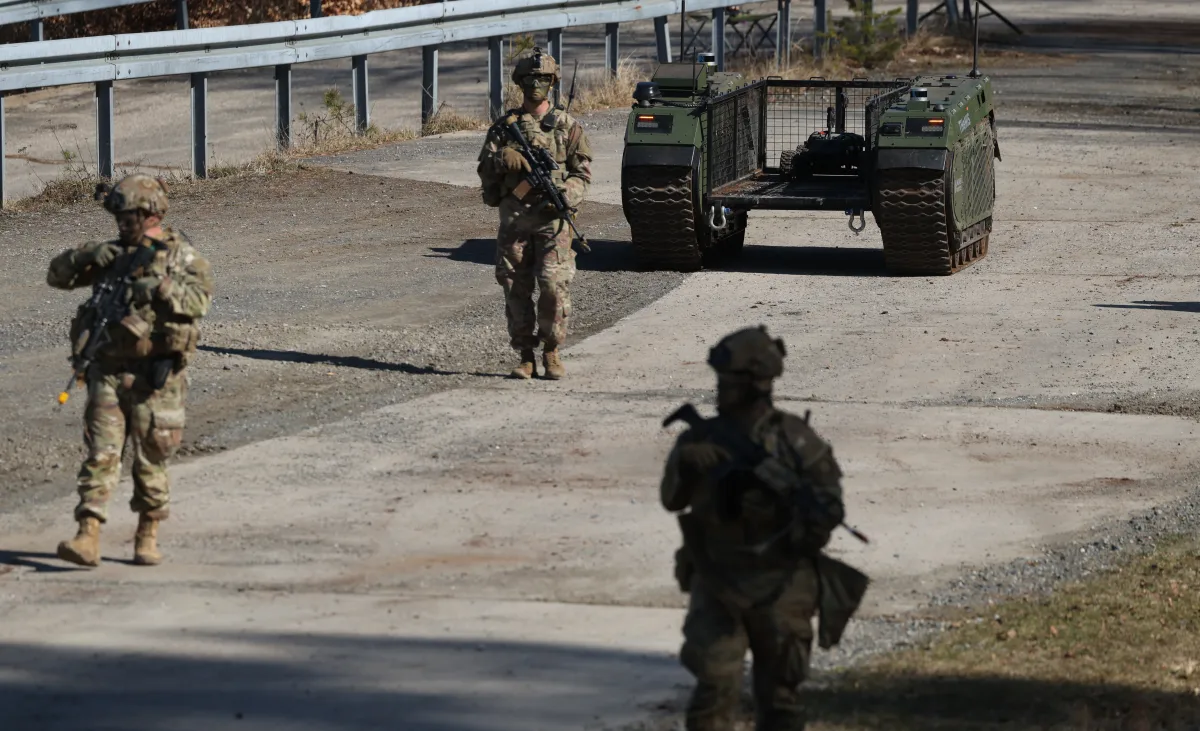
- Milrem, the target of the attack, holds a critical position in the global defense market, particularly with its THeMIS unmanned ground vehicles delivered to Ukraine.
- Similar hybrid operations targeting military facilities across Europe are prompting NATO member states to raise their security measures to the highest level.
Hybrid Threat Directed at Critical Defense Facility
The veil has been lifted on a chain of covert operations unsettling security balances across the Baltic region. The Estonian government has officially declared that a fire at a facility belonging to Milrem, the country's leading developer of military robotics and autonomous systems, was an act of sabotage carried out under the direct guidance of a foreign state. A comprehensive and meticulous investigation conducted by the Estonian Internal Security Service revealed that the Russian Federation's special services were directly behind the arson attack on the building located in the Lasnamäe district of the capital, Tallinn.
Noticed during the night hours in mid-August and brought under control before spreading thanks to vigilant local citizens and rapid fire brigade response, the blaze was meticulously scrutinized by intelligence services from the very first moment. Moving swiftly after the incident, security forces detained two individuals and subsequently a third person in Latvia through cross-border operational cooperation, handing them over to Estonian authorities. The fact that all captured suspects hold Latvian citizenship exposed that the operation was a classic proxy warfare and sabotage tactic executed using hired local operatives.
Sponsor AdPromote Your Defense Brand Globally Across 6 Languages
Reach military procurement officers, defense contractors, and AI (GEO/AEO) search engines in 6 languages.
Technical Capacity and Targets on the Ground
The strategic importance of the targeted company clearly explains the timing and motivation behind the attack. Milrem stands out as a leading global actor, particularly in the domain of autonomous and remotely operated ground vehicles. The THeMIS unmanned ground vehicles (UGVs) developed by the company excel in executing critical missions such as logistical support, casualty evacuation, and battlefield reconnaissance in challenging terrain. The active deployment of these systems by the Ukrainian armed forces and the planned dispatch of over 150 new units to Kyiv funded by the Dutch government placed the facility squarely in Moscow's crosshairs.
This sabotage attempt is only one of a series of escalating security breaches across the continent traced back to Moscow. An explosive-laden drone attack targeting a cargo aircraft at Germany's Leipzig/Halle Airport and arson incidents near defense industry offices in Munich demonstrate the extent of the hybrid threat facing Europe's critical infrastructure and defense supply chains. Experts point out that such low-intensity and deniable actions serve as elements of psychological warfare designed to disrupt the military and logistical support provided by Western governments to Ukraine.
Conclusion and Future Outlook
Estonian foreign policy and security bureaucracy emphasized in unequivocal terms that they would not step back in the face of this provocation, but would instead further intensify support for Ukraine. While summoning Russia's chargé d'affaires to the foreign ministry to deliver a protest note, the Tallinn administration announced that travel restrictions for Russian citizens would be tightened and sanctions deepened in coordination with European Union and NATO allies. Although the Kremlin officially denies the allegations as usual, it has become certain that the threat level for defense facilities across the Baltic and Eastern European regions will permanently remain categorized as 'high,' with intelligence agencies maintaining countermeasures at the highest alert level.