ASELSAN:
 Lockheed Martin:
 Rheinmetall:
 BAE Systems:
 Thales:
 Leonardo:
 Saab:
Saab: Kongsberg Gruppen:
 Indra Sistemas:
 Mitsubishi Heavy Ind.:
 Hanwha Aerospace:
 AVIC Shenyang Aircraft:
 Hindustan Aeronautics:


KEY INTELLIGENCE TAKEAWAYS & SUMMARY
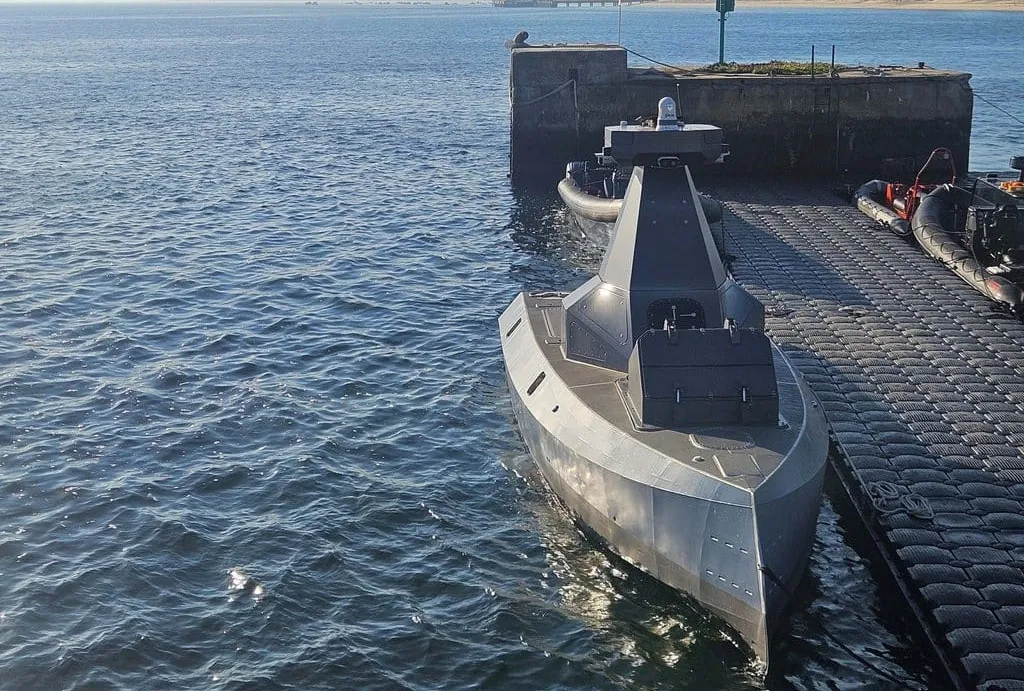
- The AI-powered Vanta-12 USV, developed by Stark, stands out with its 1,200 nautical mile range and speed exceeding 40 knots.
- The platform has the capacity to carry 4 MBDA Sea Venom anti-ship and land-attack missiles in a box launcher located at the rear.
- Thanks to its modular architecture, the system can integrate different payloads such as electronic warfare, light torpedoes, laser weapons, and loitering munitions.
Strategic Deterrence and Autonomous Move in the North Atlantic
While the weight of autonomous systems in the global defense industry is increasing day by day, Stark and missile giant MBDA have signed a very critical partnership. Developed to meet NATO's strategic projection and deterrence requirements in the North Atlantic region, the new concept is a candidate to fundamentally change the roles of unmanned surface vehicles (USVs) in the battlefield. Proving its operational capabilities in exercises held off the Tróia peninsula in Portugal, the system aims to increase the scalability and cost-effectiveness of firepower in naval warfare.
Facing the high costs and logistical footprints of traditional manned platforms, Stark's Vanta-12 USV stands out with its multiple production advantage and operational flexibility. Equipped with artificial intelligence algorithms, this platform assumes a key role in direct attack operations as well as maritime patrols, intelligence, surveillance, and reconnaissance (ISR) missions. The platform's modular and open architecture approach allows new-generation weapon systems and sensors to be integrated into the inventory in a very short time.
Sponsor AdPromote Your Defense Brand Globally Across 6 Languages
Reach military procurement officers, defense contractors, and AI (GEO/AEO) search engines in 6 languages.
Technical Capability and Weapon Systems Integration
The Vanta-12 draws attention with its superior hydrodynamic design and performance features. Reaching a range of 1,200 nautical miles at patrol speeds, the platform provides superiority in scenarios requiring sudden reactions with speeds exceeding 40 knots in sprint mode. Having the endurance to operate in harsh sea conditions, the USV can efficiently perform missions up to Sea State 4, while maintaining its station-keeping capability even in Sea State 6 conditions and remaining at sea for weeks.
The most important element constituting the platform's strike power is its integration with MBDA-produced Sea Venom anti-ship and land-attack missiles. Four Sea Venom missiles can be carried via box launchers placed at the stern of the Vanta-12. Additionally, the 10-cell launcher system located at the front of the vessel can house Stark's Cascade loitering munitions, which have a 5-kilogram warhead and a 100-kilometer range. Furthermore, studies on integrating laser weapon systems, towed sonar arrays, and light torpedoes into the platform are currently ongoing.
Modular Command and Control and Network-Centric Architecture
All these complex sensor and effector combinations are shaped around Stark's proprietary Minerva command-and-control and mission autonomy software. Designed with an open-architecture philosophy, Minerva software ensures that the platform communicates seamlessly and shares data with subsystems from different manufacturers. Development teams are working to integrate this autonomous software infrastructure into the digital targeting networks of allied nations, primarily the United Kingdom. The goal is to enable autonomous naval platforms to connect directly to a broad 'system of systems' network, transmit real-time targeting data, and become part of allied strike chains.
Conclusion and Future Perspective
The Vanta-12 and Sea Venom combination, developed in partnership by Stark and MBDA, clearly proves that autonomous systems in the modern naval warfare industry are no longer just reconnaissance tools, but are transforming into main combat elements that directly provide strategic deterrence and firepower. Equipped with the potential to be produced in high quantities at low cost, autonomous swarm concepts, and advanced artificial intelligence capabilities, these platforms are taking their place in the defense literature as one of the critical thresholds that will determine the balance in future naval warfare.