ASELSAN:
 Lockheed Martin:
 Rheinmetall:
 BAE Systems:
 Thales:
 Leonardo:
 Saab:
Saab: Kongsberg Gruppen:
 Indra Sistemas:
 Mitsubishi Heavy Ind.:
 Hanwha Aerospace:
 AVIC Shenyang Aircraft:
 Hindustan Aeronautics:


KEY INTELLIGENCE TAKEAWAYS & SUMMARY
- Boeing’s F/A-XX design has officially won the US Navy's next-generation stealth and heavy tactical fighter tender.
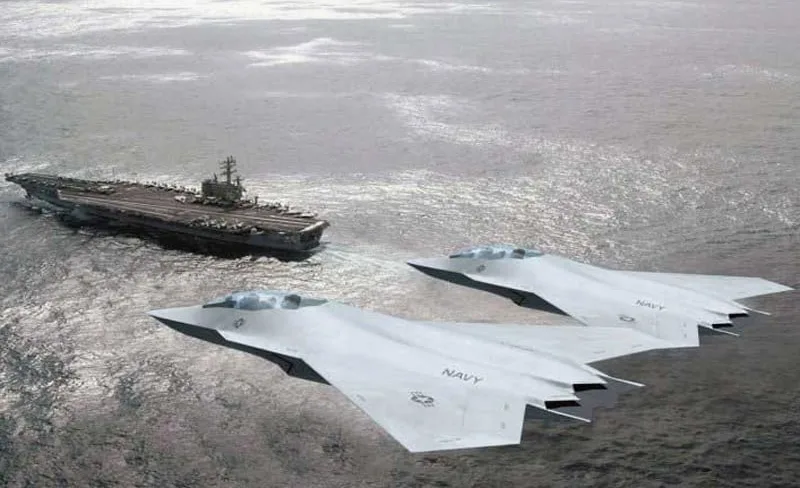
- The latest visuals released confirm that the aircraft features a large internal volume, a massive AESA radar, and a tailless aerodynamic form.
- The aircraft's single-seat cockpit design indicates that advanced AI automation will be relied upon for complex combat missions and UAV swarm management.
Strategic Turning Point in Next-Generation Naval Aviation
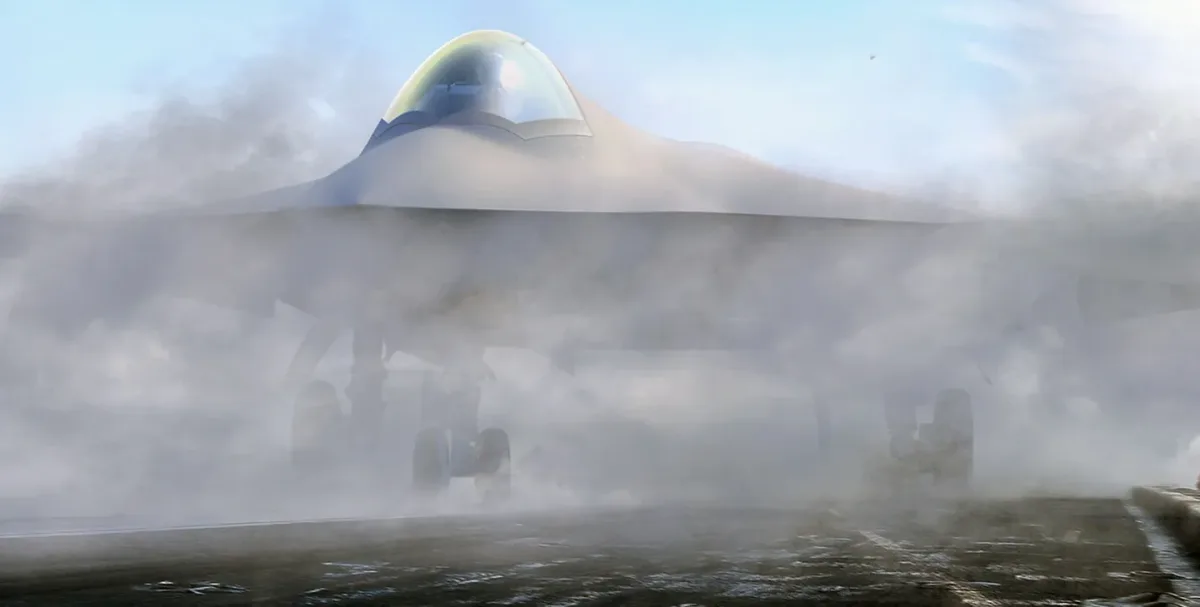
A critical threshold has been crossed in the F/A-XX program, which stands as one of the biggest competitions in the defense and aviation industry and will shape the US Navy's future aircraft carrier-based air power. The second official visual of Boeing's next-generation stealth fighter concept, which won the tender by leaving Northrop Grumman behind, has been shared with the public. It is well known that visuals in such highly classified projects are intentionally stripped of certain details to mislead foreign intelligence agencies and conceal critical capabilities. Nevertheless, the latest frames released contain extremely valuable clues regarding the operational doctrine of future naval combat elements.
Technical Capacity and Balance in the Field
The front-quarter view showing the aircraft taxiing toward an aircraft carrier catapult proves that we are facing a tactical platform with an extremely wide fuselage, tailless structure, and heavy class. It is clearly seen that large internal volume capacity was a priority criterion during the design process. The massive area located on the nose of the aircraft paves the way for the integration of an exceptionally large Active Electronically Scanned Array (AESA) radar. The prominent lines enveloping the forward fuselage and the trapezoidal-shaped air intakes reveal that the platform has been optimized to maximize its low-observable (stealth) characteristics.
Sponsor AdPromote Your Defense Brand Globally Across 6 Languages
Reach military procurement officers, defense contractors, and AI (GEO/AEO) search engines in 6 languages.
Another striking design detail was the single-seat cockpit configuration of the aircraft. For long-range and complex missions, especially as a combat manager to work in coordination with Loyal Wingman (CCA) and other unmanned aerial vehicle swarms, expectations for a twin-seat cockpit were widespread. However, the new visual indicates that a single pilot will operate the aircraft and rely on advanced artificial intelligence-based automation systems to handle this complex tactical load. While the US Navy currently actively uses twin-seat F/A-18F Super Hornet and EA-18G Growler platforms, it is understood that the era of twin-seat jets in carrier-based front-line operations will come to an end with the F/A-XX.
Conclusion and Future Perspective
Boeing's F/A-XX concept draws attention with its robust landing gear and prominent wing geometry designed to meet the demanding low-speed and high-lift requirements of aircraft carriers. The positive dihedral angle and wide trailing edge flaps of the wings aim to offer flawless maneuverability during terminal operations. Although the final details of the design remain classified, it is certain that this platform will radically transform the concept of naval aviation shaped in the late twentieth century and form the backbone of oceanic deterrence integrated with autonomous systems.