ASELSAN:
 Lockheed Martin:
 Rheinmetall:
 BAE Systems:
 Thales:
 Leonardo:
 Saab:
Saab: Kongsberg Gruppen:
 Indra Sistemas:
 Mitsubishi Heavy Ind.:
 Hanwha Aerospace:
 AVIC Shenyang Aircraft:
 Hindustan Aeronautics:


KEY INTELLIGENCE TAKEAWAYS & SUMMARY
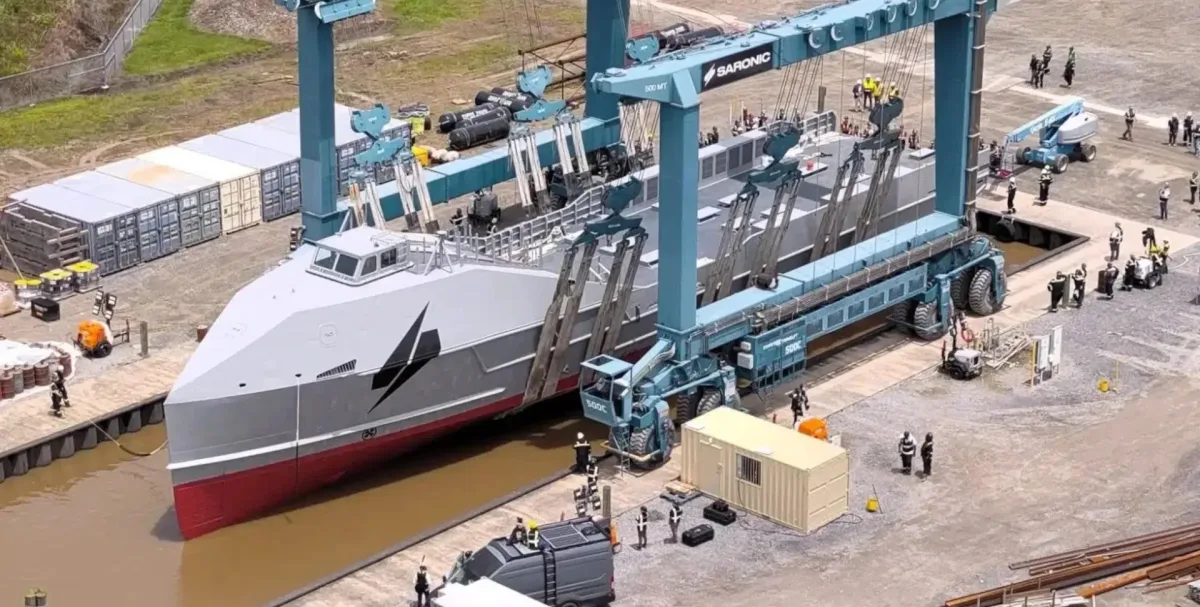
- The US Navy signed contracts with three companies to procure a total of 30 autonomous medium-class unmanned surface vehicles (USVs) at a cost of $40 million each, within the scope of the MUSV program.
- First deliveries for the project, which is executed through the 'Other Transaction Authority' (OTA) mechanism that accelerates rapid prototyping and R&D processes, are planned to begin in the final quarter of fiscal year 2027.
- The platforms will have the capacity to achieve a range of at least 2,500 nautical miles at a speed of 25 knots in NATO STANAG 4194 Sea State 4 sea conditions and carry a payload of 25 metric tons.
A New Era in Naval Warfare Industry: The Strategic MUSV Program
At a time when global power balances are rapidly evolving and autonomous systems are increasingly asserting their weight on the battlefield, breakthrough moves in the naval warfare domain are following one another. Following years of bureaucratic hurdles, concept changes, and procurement delays, the US Navy has crossed a critical threshold to transform its vision in the field of unmanned surface vehicles (USVs) into concrete fleet power. The latest procurement move realized within the scope of the Medium Unmanned Surface Vehicle (MUSV) program clearly demonstrates that autonomous naval warfare systems are no longer positioned as auxiliary elements in operational concepts, but as primary combat force multipliers.
Within the framework of this massive program executed via the 'Other Transaction Authority' (OTA) contracting model—designed to bypass the classical and cumbersome processes in defense procurement mechanisms—official agreements were signed with Galliano Marine Services, Huntington Ingalls Industries (HII), and Saronic Technologies. It was announced that the total procurement package of 30 ships, with each company constructing 10 platforms, has an average unit cost around the $40 million level. This supply chain, possessing a total financial size of approximately $1.2 billion, goes on record as one of the US's largest mass production moves in naval autonomy. Production activities are projected to start rapidly at shipyards in the state of Louisiana, and the first deliveries are anticipated to enter the naval inventory in the final quarter of fiscal year 2027.
Sponsor AdPromote Your Defense Brand Globally Across 6 Languages
Reach military procurement officers, defense contractors, and AI (GEO/AEO) search engines in 6 languages.
Technical Capacity, Autonomous Navigation, and Field Expectations
The technical and operational requirements of the new generation MUSV platforms were designed to fully adapt to the challenging conditions of modern naval combat. According to threshold criteria published by the navy, these unmanned vessels are required to maintain a speed of 25 knots in NATO STANAG 4194 Sea State 4 standards (17 to 21 knots wind speed and wave heights between 1.2 and 2.4 meters) while carrying a payload of at least 25 metric tons on deck and achieving a range of more than 2,500 nautical miles. Furthermore, the capability to house forty-foot equivalent unit (FEU) containerized payloads and the ability to refuel 2,000 gallons per minute at sea maximize the logistic flexibility of the platforms.
Prior to the signing of these contracts, rigorous open-ocean tests were conducted with the participation of seven competing companies in the initial phase. In these tests, the platforms' environmental awareness capabilities, autonomous navigation success fully compliant with the International Regulations for Preventing Collisions at Sea (COLREG), and long-duration mission execution capabilities were meticulously evaluated. Successfully leaving behind operational maturity tests, the autonomous systems notably covered a distance exceeding 360 nautical miles in over 26 hours with minimal intervention from the command and control (C2) station. This high level of autonomy directly increases the survival and mission execution capabilities of the platforms in scenarios where communication lines are disrupted or electronic warfare pressure is intense.
Conclusion and Future Perspective
This 30-ship procurement move by the US Navy constitutes a historic milestone in integrating autonomous naval systems out of R&D laboratories and directly into the backbone of combat fleets. These medium-class unmanned surface vehicles, which will undertake critical missions such as surveillance, reconnaissance, mine warfare, and logistical resupply that traditional manned platforms struggle to execute in high-risk regions, will completely reshape naval power projection. The delivery schedule starting from the end of 2027 will register the strategic weight of autonomous fleets in the world's seas and set a new standard in the global defense industry.