ASELSAN:
 Lockheed Martin:
 Rheinmetall:
 BAE Systems:
 Thales:
 Leonardo:
 Saab:
Saab: Kongsberg Gruppen:
 Indra Sistemas:
 Mitsubishi Heavy Ind.:
 Hanwha Aerospace:
 AVIC Shenyang Aircraft:
 Hindustan Aeronautics:


KEY INTELLIGENCE TAKEAWAYS & SUMMARY
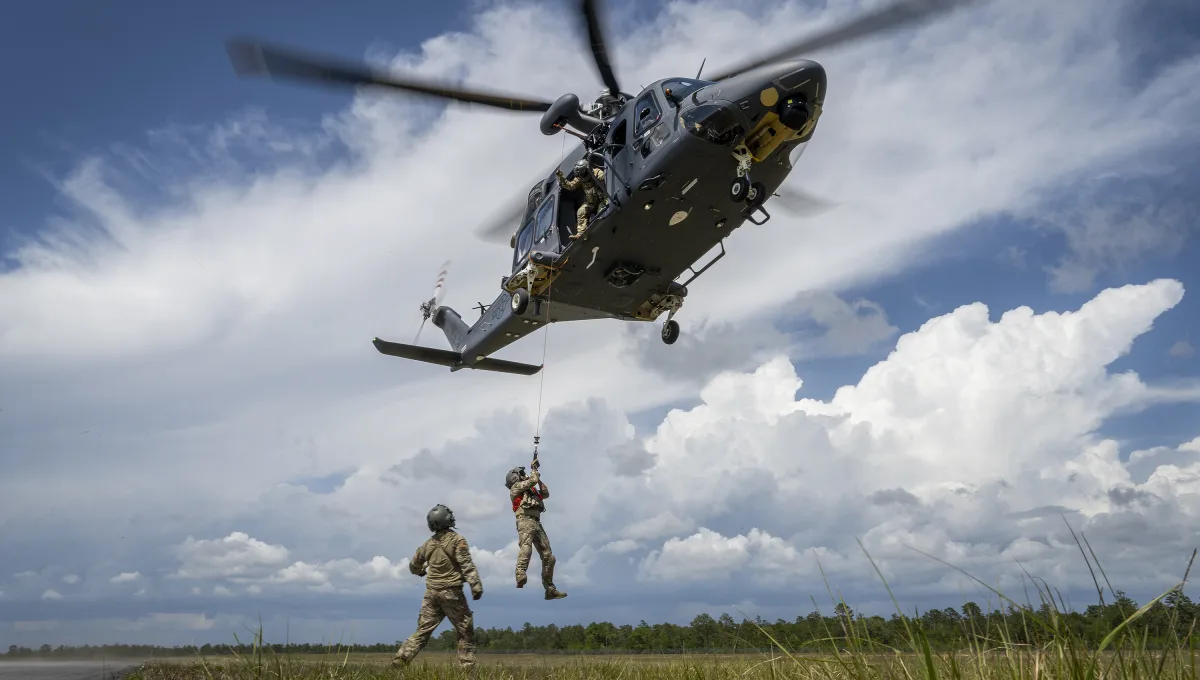
- The U.S. Air Force has transitioned to the first full-rate production phase of the MH-139A Grey Wolf project, ordering 4 helicopters.
- The new platforms replace the aging UH-1N Huey fleet that secures the United States' intercontinental nuclear ballistic missile sites.
- The MH-139A offers 50% higher speed and double the payload capacity compared to previous-generation Huey helicopters.
- Despite past test and certification delays, the program has reached a critical milestone for the U.S. strategic deterrence infrastructure.
A Busy Week in Strategic Aviation and a New Production Phase
Boeing, a key actor in the global defense industry, continues to draw attention with massive programs and supply contracts announced one after another recently. One of these critical links added to the company's portfolio is the U.S. Air Force's next-generation platform tasked with protecting nuclear missile sites. According to official statements, the first full-rate production contract for the MH-139A Grey Wolf helicopters, which have proven their operational readiness level in nuclear deterrence missions, has officially entered into force.
This new batch procurement agreement, valued at approximately $85 million, also includes maintenance and sustainment support packages. The four new helicopters to be produced under the contract are planned to enter the inventory between 2028 and 2029. With this latest procurement, the total number of contracted Grey Wolves under the supply chain has reached 42 units. Twenty-seven of these have already been delivered to the Air Force; this number includes earlier test aircraft and initial low-rate production series.
Sponsor AdPromote Your Defense Brand Globally Across 6 Languages
Reach military procurement officers, defense contractors, and AI (GEO/AEO) search engines in 6 languages.
Technical Capacity and Operational Balances in the Field
A militarized derivative of Leonardo's commercial AW139 platform, the MH-139A Grey Wolf is poised to radically transform security standards at U.S. strategic nuclear sites. According to Air Force Global Strike Command data, the Grey Wolf offers approximately 50 percent higher speed compared to the previous-generation UH-1N Huey helicopters and has the capacity to carry twice as many military personnel. Equipped with advanced self-defense systems, the platform can perform uninterrupted escort and patrol missions in challenging geographical conditions.
The platform, which has begun taking over security duties at critical intercontinental ballistic missile bases located in Montana, Wyoming, and North Dakota, has successfully completed its first real-world missions. Capable of covering distances of hundreds of miles without refueling during long-range patrol missions, the helicopters provide a layer of flexibility and deterrence in protecting strategic assets. Despite past FAA certification processes and test delays in the program schedule, leaving the initial operational capability phase behind has created satisfaction among field commands.
Conclusion and Future Perspective
Although initially planned procurement numbers have been revised due to defense budget constraints and cost-cap regulations, the Grey Wolf program stands out as an indispensable element of the U.S. nuclear modernization architecture. Carrying a mission requiring high precision such as the security of strategic missile sites, the MH-139A will continue to form the backbone of the American military's airborne mobility and protection capability for many years to come.