ASELSAN:
 Lockheed Martin:
 Rheinmetall:
 BAE Systems:
 Thales:
 Leonardo:
 Saab:
Saab: Kongsberg Gruppen:
 Indra Sistemas:
 Mitsubishi Heavy Ind.:
 Hanwha Aerospace:
 AVIC Shenyang Aircraft:
 Hindustan Aeronautics:


KEY INTELLIGENCE TAKEAWAYS & SUMMARY
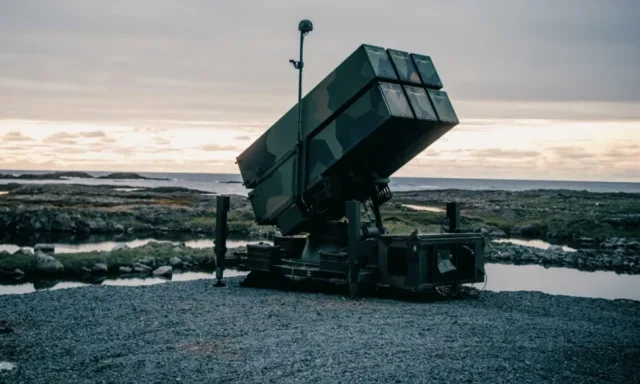
- Belgium officially joined the international NASAMS user community with a massive $1 billion contract signed with Kongsberg Gruppen.
- The Netherlands Armed Forces procurement authority managed the acquisition process on behalf of Belgium, demonstrating operational cooperation in defense procurement between allied nations.
- With an additional $155 million contract signed for the Netherlands' CITADEL program, Kongsberg incorporated NOMADS highly mobile short-range air defense systems into the project.
- Thanks to its modular and network-centric architecture, NASAMS has become one of the most preferred layered defense solutions against Europe's changing and increasing air threats.
Strategic Expansion in Europe's Air Defense Architecture
In the global defense industry, procurement mechanisms in Europe have gained momentum in the face of rising geopolitical risks and increasingly complex air threats. Norway-based defense giant Kongsberg Gruppen has signed a massive contract that will radically transform Belgium's air defense capability. Within the framework of the agreement valued at approximately $1 billion, Belgium is preparing to add advanced NASAMS (Norwegian Advanced Surface-to-Air Missile System) air defense systems to its inventory. This move constitutes a critical turning point in terms of Brussels joining the international NASAMS user community.
The procurement process in question is being conducted through a striking joint defense mechanism. The agreement was realized not directly by Belgium, but through the procurement authority of the Netherlands Armed Forces. This procurement activity carried out by Dutch authorities on behalf of their neighboring country demonstrates how far NATO allies can advance operational compatibility in joint ammunition and system procurement. Upon the completion of the procurement process, the Belgian Air Force, as the ultimate user of the systems, will acquire the capacity to protect its national airspace with a modern and flexible shield.
Sponsor AdPromote Your Defense Brand Globally Across 6 Languages
Reach military procurement officers, defense contractors, and AI (GEO/AEO) search engines in 6 languages.
Technical Capacity and Balances on the Field
NASAMS meets all the requirements of modern warfare thanks to its modular structure and network-centric command-and-control architecture. Providing effective protection against a wide range of air targets such as cruise missiles, unmanned aerial vehicles (UAVs), helicopters, and fighter jets, the system stands out with its open architecture. This structure allows next-generation technologies and ammunition types to be integrated into the system as operational needs evolve.
On the same day, Kongsberg announced that it had signed a second additional contract with the Netherlands valued at approximately $155 million. This agreement aims to increase the scope and operational depth of the Netherlands' ongoing CITADEL air defense program. Additional systems to be integrated into the CITADEL project, whose foundations were laid in 2024, include NOMADS highly mobile short-range air defense system solutions and increased firing capacity for NASAMS batteries. With these moves, the Netherlands aims both to protect the mobility of its own land forces and to maximize its multi-layered air defense umbrella.
Conclusion and Future Perspective
Belgium's billion-dollar NASAMS investment and the Netherlands' steps to expand the CITADEL project clearly demonstrate Europe's determination to increase its deterrence capacity. In the face of long delivery times and high costs of traditional air defense systems, it is seen that modular, scalable, and interoperable systems among allies come to the fore. These critical contracts signed by Kongsberg not only symbolize the efficient use of the defense budgets of the two countries, but also set a new standard in the Northwest Europe axis regarding the European continent's airspace protection doctrine. In the coming period, with the deployment of these systems to the field, NATO's deterrence architecture in the region will be further solidified.