ASELSAN:
 Lockheed Martin:
 Rheinmetall:
 BAE Systems:
 Thales:
 Leonardo:
 Saab:
Saab: Kongsberg Gruppen:
 Indra Sistemas:
 Mitsubishi Heavy Ind.:
 Hanwha Aerospace:
 AVIC Shenyang Aircraft:
 Hindustan Aeronautics:


KEY INTELLIGENCE TAKEAWAYS & SUMMARY
- During the Atlantic Thunder 2026 exercise led by the US 6th Fleet, the retired Oliver Hazard Perry-class frigate ex-USS Klakring was used as a target.
- During the exercise, the US Navy destroyer USS Paul Ignatius fired the surface variant of the SM-6 missile, while the USS Massachusetts nuclear-powered attack submarine delivered the final blow with an Mk 48 torpedo.
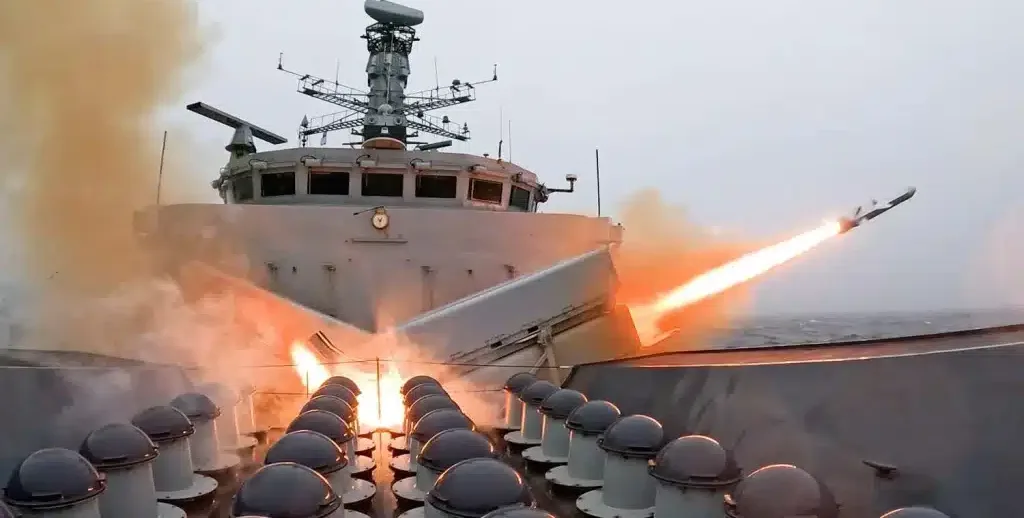
- The UK Royal Navy successfully validated the operational effectiveness of its next-generation Naval Strike Missile (NSM) and Sea Venom missiles.
Comprehensive Joint Strike Exercise in the North Atlantic
Atlantic Thunder 2026, one of the exercises where deterrence strategies in the global naval warfare domain are tested at the highest level, has been successfully concluded in the challenging waters of the North Atlantic. Conducted under the command of the United States Naval Forces 6th Fleet, the multi-domain sinking exercise (SINKEX) showcased operational interoperability and strike capability among allied forces. Carried out in an integrated manner with various task forces, UK Royal Navy, and US Air Force elements, the exercise provided critical data to report the performance of modern naval warfare technologies under realistic scenarios.
Technical Capacity and Field Dynamics
The main target of the exercise, the retired Oliver Hazard Perry-class guided-missile frigate ex-USS Klakring, which served the US Navy for many years, became the target of the allies' sophisticated munition inventory. During the operation, the Arleigh Burke-class guided-missile destroyer USS Paul Ignatius successfully proved the range and maximum damage capacity of the anti-surface variant of the Standard Missile 6 (SM-6) missile. Following intense fire pressure from surface elements, the Virginia-class nuclear attack submarine USS Massachusetts stepped in to deliver the fatal blow to the target ship with an Mk 48 Advanced Capability Torpedo, causing the frigate to sink into the waters.
Sponsor AdPromote Your Defense Brand Globally Across 6 Languages
Reach military procurement officers, defense contractors, and AI (GEO/AEO) search engines in 6 languages.
Meanwhile, the UK Royal Navy had the opportunity to test its newest inventory, the Naval Strike Missile (NSM) and Sea Venom anti-ship missiles, in an actual combat scenario. Successful NSM firings from the frigate HMS Portland certified the Royal Navy's determination in modern naval strike capabilities. Throughout the exercise, P-8 maritime patrol aircraft, Wildcat helicopters, and F-15E Strike Eagle fighter jets also jointly conducted intelligence, surveillance, and targeting missions.
Conclusion and Future Perspective
Beyond being merely a destruction operation, the Atlantic Thunder 2026 exercise served as a scientific testbed containing vital data for the development of next-generation naval systems. Special sensors placed on the target ship by Naval Surface Warfare Center and Information Warfare Center experts prior to the sinking operation precisely recorded the structural damage dynamics caused by warheads. Conducted in full compliance with environmental regulations and international marine conservation laws, this comprehensive exercise reaffirmed at the highest level the transatlantic strike superiority and crisis-response reaction speed of the US-UK alliance.