ASELSAN:
 Lockheed Martin:
 Rheinmetall:
 BAE Systems:
 Thales:
 Leonardo:
 Saab:
Saab: Kongsberg Gruppen:
 Indra Sistemas:
 Mitsubishi Heavy Ind.:
 Hanwha Aerospace:
 AVIC Shenyang Aircraft:
 Hindustan Aeronautics:


KEY INTELLIGENCE TAKEAWAYS & SUMMARY
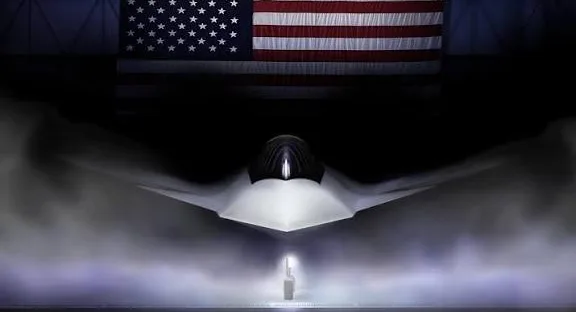
- Boeing was selected as the prime contractor for the U.S. Navy's 6th-generation F/A-XX fighter jet program.
- The contract value exceeds $20 billion, while Northrop Grumman was eliminated from the tender.
- Thus, Boeing has become the sole supplier in the 6th-generation market with both the Air Force's F-47 and the Navy's F/A-XX projects.
- The new platform will replace the F/A-18E/F Super Hornet fleet and serve as the Navy's main strike force in the 2030s.
A New Era in the U.S. Navy: The F/A-XX Program
While the pulse of the global defense industry continues to beat with Washington-based strategic moves, the U.S. Navy has marked one of the most critical turning points in aviation history. A decision has been reached in the long-contested tender for the sixth-generation carrier-based fighter jet, the F/A-XX. In the process that was heavily discussed in defense corridors for days, Boeing was declared the prime contractor by the Pentagon, leaving behind defense giant Northrop Grumman. This massive contract, exceeding $20 billion, represents not just the procurement of an aircraft, but a technological leap that will fundamentally shake the balance of global air superiority.
Technical Capacity and Field Balances
The massive contract signed covers the full-scale development phase of the platform, ground and airworthiness tests, avionics system integration, and the procurement of numerous prototype test aircraft. Technically, the F/A-XX is designed to replace the F/A-18E/F Super Hornet fleet, which forms the backbone of the U.S. Navy's inventory, and to operate side-by-side with F-35C Lightning II platforms. It is expected to feature advanced deep stealth geometry, an extended combat radius that will keep aircraft carriers safely out of range of modern anti-access/area denial (A2/AD) missiles, and the capability to conduct joint operations with autonomous unmanned systems (Collaborative Combat Aircraft - CCA).
Sponsor AdPromote Your Defense Brand Globally Across 6 Languages
Reach military procurement officers, defense contractors, and AI (GEO/AEO) search engines in 6 languages.
Industrial Transformation and Market Dominance
This strategic victory elevates Boeing to an unrivaled position in the American military aviation market in the context of sixth-generation aircraft. Last March, the company also won the U.S. Air Force’s F-47 next-generation fighter jet project, which will replace the F-22 Raptor. The exclusion of two giant rivals like Lockheed Martin and Northrop Grumman from the sixth-generation market has served as a rebirth scenario for Boeing, which had recently faced the threat of closure at its production facilities in St. Louis.
Conclusion and Future Perspective
The F/A-XX program, which was previously frozen due to budget constraints and whose fate was debated in the corridors of Congress and the Navy, is preparing to seal the battlefield of the 2030s with this multi-billion dollar move. This dual success achieved by Boeing not only secures the company's financial and industrial future but also lays the foundations for a next-generation ecosystem that will carry the U.S. technological supremacy in naval aviation well into the middle of the 21st century.