ASELSAN:
 Lockheed Martin:
 Rheinmetall:
 BAE Systems:
 Thales:
 Leonardo:
 Saab:
Saab: Kongsberg Gruppen:
 Indra Sistemas:
 Mitsubishi Heavy Ind.:
 Hanwha Aerospace:
 AVIC Shenyang Aircraft:
 Hindustan Aeronautics:

KEY INTELLIGENCE TAKEAWAYS & SUMMARY
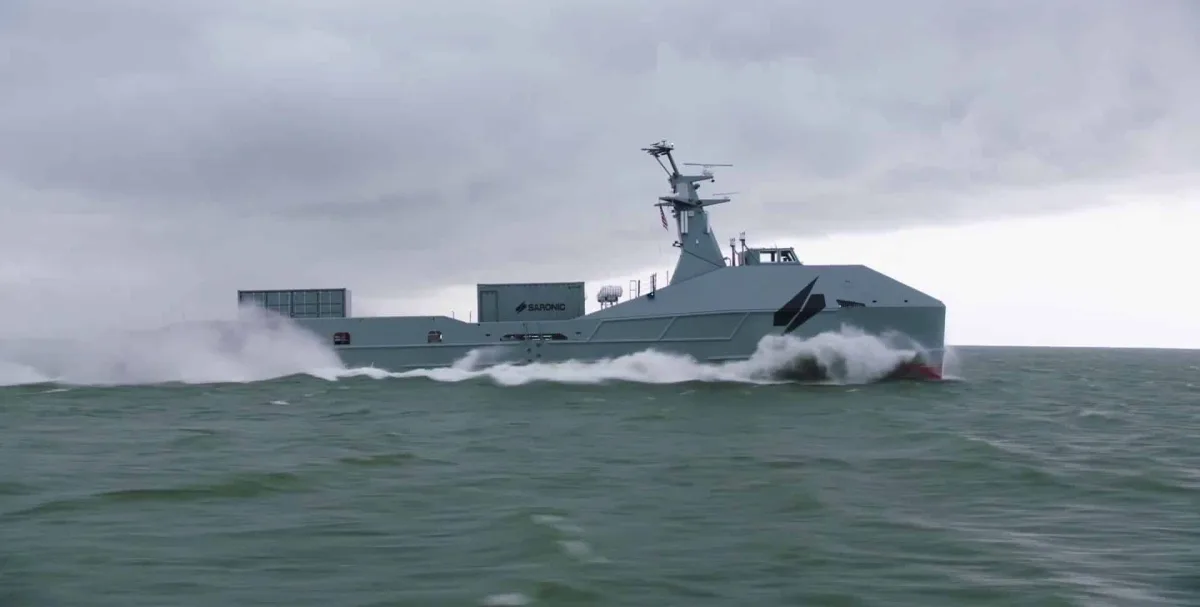
- Saronic Technologies was awarded a mass production contract for its Marauder autonomous vessel under the US Navy's MUSV Marketplace program.
- In sea trials, Marauder conducted continuous 24-hour operations for 8 days, completing over 140 scenarios with zero errors.
- The platform proved its ability to track targets using only passive sensors without active radar during rigorous testing.
- Following phase testing, the Navy plans to procure 30 Medium Unmanned Surface Vessels at a unit cost of approximately $40 million.
As unmanned and autonomous systems grow increasingly significant in global defense technologies, the US Navy has passed a critical threshold that will radically transform surface combat doctrine. Under the Medium Unmanned Surface Vessel (MUSV) Marketplace initiative, launched to eliminate the slowness of traditional procurement cycles, an official production contract was signed with innovative defense technology company Saronic Technologies. While accelerating the Navy's pace of inducting autonomous platforms into inventory, this move also establishes a new model for integrating commercial off-the-shelf technologies into military standards.
Technical Capacity and Rigorous Sea Trials
Developed by Saronic, the 180-foot (approximately 55 meters) dual-use autonomous vessel Marauder demonstrated exceptional performance during the Navy's at-sea testing phase. Kept under continuous 24/7 operational conditions for eight days, the platform flawlessly completed over 140 test scenarios in challenging sea conditions. The test program not only pushed the limits of the vessel's autonomous navigation and maneuvering capabilities, but also subjected its passive sensing capabilities to rigorous evaluation.
Sponsor AdPromote Your Defense Brand Globally Across 6 Languages
Reach military procurement officers, defense contractors, and AI (GEO/AEO) search engines in 6 languages.
Marauder successfully executed the tasks of detecting, tracking, and following other vessels using only its onboard passive sensors without emitting active radar signals. Achieving passive tracking—one of the most complex technical hurdles in naval warfare autonomy—proved that the platform elevates operational survivability by keeping its electromagnetic signature to a minimum. Thanks to the company's vertically integrated manufacturing model, the simultaneous development of software, hardware, and hull design played a key role in enabling the platform to achieve such a high reliability rate.
Conclusion and Future Outlook
In line with the procurement strategy led by the US Navy's Direct Reporting Program Manager for Robotics and Autonomous Systems (DRPM RAS), a total of 30 MUSVs are planned for procurement following the successful completion of initial phase tests. Under the project, which has an average unit cost set at $40 million, Production Other Transaction Authority (OTA) agreements were executed with select defense contractors, including Saronic Technologies. The first autonomous vessels are expected to enter Navy inventory before the end of fiscal year 2027. These developments signify the official start of an era in which autonomous surface vessels will share the burden of manned platforms in future naval warfare and unmanned fleets will form the backbone of transoceanic operations.