ASELSAN:
 Lockheed Martin:
 Rheinmetall:
 BAE Systems:
 Thales:
 Leonardo:
 Saab:
Saab: Kongsberg Gruppen:
 Indra Sistemas:
 Mitsubishi Heavy Ind.:
 Hanwha Aerospace:
 AVIC Shenyang Aircraft:
 Hindustan Aeronautics:


KEY INTELLIGENCE TAKEAWAYS & SUMMARY
- The US Navy signed a five-year multi-year SM-6 contract worth $24.4 billion with Raytheon to fortify its ammunition stockpiles.
- The SM-6 munition stands out among rare combat-proven systems that combine air defense, surface warfare, and ballistic missile defense into a single platform.
- The Pentagon's strategic moves to accelerate munition manufacturers continue with massive multi-billion-dollar procurement agreements such as AMRAAM and Patriot.
- Defense industry executives point out that due to Congress not yet fully allocating funding, legal processes must be awaited for scalable investments.
Critical Step for Replenishing Strategic Stocks
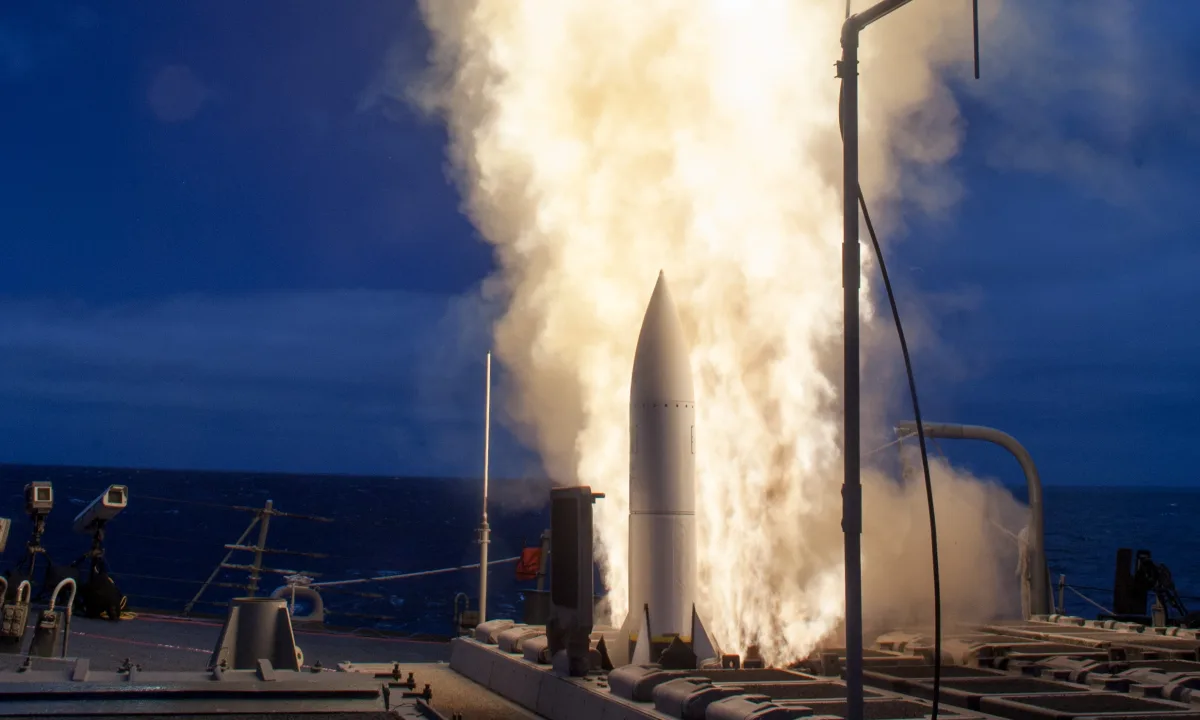
Increasing geopolitical tensions in the global security architecture and intense conflict environments, particularly in the Middle East and Eastern Europe, are depleting global powers' ammunition inventories at an unprecedented rate. During this critical process, the Pentagon is making massive financial commitments to the defense industrial base to maintain Washington's deterrence capacity and munition depth. Most recently, the US Department of the Navy announced that a massive multi-year procurement contract worth up to $24.4 billion has been signed with Raytheon, a subsidiary of RTX, for the production of Standard Missile-6 (SM-6) interceptor missiles. Encompassing five years and including additional two-year options, this agreement aims to secure the long-term operational readiness of American sea power.
Technical Capacity and Versatile Striking Power in the Field
As one of the most critical deterrent elements of the modern naval battlefield, the SM-6 stands out with its unique operational flexibility. According to Raytheon data, this missile is the world's only combat-proven weapon system capable of executing air defense, anti-surface warfare, and terminal-phase ballistic missile defense simultaneously. Capable of being fired from surface combatants equipped with the AEGIS combat system, the SM-6 is also designed to offer thrift and compatibility so that it can be launched from land-based mobile launcher systems. This provides allied forces with flexibility in both sea- and land-based integrated air and missile defense architectures. This massive-budget multi-year contracting model of the Pentagon aims to enable contractor firms to conduct long-term production planning while overcoming bottlenecks in the supply chain.
Sponsor AdPromote Your Defense Brand Globally Across 6 Languages
Reach military procurement officers, defense contractors, and AI (GEO/AEO) search engines in 6 languages.
Industrial Production Capacity and Financial Realities
The recent chain of multi-billion-dollar contracts put into effect by the Pentagon—along with the $20.7 billion AMRAAM agreement in September and the $58.6 billion Patriot agreement in July—is forcing defense industry companies to maximize production. RTX has announced that to meet growing global demand, it has automated production lines, expanded its skilled labor capacity, and strengthened its supplier network within the defense industrial base. Conversely, defense analysts and senior executives point out that the fact that the US Congress has not yet fully allocated appropriations for these massive contracts carries certain risks. It is emphasized that until the legal funding allocation process is completed, slowdowns may occur in scaling industrial facilities and component supply, but long-term strategic goals make these investments mandatory.
Conclusion and Future Perspective
This $24.4 billion SM-6 contract signed between the US Navy and Raytheon is at the center of Washington's strategy to prepare for high-intensity conflict scenarios. Prioritizing long-term ammunition supply security and industrial sustainability rather than shareholder crises is considered the key to achieving superiority on the future battlefield. In the coming years, with the reflection of these investments onto the field, the integrated air and missile defense umbrella of the US and its allies will become even more resilient.