ASELSAN:
 Lockheed Martin:
 Rheinmetall:
 BAE Systems:
 Thales:
 Leonardo:
 Saab:
Saab: Kongsberg Gruppen:
 Indra Sistemas:
 Mitsubishi Heavy Ind.:
 Hanwha Aerospace:
 AVIC Shenyang Aircraft:
 Hindustan Aeronautics:


KEY INTELLIGENCE TAKEAWAYS & SUMMARY
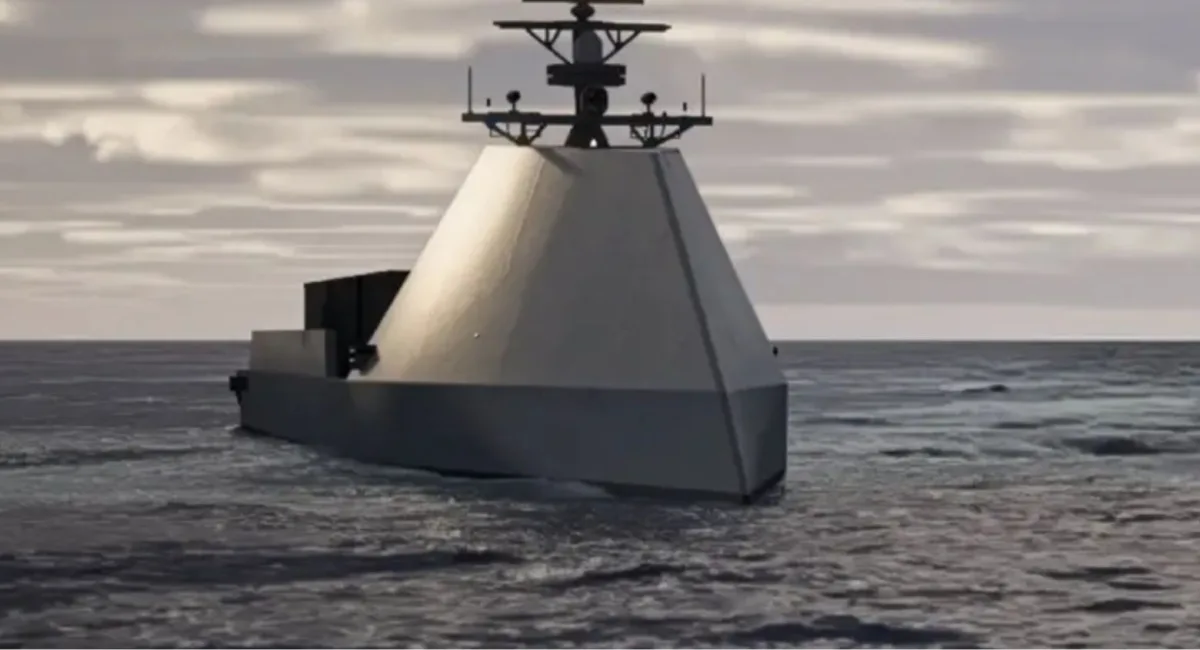
- Saronic, HII, and Galliano Marine Service companies will build a total of 30 MUSVs for the US Navy.
- The unit cost of the vessels has been determined as $40 million, with the first deliveries planned for the end of 2027.
- Autonomous systems successfully traveled for more than 24 hours and over 360 nautical miles without human intervention.
- In the second phase projects, the speed criteria were relaxed, and conditions were introduced to survive severe storms in Sea State 6 and operate continuously for 10 days.
Autonomous Era in Global Naval Warfare History
The front of the global power struggle in the oceans is undergoing a radical transformation with the integration of unmanned and autonomous systems. The US Navy has added a new strategic investment worth billions of dollars that will redefine its surface warfare concept. Three critical shipyards, having successfully left behind demanding sea test processes, have been tasked with the construction of Medium Surface Vessels (MUSV) to strengthen the navy's inventory. This move, which changes the balance in the defense supply chain, aims to minimize the risks exposed to manned platforms in transoceanic operations.
Technical Capacity and Balances in the Field
According to data shared by naval authorities; Saronic, HII, and Galliano Marine Service companies will share a massive production pool of a total of 30 ships, with 10 MUSVs each. In the project, where the average unit cost amounts to $40 million, the total contract value reaches $1.2 billion. The first fruits of the production activities, which will begin at strategic facilities in the state of Louisiana, are projected to be harvested in the final quarter of 2027. The financial infrastructure of the project is funded from defense budget items approved in the near term.
Sponsor AdPromote Your Defense Brand Globally Across 6 Languages
Reach military procurement officers, defense contractors, and AI (GEO/AEO) search engines in 6 languages.
The technical capabilities of the newly developed platforms push the limits of modern naval warfare engineering. According to the first-phase specifications, MUSVs are required to reach high speeds such as 25 knots in moderate wave sea conditions and cover a range of 2,500 nautical miles. Moreover, critical payload carrying capacity equivalent to two 40-foot standard container volumes and up to 25 metric tons in total makes these platforms indispensable in terms of logistics and attack. Proving its autonomous transit capability, the ship receiving a single command from the command center completed a route longer than 360 nautical miles in approximately 26 hours, breaking the record for continuous operation with minimal human intervention.
Future Concepts and Legal Processes
In the second phase of the project, strategic flexibility was provided in technical parameters depending on operational doctrine. While high speed and underway replenishment requirements were relaxed, platforms were required to survive even in severe storm conditions—characterized by waves close to 6 meters, known as Sea State 6—and to perform missions without resupply for 10 days. On the other hand, this massive high-budget procurement program also brought along some legal disputes. Lawsuits filed by some autonomous system manufacturers eliminated during the prototype phase regarding the transparency of navy tender criteria once again revealed the importance of legal oversight in defense procurement management.
Conclusion and Future Perspective
This $1.2 billion MUSV contract signed by the US Navy clearly proves that the weight of manned platforms will decrease in the future of naval warfare art and the era of autonomous fleets has begun. The durability of the procured platforms in harsh ocean conditions and their long-term autonomous cruising capabilities are candidates to play a key role in protecting strategic naval bases and sea control areas in the near future. This process, where uninterrupted operational capability rather than price gains priority in the defense industry ecosystem, is rewriting the rules of global naval competition.