ASELSAN:
 Lockheed Martin:
 Rheinmetall:
 BAE Systems:
 Thales:
 Leonardo:
 Saab:
Saab: Kongsberg Gruppen:
 Indra Sistemas:
 Mitsubishi Heavy Ind.:
 Hanwha Aerospace:
 AVIC Shenyang Aircraft:
 Hindustan Aeronautics:


KEY INTELLIGENCE TAKEAWAYS & SUMMARY
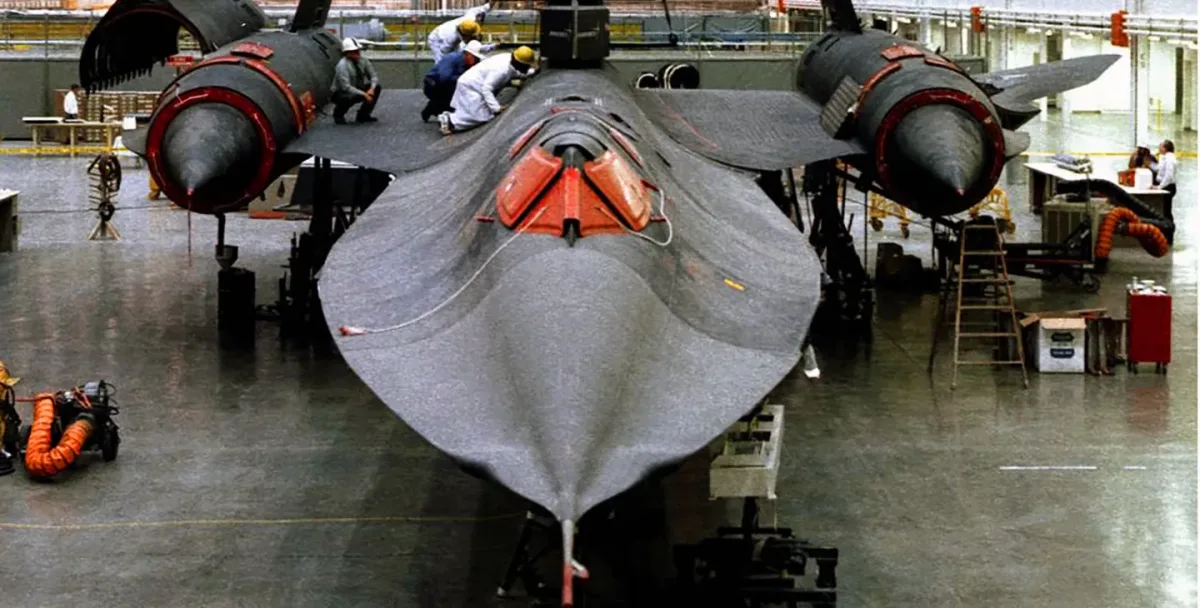
- The preparation of the SR-71 Blackbird for renewed flight tests brings long-duration flight and heavy payload carriage capabilities in the Mach 3-4 regime into the modern operational environment.
- Reverse engineering and digital twin technologies utilized during the aircraft's revival generate critical data for future hypersonic platforms.
- The project pioneers the revitalization of six-decade-old lost supply chains using additive manufacturing and modern materials science.
For decades, the aviation and defense world has begun to debate a scenario once deemed impossible with a sense of reality following recent developments. The possibility of the SR-71 Blackbird—one of the most clandestine and technologically revolutionary platforms of the Cold War era—reuniting with the skies excites military aviation enthusiasts and strategists alike. The primary motivation behind this move is not merely to execute a nostalgic flight. The resurgence of high speed as a tactical necessity in the modern battlefield has elevated the need for platforms capable of seamlessly sustaining speed regimes between Mach 3 and Mach 4 while carrying massive munitions or payloads at these extreme speeds to its peak. However, this colossal and costly technical challenge has another dimension just as valuable as the flight test data: the institutional learning and engineering gains to be derived from the process itself.
Technological Heritage and Modern Engineering Discipline
The SR-71, which resembled space technology sixty years ago and has no operational equivalent even today, had been in a deep sleep for nearly thirty years. Most of the expert generation that built, supported, and flew the aircraft is no longer in the field. However, this situation is seen as an obstacle that can be overcome with the capabilities available to the modern defense industry. When reverse engineering processes are combined with revolutions in additive manufacturing (3D printing) and rapid prototyping, next-generation materials science, and avionics architectures, a unique R&D opportunity emerges. Notably, the mysterious departure of the SR-71 airframe with tail number 844 from its display location in the NASA inventory brings along strong claims that a digital twin of the aircraft has been created. With the deployment of digital engineering tools, the objective is not only to fly this iconic platform again but also to radically enhance its performance and reliability.
Sponsor AdPromote Your Defense Brand Globally Across 6 Languages
Reach military procurement officers, defense contractors, and AI (GEO/AEO) search engines in 6 languages.
Supply Chain and Roadmap for Future Platforms
Historically, the SR-71 and its precursor, the A-12, possessed the most exotic and complex logistical support chain in aviation history. Rebuilding this chain from scratch half a century later serves as an eye-opening exercise not just for this aircraft, but for the entire aerospace industry. Keeping the highest-performance aircraft of an era of slide rules and drawing boards alive again with today's digital infrastructure serves as an excellent prototype for testing the U.S. military's capability to put out-of-production strategic platforms back into manufacturing. The combination of the Foreign Materiel Exploitation (FME) community's clandestine operational experiences and NASA's scientific infrastructure proves that this project will not only resurrect the past but also shed light on future air dominance concepts.
Conclusion and Future Perspective
The project to bring the SR-71 Blackbird back to flight signifies the reopening of a page in aviation history once thought to be closed, backed by a much more advanced technological literacy. The digital modeling capabilities, hypersonic engine technologies, and the substitution of lost manufacturing techniques with modern methods gained during this process will directly shape the air combat systems of the next 30 years. The return of the legendary spy plane is not merely the revival of an artifact in an aviation museum, but also a next-generation launch pad that will mark the aviation engineering of tomorrow.