ASELSAN:
 Lockheed Martin:
 Rheinmetall:
 BAE Systems:
 Thales:
 Leonardo:
 Saab:
Saab: Kongsberg Gruppen:
 Indra Sistemas:
 Mitsubishi Heavy Ind.:
 Hanwha Aerospace:
 AVIC Shenyang Aircraft:
 Hindustan Aeronautics:


KEY INTELLIGENCE TAKEAWAYS & SUMMARY
- The high-level leadership change implemented in the Pentagon's space policy office demonstrates that strategic priorities are being redefined.
- The appointment of a new figure with an intelligence background will transform the operational concepts of deterrence and early warning systems in space.
- The United States' space architecture is being reshaped in line with increasing asymmetric threats and orbital security requirements.
Critical Leadership Change in the Pentagon's Space Corridors
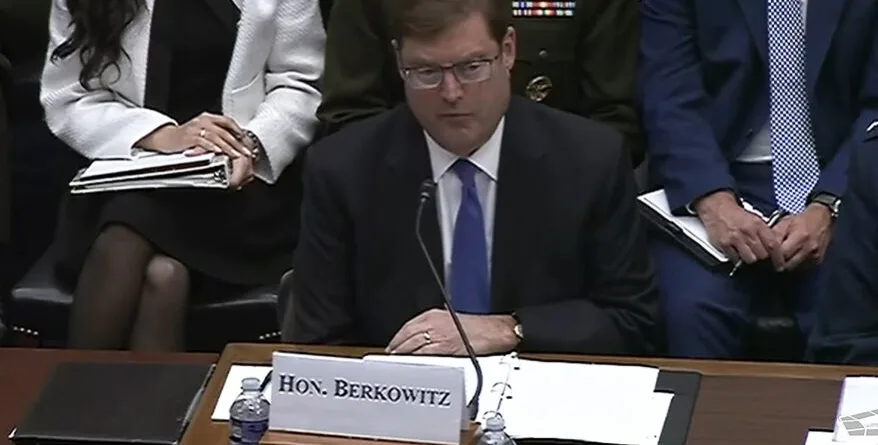
The US Department of Defense (Pentagon), the heart of the global defense architecture, is witnessing a disruptive management change that will directly impact space policies and strategic orbital operations. At this sensitive time when global power competition is rapidly shifting to sub-orbital and space layers, this seat change in the critical unit opens the doors to a new era in Washington's military space vision. While space is no longer just a peaceful layer containing telecommunication and intelligence satellites, but is transforming into a strategic battlespace where potential conflicts will first ignite, this leadership move in the Pentagon's department is being closely monitored by allies and rival actors.
Intelligence-Focused Leadership and New Strategic Priorities
The deep intelligence background and critical congressional experience of the figure taking over with the new appointment are of a nature to fundamentally affect the decision-making mechanisms in the ministry's space policies. Experience gained particularly in Senate intelligence committees will play a direct role in the protection of satellites in space, increasing launch capacities, and developing deterrence strategies against anti-satellite (ASAT) weapons. While the uninterrupted operation of command-and-control, early warning, and precision-guidance systems in the modern battlespace depends entirely on the security of space assets, how the new administration will establish this delicate balance has aroused great curiosity in defense circles.
Sponsor AdPromote Your Defense Brand Globally Across 6 Languages
Reach military procurement officers, defense contractors, and AI (GEO/AEO) search engines in 6 languages.
Technological Integration and Orbital Architecture
Defense industry analysts predict that this new era in the Pentagon's space policies will accelerate integration with commercial space actors and the security of multi-layered satellite constellations. The transition process to distributed, flexible, and redundant micro-satellite architectures in orbit, instead of traditional large and costly satellites, may gain momentum with this leadership change. Budget and operational priorities are expected to be re-mapped, particularly in hypersonic missile tracking and Space Domain Awareness projects.
Conclusion and Future Perspective
This administrative transformation in the Pentagon's space policy office is one of the clearest indicators of the US's effort to maintain its global superiority in the space battlespace. In the upcoming period, the militarization of space, orbital security, and joint space operations to be conducted with allied countries will be the heaviest files on this new cadre's desk. In this process where geopolitical competition extends into the depths of space, every strategic step Washington takes carries the potential to shake global military balances.