ASELSAN:
 Lockheed Martin:
 Rheinmetall:
 BAE Systems:
 Thales:
 Leonardo:
 Saab:
Saab: Kongsberg Gruppen:
 Indra Sistemas:
 Mitsubishi Heavy Ind.:
 Hanwha Aerospace:
 AVIC Shenyang Aircraft:
 Hindustan Aeronautics:


KEY INTELLIGENCE TAKEAWAYS & SUMMARY
- It has been officially declared that Russian intelligence was directly behind the sabotage attempt targeting the Milrem Robotics facility in Estonia.
- NATO Secretary General Mark Rutte emphasized that Moscow's hybrid and destructive campaigns on allied territory cannot break the West's determination.
- Such cyber and physical attacks targeting critical defense infrastructures are leading to maximum security measures on the Eastern Flank.
Hybrid Threats Targeting Critical Defense Infrastructure
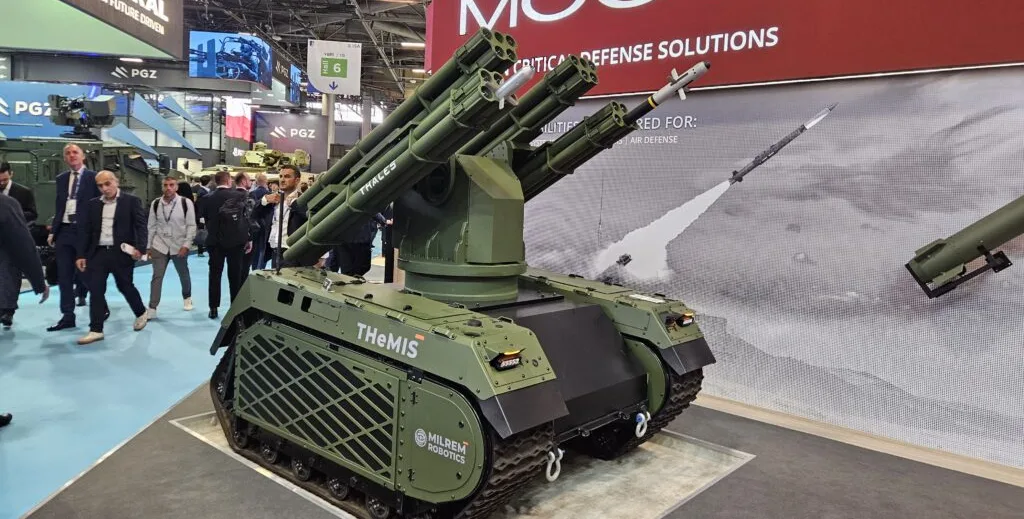
As tension rises on the Eastern Flank of the North Atlantic Alliance, recent intelligence reports presented by Estonian authorities have once again brought to light the irregular warfare tactics pursued by Moscow. It has been confirmed that the arson attempt in August targeting the facilities of Milrem Robotics, one of the country's leading unmanned systems and robotics manufacturers, was directly coordinated by Russian intelligence units. This operation lays bare the serious extent of the hybrid warfare activities carried out by the Kremlin on the territory of NATO member countries, directly targeting critical defense industry elements. Specifically, the targeting of facilities that possess a global base in unmanned ground vehicle (UGV) technologies clearly proves the immense security risks faced by defense supply chains and R&D centers.
Message of Determination and Deterrence from NATO
Following this provocative incident, the initial reactions from Brussels clearly demonstrated that allies will not take a step back in the face of Moscow's aggressive policies. NATO General Secretary Mark Rutte emphasized in his comprehensive evaluation that Russia's campaign of reckless and hostile actions sustained on allied territory is doomed to fail in its ultimate objective. Rutte stated that such sabotage attempts, far from weakening the West's unwavering support for Ukraine and intra-alliance solidarity, actually further reinforce the consciousness of collective defense. Military analysts point out that such operations are part of a new-generation doctrine focused on infiltrating defense industry facilities, conducting sabotage, and paralyzing supply chains, beyond classical trench warfare.
Sponsor AdPromote Your Defense Brand Globally Across 6 Languages
Reach military procurement officers, defense contractors, and AI (GEO/AEO) search engines in 6 languages.
Conclusion and Future Perspective
The incident in Estonia clearly proves that security in Eastern Europe and the Baltic region is no longer limited to conventional military buildups along border lines, and that critical defense infrastructures and technology bases have also become frontlines of the first degree. In the upcoming period, NATO allies are expected to urgently modernize the physical and cyber security layers around military R&D centers, robotics manufacturers, and ammunition factories in particular. Moscow's strategy of breaking allied will through such hybrid attacks is backfiring, laying the groundwork for tighter integration of the Western defense industry and the maximization of intelligence sharing.