ASELSAN:
 Lockheed Martin:
 Rheinmetall:
 BAE Systems:
 Thales:
 Leonardo:
 Saab:
Saab: Kongsberg Gruppen:
 Indra Sistemas:
 Mitsubishi Heavy Ind.:
 Hanwha Aerospace:
 AVIC Shenyang Aircraft:
 Hindustan Aeronautics:


KEY INTELLIGENCE TAKEAWAYS & SUMMARY
- Russia does not categorically rule out the transfer of the S-400 systems in Turkey's possession to third countries, but conditions this on strict political and legal guarantees.
- While end-user certificates legally mandate Moscow's approval, the primary concern is the transfer of the systems to conflict zones such as Ukraine.
- The statements from the Ministry of National Defense and the Kremlin confirmed that the process was conducted on the basis of a "super sensitive" diplomacy and strategic negotiation axis.
S-400 Impasse in Strategic Inventory and New Diplomacy Axis
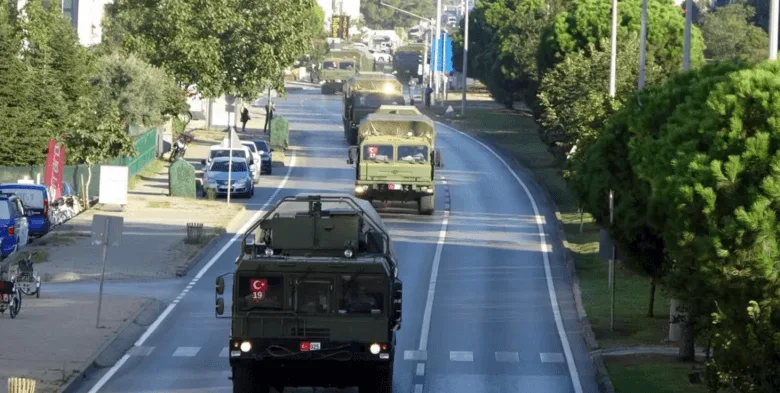
<p>The future of the S-400 Long-Range Regional Air and Missile Defense Systems, one of the most sensitive and geopolitically debated topics in the global defense architecture, has entered a new phase with highly critical statements coming from Moscow. The possibility of the transfer or sale of the systems to a third country—frequently brought to the agenda on United Nations platforms and international summits—is being closely monitored not only along the Ankara-Moscow axis, but also on the Washington and Brussels lines. Recent remarks by Russian Foreign Minister Sergey Lavrov have sparked intense analysis within defense circles regarding whether a tactical softening has occurred in Moscow's rigid stance on this issue.</p>
The status of the systems in Turkey's inventory, which have caused diplomatic tensions with allied countries since the procurement process, is based on the 'End-User Certificate' mechanism, which is the most basic rule of international arms trade. Due to legal and international agreements, it is made impossible to transfer such strategic weapon systems to third parties without the consent and approval of the country to which they were exported. While the Kremlin administration has repeatedly emphasized this legal binding in its previous statements, recent diplomatic signals theoretically suggest that there may be a way out, but it is clearly shown that this is subject to very strict and rigid conditions.
Sponsor AdPromote Your Defense Brand Globally Across 6 Languages
Reach military procurement officers, defense contractors, and AI (GEO/AEO) search engines in 6 languages.
Technical Capacity and Maritime Balance
The potential transfer of S-400 systems to a third country is not merely a legal approval process, but also directly concerns regional air defense balances and global arms transfer security protocols. Moscow closely monitors examples where Western countries globally transfer ammunition and equipment procured from Asia, Africa, and the Middle East ultimately to Ukraine. In this context, Russian foreign policy openly expresses concern that the S-400s in Turkey's possession might face a similar fate. As Lavrov emphasized, for the transfer process to be paved, the requesting country is required to provide a one-hundred percent guarantee that the systems will under no circumstances be dispatched to a third conflict zone or to Ukraine.
This situation reveals how complex and multi-layered diplomatic negotiations the process requires, even in scenarios where Gulf countries such as the United Arab Emirates (UAE) are mentioned as potential buyers. Turkey's military authorities and officials of the Ministry of National Defense, in their official assessments on the matter, state that the process has been addressed comprehensively and that it will be shared with the public if concrete developments occur. On the Washington front, while Turkey's not actively using the systems or completely removing them from inventory has long been voiced as a strategic expectation, Ankara's room for maneuver within its national interests and international agreements compels a rational balance policy.
<h2>Conclusion and Future Perspective</h2>
As a result, the future of the S-400 systems in Turkey's possession appears far from being a simple logistical or commercial transfer that could be resolved in the short term. Moscow's imposed 'assurance and guarantee' condition, while theoretically not preventing the systems from changing hands, clearly demonstrates in practice how high the political criteria being sought are. In the coming period, Ankara's multidimensional defense diplomacy, its strategic relations with allies, and the legal limits of the original supply contract signed with Russia will continue to be the key factors determining how this complex knot will be untied. Defense industry analysts anticipate that every step will be taken with extreme caution due to the matter containing both technical sensitivities and geopolitical risks.