ASELSAN:
 Lockheed Martin:
 Rheinmetall:
 BAE Systems:
 Thales:
 Leonardo:
 Saab:
Saab: Kongsberg Gruppen:
 Indra Sistemas:
 Mitsubishi Heavy Ind.:
 Hanwha Aerospace:
 AVIC Shenyang Aircraft:
 Hindustan Aeronautics:


KEY INTELLIGENCE TAKEAWAYS & SUMMARY
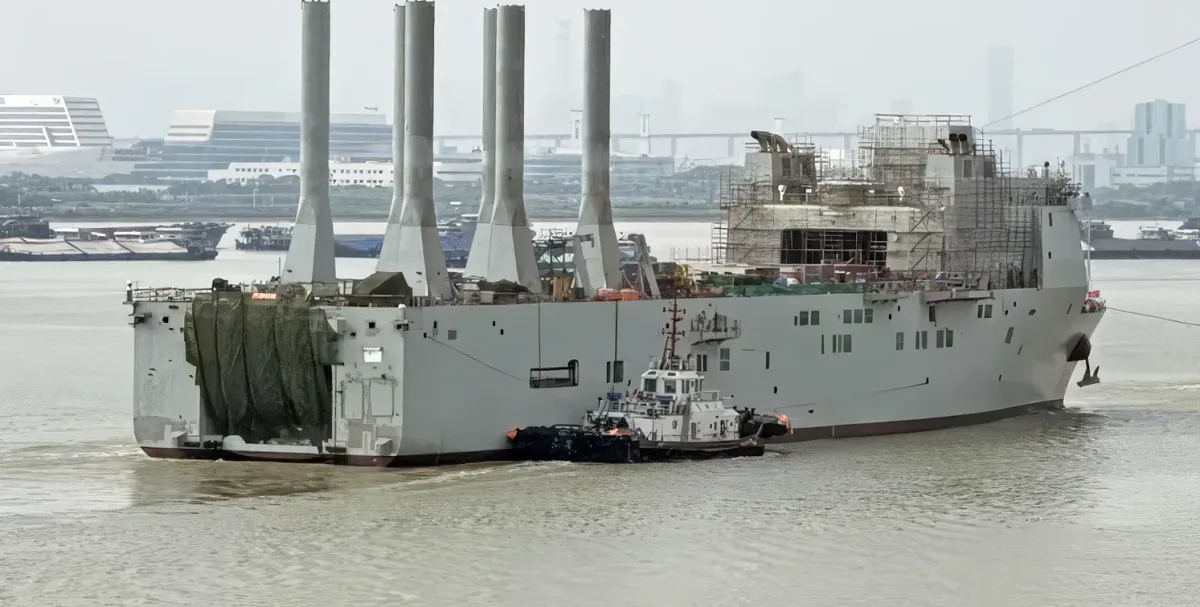
- China, after the first prototype in Shanghai, is preparing to submerge the second unmanned underwater vehicle (UUV) built in Guangzhou, which is almost completed, into the water.
- New platform, compared to the first ship, was designed as a modular structure with a silhouette three times more compact and six integrated crane/elevator towers.
- The ship, including Extra Large Unmanned Underwater Vehicles (XLUUV), among many autonomous platforms, is communicating from very distant areas far from the coast, creating a strategic asymmetric threat against the US and allies.
- While the US Navy does not yet have similar specialized launch and recovery main vessels, China's rapid expansion of this fleet demonstrates that it has become a decisive advantage in anti-submarine warfare doctrine.
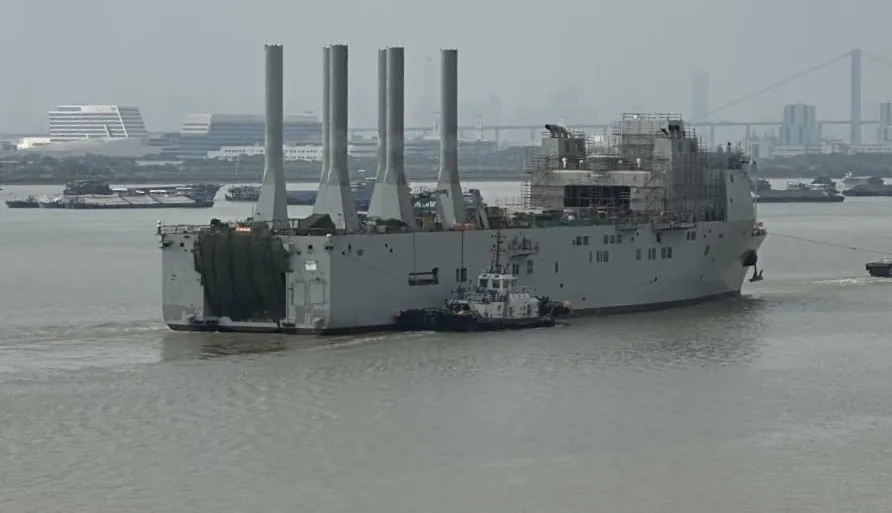
As the role of unmanned systems in global submarine warfare becomes increasingly critical, the People's Liberation Army Navy (PLAN) continues to fortify its doctrine in this field with concrete platforms. Shortly after the first unusual platform was detected at the Hudong-Zhonghua Shipyard on Changxing Island off Shanghai, a second unmanned submarine mothership, nearly at the stage of completion, has come to light in southern China. Built at the Longxue Island facilities in Guangzhou, this new ship clearly reveals that Beijing is transforming its unmanned underwater vehicle (UUV) operations from an experimental pursuit into a full-fledged fleet concept.
Advanced Lift Towers and Modular Architecture
The new platform taking shape at the Guangzhou Shipyard International (GSI) facilities largely reflects the same design philosophy as the first version built in Shanghai. However, it is observed that the new vessel has dimensions approximately one-third more compact compared to its predecessor and that certain optimizations have been made to its hull lines. In place of the 12 lifting towers featured on the first platform, six heavy-load pylons are deployed in this variant. These towers are tasked with safely launching autonomous underwater vehicles weighing tons in open-sea conditions, recovering them from the sea, and transferring them between decks within the vessel.
Sponsor AdPromote Your Defense Brand Globally Across 6 Languages
Reach military procurement officers, defense contractors, and AI (GEO/AEO) search engines in 6 languages.
Asymmetric Naval Capability in Open Seas
<p>Unmanned underwater vehicles (XLUUV) are taking a revolutionary role in modern naval operations. These platforms can be used across a wide spectrum, from high-resolution mapping of the sea floor to passive/active tracking of enemy submarines, from covert mine laying or mine-clearing missions to directing fire on critical coastal targets. Specialized mother ships capable of discussing such vehicles thousands of miles away from Chinese coasts are providing China's government with a significant asymmetric deterrent deep in the Pacific and even within the reach of direct enemy strategic bases.</p>
Currently, no Western navy, including the US Navy, has a similar purpose-built mothership in its inventory capable of operationally launching and recovering (LARS) large UUV fleets. While the Washington administration is attempting to test this concept through modular cargo ships and existing amphibious platforms, China's construction of purpose-built hulls in two different tonnages creates a critical difference in terms of operational maturity.
<h2>Conclusion and Future Perspective</h2>
Simultaneously produced at two separate shipyards, these UUV motherships symbolize Beijing's determination to transform autonomous underwater technologies into a primary combat element. The emergence of the second vessel demonstrates that the concept is not merely a temporary R&D trial; on the contrary, it represents the initial steps toward a multi-layered task force that could evolve into mass production. In the coming period, as the operational tests of these vessels are completed and they join the fleet, the autonomous submarine patrol lines established by the People's Liberation Army Navy beyond the First and Second Island Chains will radically change all rules of engagement in the Indo-Pacific region.