ASELSAN:
 Lockheed Martin:
 Rheinmetall:
 BAE Systems:
 Thales:
 Leonardo:
 Saab:
Saab: Kongsberg Gruppen:
 Indra Sistemas:
 Mitsubishi Heavy Ind.:
 Hanwha Aerospace:
 AVIC Shenyang Aircraft:
 Hindustan Aeronautics:


KEY INTELLIGENCE TAKEAWAYS & SUMMARY
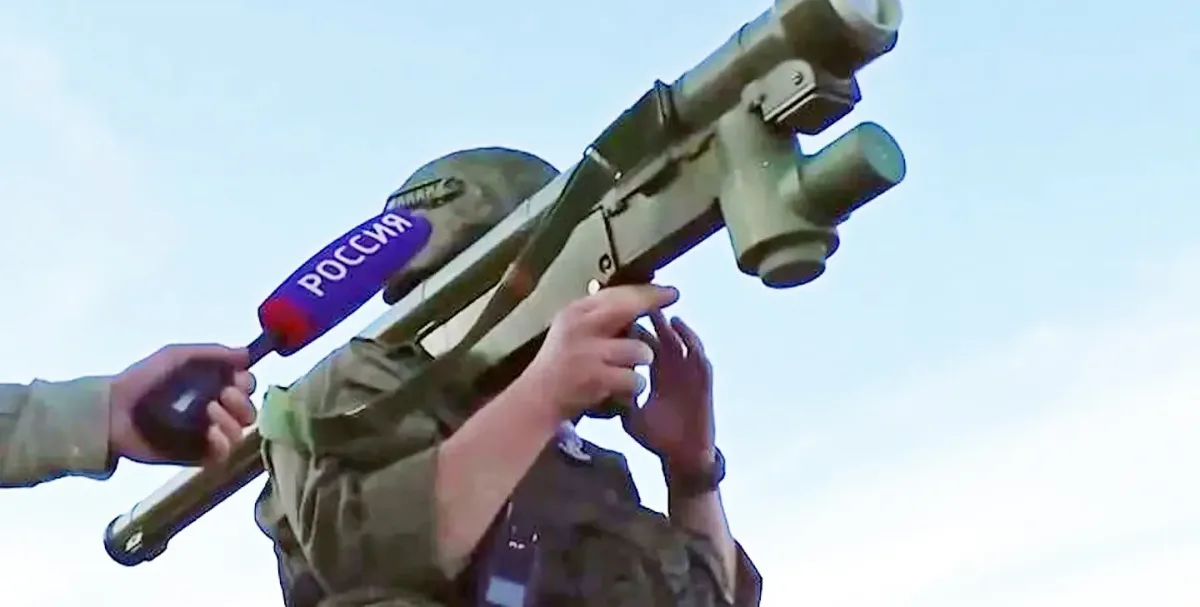
- During exercises in the Rostov region, Russian troops were filmed carrying a mysterious shoulder-fired system that does not resemble standard Russian-made MANPADS.
- Visual analysis reveals that the weapon's design features bear striking similarities to China's QW series or Iran's Misagh-3 systems.
- It is noted that military-technical cooperation between Moscow, Beijing, and Tehran deeply affects informal arms and ammunition supply networks on the front lines.
Surprise Encounter on the Front Line: The Origin of the Mysterious Weapon
The capture on camera of a shoulder-fired air defense system (MANPADS) not belonging to the Russian army's inventory during military exercises in the Rostov region, which borders Ukraine, has sparked widespread repercussions in global defense circles. Spotted in exercise footage broadcast by Russian state television covering elements of the 51st Air Defense Division, this unusual system has once again brought into question the limits of the integrated military supply chains Moscow has woven along the Beijing and Tehran axes. The fact that Russian field personnel nicknamed the weapon "Iva," meaning willow in local slang, has increased speculations regarding the system's non-official inventory status and its foreign origin.
Technical Capacity and Field Balances
Detailed visual examinations conducted by military analysts on the launcher tube and sight mechanism indicate that the system shares similarities between the Iranian-made Misagh-3 and the Chinese-origin QW family (specifically QW-18/18A and QW-19 variants). In particular, the box-shaped additional component located at the front of the launcher exhibits a major parallel with the structural architecture of Chinese-designed systems. Considering that Chinese technologies lie at the foundation of Tehran's Misagh series as well, the possibility that the weapon was directly imported from China or is an intermediate model shipped via Iran is gaining traction. Meanwhile, the scenario that the Russian defense industry may have modified this design using domestic capabilities to produce it in limited numbers also remains on the table.
Sponsor AdPromote Your Defense Brand Globally Across 6 Languages
Reach military procurement officers, defense contractors, and AI (GEO/AEO) search engines in 6 languages.
Conclusion and Future Perspective
Since the beginning of the conflicts in Ukraine, Moscow has elevated its military-technical cooperation with partners in Asia and the Middle East to an unprecedented level in order to bypass the West's heavy economic and technological embargoes. Multi-dimensional supply mechanisms established with China and comprehensive strategic partnership agreements signed with Iran are expanding to encompass not only unmanned aerial vehicles or microelectronic components, but also critical ammunition transfers. This mysterious MANPADS incident surfacing in Rostov clearly proves how complex the logistical footprint of international arms trafficking, third-party intermediary companies, and Asian suppliers has become in modern battlefields.