ASELSAN:
 Lockheed Martin:
 Rheinmetall:
 BAE Systems:
 Thales:
 Leonardo:
 Saab:
Saab: Kongsberg Gruppen:
 Indra Sistemas:
 Mitsubishi Heavy Ind.:
 Hanwha Aerospace:
 AVIC Shenyang Aircraft:
 Hindustan Aeronautics:


KEY INTELLIGENCE TAKEAWAYS & SUMMARY
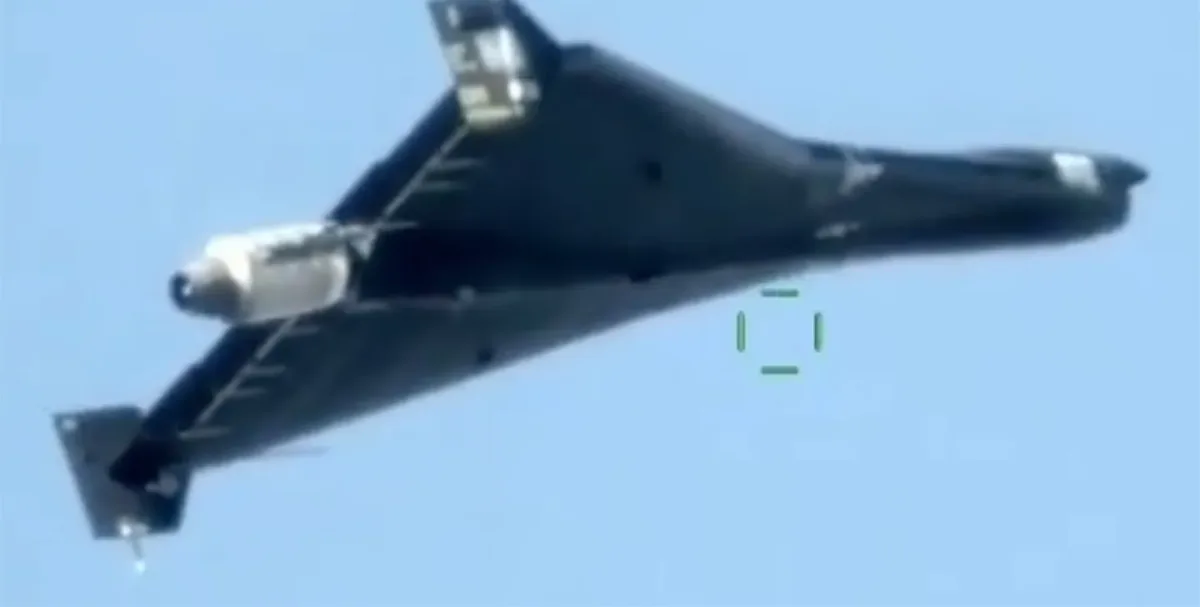
- The Geran-4 features an aerodynamic fuselage structure specifically designed for high-speed flights and high-G maneuvers.
- Thanks to its turbojet engine, the UAV can reach an altitude of 8 kilometers and achieve speeds between 450 and 500 kilometers per hour.
- It can be controlled remotely in real-time by operators thanks to advanced optical cameras and GSM modem support.
Evolution of Jet-Powered UAVs and Tactical Shift
Technical Capacity and Balance on the Battlefield
Examinations conducted on recently recovered debris have clearly revealed the engineering details and operational superiority of these jet-powered platforms. The inadequacy of older model airframes at high speeds and high-G maneuvers led manufacturers to design a completely new aerodynamic concept. Thanks to integrated air intakes, a reinforced structural skeleton, and minimized fuselage protrusions, the drag coefficient was reduced to a minimum. The most critical threshold was the integrated turbojet engine. This engine architecture allows the platform to cruise at a high altitude of 8 kilometers, which is twice the height that older-generation propeller-driven systems could reach.
A cruising speed ranging from 450 to 500 kilometers per hour makes it extremely difficult for these munitions to be shot down by classical anti-aircraft and machine gun-based mobile squads. Furthermore, the avionics and optical packages of the munition have undergone a remarkable modernization process. Cameras featuring daytime, night vision, and infrared modes offer 10x optical and up to 32x digital zoom capabilities. This allows operators to clearly observe the terrain from thousands of meters above. Moreover, thanks to GSM modems and SIM card technology connecting to local cellular networks, real-time data streaming and route tracking can be provided from command centers on Russian territory.
Sponsor AdPromote Your Defense Brand Globally Across 6 Languages
Reach military procurement officers, defense contractors, and AI (GEO/AEO) search engines in 6 languages.
Conclusion and Future Perspective
The rapid adaptation of the jet-powered kamikaze UAV concept on the battlefield necessitates a new paradigm shift in air defense strategies. High altitude, increased speed, and advanced optical-electronic warfare integration call the cost-effectiveness ratio of standard air defense missiles into question, while increasing the urgency of alternative solutions such as electronic jamming and directed-energy weapons. This technological competition taking place in the skies of Ukraine clearly proves that low-cost yet high-performance autonomous systems will play a dominant role in the conflict environment of the future.