ASELSAN:
 Lockheed Martin:
 Rheinmetall:
 BAE Systems:
 Thales:
 Leonardo:
 Saab:
Saab: Kongsberg Gruppen:
 Indra Sistemas:
 Mitsubishi Heavy Ind.:
 Hanwha Aerospace:
 AVIC Shenyang Aircraft:
 Hindustan Aeronautics:


KEY INTELLIGENCE TAKEAWAYS & SUMMARY
- Germany will execute a historic transformation in its military structure by establishing the country's first dedicated unmanned aerial vehicle regiment by 2027.
- The new regiment will integrate reconnaissance, strike, electronic warfare, and unmanned ground vehicles (UGVs) under a single command structure.
- The unit will be deployed within the 10th Armored Division and will directly draw from conflict experiences in Ukraine.
- The project will be practically implemented between 2026 and 2027 within the scope of the modernization of light infantry, reconnaissance, and armored units.
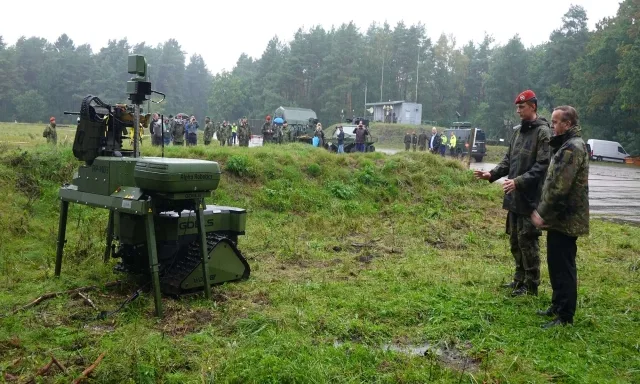
Shaking changes in the global security architecture and the harsh lessons presented by modern conflict areas are forcing Europe's leading armies into radical structural reforms. German Defense Minister Boris Pistorius announced during a strategic statement made during an exercise at the Bergen military training area in Lower Saxony that the Berlin administration's first dedicated unmanned aerial vehicle regiment in its military history will be operationalized by 2027. This move is evaluated as the most concrete indicator of the Bundeswehr's (Federal Armed Forces of Germany) effort to move away from traditional warfare doctrine and adapt to the digitized and autonomized battle scenes of the future.
Technical Capacity and Balances on the Field
This special regiment, which will be newly established and allocated to the divisional units of the 10th Armored Division, will consolidate the scattered capabilities of the German Army in the field of unmanned systems under a single roof. The structure, which will not be limited only to air elements, will cover a wide range from micro-reconnaissance drones operating at very short and close ranges to medium and long-range strike systems. Furthermore, unmanned ground systems (UGVs), which are an indispensable element of the modern battlefield, and a comprehensive electronic warfare (EW) company will be integrated into the operational ecosystem of the regiment.
Sponsor AdPromote Your Defense Brand Globally Across 6 Languages
Reach military procurement officers, defense contractors, and AI (GEO/AEO) search engines in 6 languages.
Under the guidance of Army Inspector General Christian Freuding, infrastructure works carried out within light infantry, reconnaissance, and armored units will gain momentum between 2026 and 2027. The primary goal of this new regiment is not to eliminate the local UAV uses of other combat elements at the division level, but rather to create a complementary superior intelligence and strike force center at the strategic and operational level.
Lessons of the Ukraine War and Strategic Vision
The biggest catalyst for German military planners in making this radical decision was undoubtedly the painful and priceless lessons learned from the conflict environment in Ukraine. Data sovereignty, uninterrupted network-centric warfare capability, rapid technological iteration cycles, and the operational effectiveness of autonomous systems have been placed at the top of Berlin's modernization priorities. Strategic cooperation and information flow with Ukraine allow the German defense industry to test real battlefield data and revise procurement processes in this direction.
Conclusion and Future Perspective
Germany's UAV regiment project targeted for 2027 constitutes much more than the establishment of a tactical unit; it forms the backbone of future battle readiness concepts for European land armies. This new model, where traditional armored mechanized brigades are blended with autonomous systems and electronic warfare elements, is closely monitored by other NATO allies. With this step, the Berlin administration aims not only to increase its own defense capacity but also to be among the actors setting the unmanned combat standards of the future.