ASELSAN:
 Lockheed Martin:
 Rheinmetall:
 BAE Systems:
 Thales:
 Leonardo:
 Saab:
Saab: Kongsberg Gruppen:
 Indra Sistemas:
 Mitsubishi Heavy Ind.:
 Hanwha Aerospace:
 AVIC Shenyang Aircraft:
 Hindustan Aeronautics:


KEY INTELLIGENCE TAKEAWAYS & SUMMARY
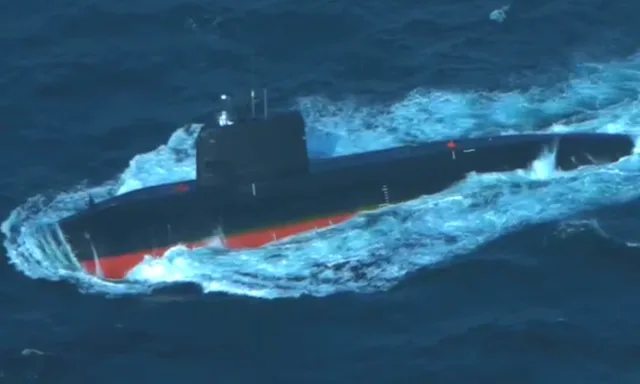
- The PNS/M Hangor submarine successfully hit the target with a long-range anti-ship missile in its first live missile test conducted shortly after entering the inventory.
- This platform, the first unit of the 8-ship procurement program, features China's advanced Air-Independent Propulsion (AIP) system and high stealth characteristics.
- While some of the submarines built within the scope of the project are produced in China, the remaining platforms are being built domestically at the Karachi Shipyard facilities through technology transfer.
A New Breath to Submarine Warfare: PNS/M Hangor Takes the Stage
In line with its strategy to modernize its submarine combat capability, the Pakistan Navy continues to alter regional power balances with next-generation platforms added to its inventory. Most recently, the PNS/M Hangor, the first Hangor-class submarine in the navy's inventory, successfully carried out its first live missile firing test as part of exercises conducted in the strategic waters of the Northern Arabian Sea. This operational test, closely monitored by the navy command echelon, certified the combat readiness level of the platform's offensive capabilities.
According to details shared by official authorities, the submarine launched a long-range anti-ship cruise missile, precisely destroying the designated surface target. This critical threshold, personally monitored at sea by Naval Chief Admiral Naveed Ashraf, opened the doors to a new era in Pakistan's underwater attack and deterrence doctrine. Experts evaluate the execution of such a complex live-firing test immediately after delivery as a significant success in terms of the crew's training level and the maturity of the platform's integrated systems.
Sponsor AdPromote Your Defense Brand Globally Across 6 Languages
Reach military procurement officers, defense contractors, and AI (GEO/AEO) search engines in 6 languages.
Technical Capacity and Balances in the Field
Built within the framework of a comprehensive procurement agreement signed between Pakistan and China, the eight Hangor-class submarines form the backbone of the country's naval modernization program. The PNS/M Hangor, which was taken over with a ceremony held at Sanya Port in China's Hainan province and subsequently transferred to the port of Karachi, was instantly integrated into the navy's operational strength. At the forefront of the platform's most striking technical features is the Air-Independent Propulsion (AIP) system, which maximizes underwater endurance and stealth.
Thanks to AIP technology, the Hangor class can stay underwater much longer compared to traditional diesel-electric submarines, allowing it to perform strategic patrol missions while keeping its acoustic signature to a minimum. Equipped not only with cruise missile capabilities but also with heavy torpedoes, minelaying capability, and highly advanced sonar/underwater detection sensors, these platforms are of a nature to shake the power balances in the Indian Ocean and the Arabian Sea. Furthermore, the fact that the first four ships of the project are being built in China and the remaining four ships are being built at the Karachi Shipyard & Engineering Works facilities in Karachi through technology transfer directly serves Pakistan's vision of localization in the defense industry.
Conclusion and Future Perspective
The eight-ship Hangor-class submarine procurement program, planned to be completed between 2022 and 2028, completely transforms the Pakistan Navy's underwater warfare fleet not only quantitatively but also qualitatively. This successful first missile test carried out by the PNS/M Hangor proves that the project is progressing in accordance with the planned schedule and with a high level of operational readiness. These developments, which are a critical threshold for regional maritime security, highlight the goal of reducing foreign dependency in submarine technologies and the effectiveness of joint production models. With all platforms entering the inventory in the coming years, the Pakistan Navy's strategic deterrence in the Indian Ocean will increase exponentially.