ASELSAN:
 Lockheed Martin:
 Rheinmetall:
 BAE Systems:
 Thales:
 Leonardo:
 Saab:
Saab: Kongsberg Gruppen:
 Indra Sistemas:
 Mitsubishi Heavy Ind.:
 Hanwha Aerospace:
 AVIC Shenyang Aircraft:
 Hindustan Aeronautics:


KEY INTELLIGENCE TAKEAWAYS & SUMMARY
- The agreement is not a hijacking of the NIH budget, but a legal and efficient mechanism utilizing defense procurement infrastructure.
- The primary objective is to overcome the "valley of death" barrier in transitioning laboratory discoveries to mass production.
- Civilian public health priorities and research such as dementia and cancer are not adversely affected by this memorandum.
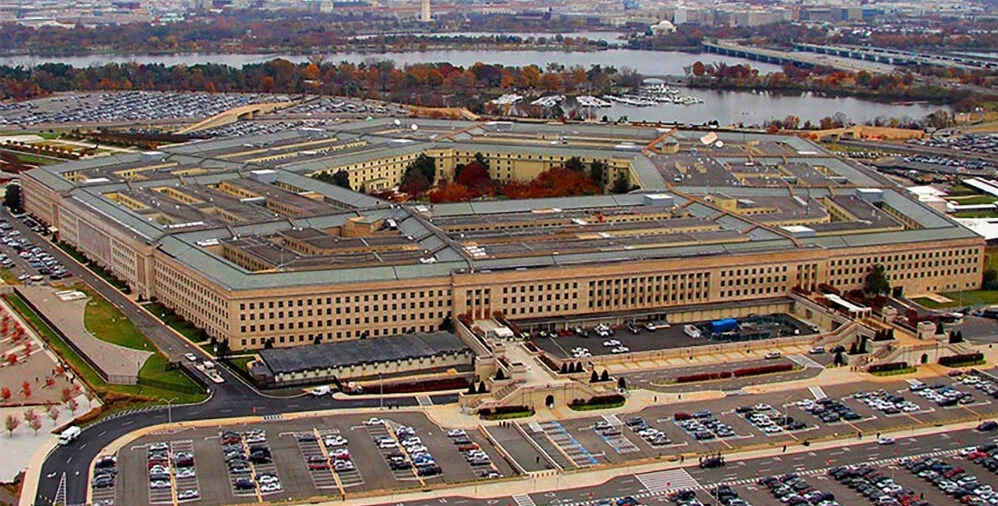
Recently causing widespread resonance in defense and biotechnology circles, the Interagency Agreement (IAA) between the Department of Defense and the National Institutes of Health (NIH) has sparked misunderstandings and debates in the public eye. Some media reports framed this move as the military bureaucracy seizing and redirecting funds from massive research budgets. However, these claims are far from the technical and legal reality of the current situation. While there are legitimate concerns regarding the current administration's budget policies, the cooperation in question is not a hostile takeover; on the contrary, it is the activation of a highly efficient and legal procurement mechanism.
In today's complex geopolitical and asymmetric threat environment, it is vital that the U.S. military is fully prepared against Chemical, Biological, Radiological, and Nuclear (CBRN) threats. The step taken in this direction is precisely a strategic move that requires government agencies to work in an integrated manner.
Sponsor AdPromote Your Defense Brand Globally Across 6 Languages
Reach military procurement officers, defense contractors, and AI (GEO/AEO) search engines in 6 languages.
Strategic Procurement Infrastructure and Legal Basis
Signed between the Department of Defense Office of the Deputy Assistant Secretary of Defense for Chemical and Biological Defense and the NIH directorship, this memorandum provides a streamlined framework aimed at accelerating the development of medical countermeasures (MCMs), advanced diagnostic systems, and personal protective equipment (PPE). The agreement has been shaped within the framework of Economy Act provisions and relevant legal authorities, allowing the NIH to access the Department of Defense's specialized procurement infrastructure.
The critical point here is that the NIH is neither giving up its own mission nor being handed a blank check. The NIH utilizes the department's procurement network and Other Transaction Authority mechanisms to execute research orders that it has requested and funded. Under the Project Bioshield Act of 2004, Congress granted the National Institute of Allergy and Infectious Diseases (NIAID) expedited research and facilitated procurement authorities against threats across the CBRN spectrum.
Overcoming the Valley of Death and Military Preparedness
One of the greatest bottlenecks in the field of biodefense has never been a lack of basic science. The real problem is the dangerous transitional zone referred to in defense literature as the "valley of death," where promising laboratory discoveries fail to transform into scalable and manufacturable medical countermeasures. The NIH excels in foundational discoveries and scientific research; however, translating a laboratory finding into a mass-applicable treatment, rapid diagnostic kit, or field-deployable protective equipment requires rigorous program management, industrial base coordination, and specialized contracting mechanisms.
The scope of the agreement has been determined with surgical precision, explicitly safeguarding civilian public health interests. Civilian public health priorities such as dementia, cancer, or nutrition are not harmed by this process. The established governance structure mandates mutual consent for joint agendas, while the NIH retains final say on civilian public health product requirements. Simultaneously, the Pentagon maintains ultimate authority over warfighter protection and tactical deployment needs, ensuring that civilian and military priorities complement one another.
Conclusion and Future Perspective
This strategic agreement between the Pentagon and the NIH is not a bureaucratic turf war, but a rational bridge aimed at protecting national security and public health against future CBRN crises. Closing the gap between foundational scientific research and industrial scaling, this model stands as a concrete example of maximizing the integration of state capacity against future battlefield and biological threats. Acting with shared wisdom by defense and health authorities directly reinforces both military deterrence and national resilience.