ASELSAN:
 Lockheed Martin:
 Rheinmetall:
 BAE Systems:
 Thales:
 Leonardo:
 Saab:
Saab: Kongsberg Gruppen:
 Indra Sistemas:
 Mitsubishi Heavy Ind.:
 Hanwha Aerospace:
 AVIC Shenyang Aircraft:
 Hindustan Aeronautics:


KEY INTELLIGENCE TAKEAWAYS & SUMMARY
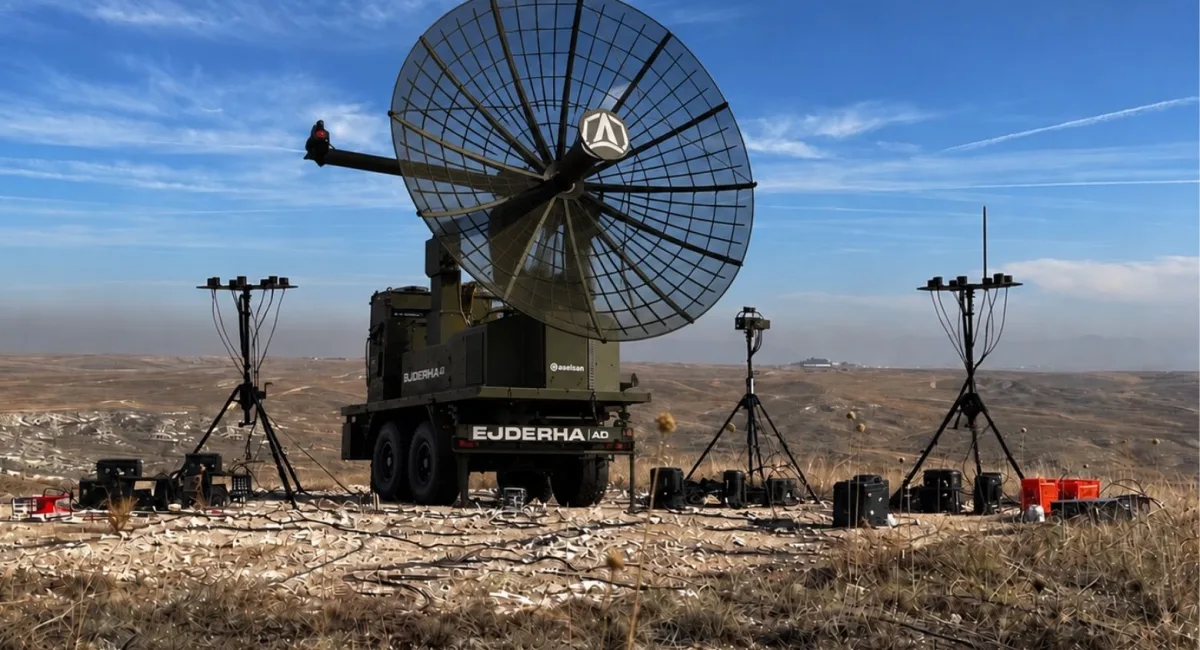
- Tested at ASELSAN's Gölbek Firing and Test Center, the KANGAL FPV 100 and EJDERHA AD 210 systems constitute a critical layer against drone threats in the modern asymmetric battlefield.
- EJDERHA AD 210 neutralizes mini and micro UAVs thanks to its high-power electromagnetic wave technology, while also forming an important component of the Steel Dome air defense architecture.
- Featuring AI-supported detection and a software-defined programmable jamming architecture, the KANGAL FPV 100 provides 360-degree protection for critical facilities and military convoys.
Changing Threat Paradigm and Electronic Defense in the Modern Battlefield
The proliferation of asymmetric elements and low-cost mini/micro UAV systems in today's combat environment has fundamentally altered traditional air defense architectures. The intensive use of FPV drones for attack and reconnaissance purposes in the operational scene in particular forces armies to develop layered and flexible electronic warfare solutions. In this context, ASELSAN, the global giant of the Turkish defense industry, reinforces its presence in this field with next-generation systems that prove their superior capabilities in field tests. In the recent activities carried out at the Gölbek Firing and Test Center, two critical systems that strengthen the protection shield of military units and critical infrastructures were tested in all aspects.
Technical Capacity and Field Balances
EJDERHA AD 210, one of the systems playing a leading role in the test processes, draws attention with its capability to neutralize mini and micro UAV threats using high-power electromagnetic wave technology. Serving as an integrated component of the Steel Dome air defense project, this platform provides effective protection against multi-wired FPV drones, fixed-wing systems, and aircraft with internal combustion engines. Capable of concentrating on a specific point with narrow-beam technology or keeping a wide field under control with scanning mode, EJDERHA AD 210 reduces the operational margin of error to zero by blending radar-supported target detection and electro-optical tracking. The system neutralizes threats by producing effects such as suppression and rebooting on electronic circuits.
Sponsor AdPromote Your Defense Brand Globally Across 6 Languages
Reach military procurement officers, defense contractors, and AI (GEO/AEO) search engines in 6 languages.
Appearing in the same test scenarios and described as a 'Drone Hunter', KANGAL FPV 100 was designed for mobile or stationary defense purposes, especially in military bases, headquarters, ceremonial areas, and convoy crossings. Targeting the command and video transmission frequencies of FPV drones in addition to global satellite-based navigation systems such as GPS, GLONASS, Galileo, and BeiDou, the system stands out with its AI-supported detection capability. Thanks to its software-based programmable architecture that can be dynamically updated, KANGAL FPV 100 maximizes perimeter security by offering full 360-degree coverage with its omnidirectional antenna configuration.