ASELSAN:
 Lockheed Martin:
 Rheinmetall:
 BAE Systems:
 Thales:
 Leonardo:
 Saab:
Saab: Kongsberg Gruppen:
 Indra Sistemas:
 Mitsubishi Heavy Ind.:
 Hanwha Aerospace:
 AVIC Shenyang Aircraft:
 Hindustan Aeronautics:


KEY INTELLIGENCE TAKEAWAYS & SUMMARY
- The $404 million framework agreement signed between Kongsberg and the US Marine Corps covers procurement and maintenance processes until 2034.
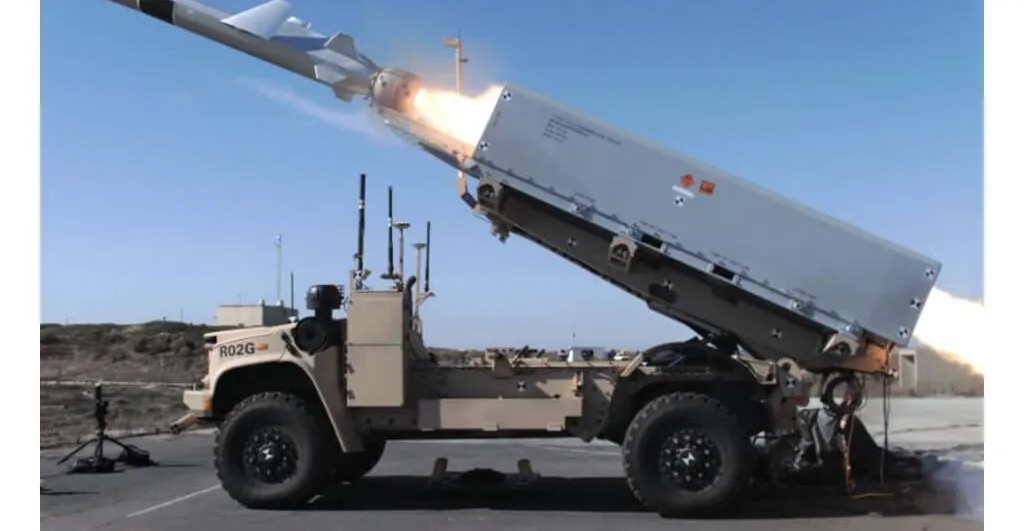
- The system provides a surface-to-sea strike capability by being integrated onto unmanned ROGUE-Fires vehicles within the scope of the NMESIS project.
- The NSM offers high survivability against modern defense systems with its passive seeker head, autonomous target recognition capability, and sea-skimming flight profile.
Norway-based Kongsberg, a leading actor in the global defense industry, has signed a massive procurement and maintenance contract that will radically increase the deterrent capacity of the US Marine Corps (USMC). This strategic memorandum, covering long-term projections, points to the transformation of the American military doctrine, particularly in coastal defense and sea control operations. Experts closely monitoring sectoral dynamics emphasize that this agreement is not merely an ammunition procurement, but also shapes the future of sea denial strategies on a global scale.
Technical Capacity and Field Balances
The signed framework agreement holds a potential financial volume reaching up to $404 million and envisions deliveries lasting until 2034. The agreement encompasses not only the Naval Strike Missile (NSM) ammunition, but also launcher units, advanced fire control systems, and comprehensive logistic maintenance equipment. This structure aims to reinforce the infrastructure of the Marine Littoral Regiments, which operate from dispersed and temporary bases within the US Marine Corps.
Sponsor AdPromote Your Defense Brand Globally Across 6 Languages
Reach military procurement officers, defense contractors, and AI (GEO/AEO) search engines in 6 languages.
Operationally, the system forms the backbone of the US Navy's NMESIS (Navy/Marine Expeditionary Ship Interdiction System) concept. The NSM missile is integrated onto remotely controlled, unmanned ROGUE-Fires platforms. While these unmanned carriers, derived from the Joint Light Tactical Vehicle (JLTV) family, constitute the launcher component, a separate command-and-control vehicle coordinates the firing processes. When examining its technical parameters, the NSM demonstrates high survival and target discrimination success against enemy air and naval defense systems thanks to its passive seeker head, autonomous target recognition capability, and sea-skimming flight profile. Its flexible strike capability against land targets as well as sea targets reinforces the weapon's versatility in the tactical field.
Conclusion and Future Perspective
This long-term cooperation between Kongsberg and the US Marine Corps clearly demonstrates the technological requirements of modern amphibious and coastal combat concepts. In today's combat environment where fixed coastal batteries create vulnerability, hit-and-run tactics supported by highly mobile, network-centric, and unmanned platforms are changing ammunition procurement priorities. The NSM, which will be actively used by the US Navy's Littoral Combat Ships (LCS) and Constellation-class frigates as well as land elements in the coming years, will continue to directly affect power balances in critical geopolitical regions, especially the Indo-Pacific.