ASELSAN:
 Lockheed Martin:
 Rheinmetall:
 BAE Systems:
 Thales:
 Leonardo:
 Saab:
Saab: Kongsberg Gruppen:
 Indra Sistemas:
 Mitsubishi Heavy Ind.:
 Hanwha Aerospace:
 AVIC Shenyang Aircraft:
 Hindustan Aeronautics:


KEY INTELLIGENCE TAKEAWAYS & SUMMARY
- India and South Korea have started re-negotiating the K30 Biho project at the 10th Defense and Logistics Joint Committee meeting.
- Evaluated to have a potential value of approximately $2.5 billion, the project has gained momentum against drone and low-altitude threats on the modern battlefield.
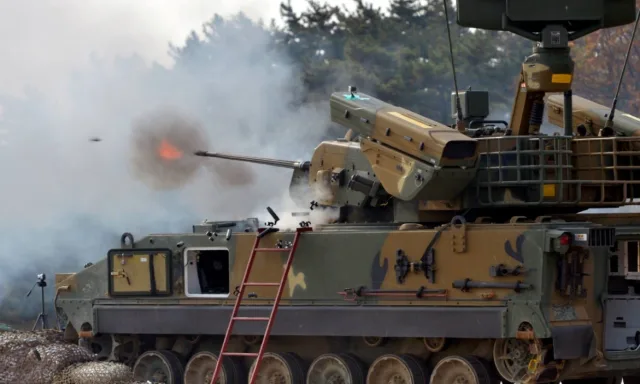
- Produced by Hanwha Aerospace, the Biho system combines twin 30mm automatic cannons and KP-SAM Chiron missiles on a tracked chassis.
- Seoul aims to go beyond mere final product export in its relations with India, targeting joint R&D and technology cooperation.
As supply chains and strategic partnerships are reshaped in the global defense market, remarkable mobility is taking place between two major powers of Asia. During high-level defense talks held between the administrations of New Delhi and Seoul, a critical air defense project—previously suspended due to domestic production-focused policies—has been revived. The 10th Korea-India Joint Defense and Logistics Committee, convened in the capital New Delhi, hosted significant decisions that will deepen military and technological cooperation between the two countries.
Technical Capability and Balances in the Field
At the center of the negotiations, conducted under the co-chairmanship of South Korea's Defense Acquisition Program Administration (DAPA) and India's Department of Defence Production, is the K30 Biho Hybrid low-altitude air defense system developed by Hanwha Aerospace. The increase in asymmetric threats posed by drones, unmanned aerial vehicles, and low-flying attack helicopters on the modern battlefield has driven New Delhi toward mobile air defense solutions. The revival of the project, previously expected to be valued at approximately $2.5 billion, is also directly supported by the sustainability of the K9 howitzers in the Indian Army's inventory and joint maintenance activities.
Sponsor AdPromote Your Defense Brand Globally Across 6 Languages
Reach military procurement officers, defense contractors, and AI (GEO/AEO) search engines in 6 languages.
Built on a tracked platform, the K30 Biho Hybrid system offers an integrated structure featuring twin 30-millimeter automatic cannons and shoulder-launched KP-SAM Chiron (Shingung) surface-to-air missiles. Having a maximum road speed of 65 km/h and an operational range of 500 kilometers, the system is fed by the TPS-830K radar. While this radar can detect targets up to a range of approximately 17 kilometers, the 30mm cannons demonstrate the capability to destroy targets at distances up to 3 kilometers, and the Chiron missiles up to 7 kilometers.
Conclusion and Future Perspective
This strategic rapprochement between the two countries aims to build a broader ecosystem beyond just off-the-shelf product procurement. The parties agreed to revive the defense cooperation roadmap signed in 2020, expand the KIND-X defense innovation platform, and conduct joint R&D activities. This process—joined by giants of the South Korean defense industry such as Hanwha Systems, Korea Aerospace Industries, and Korean Air—signals a long-term technology partnership that will impact power dynamics in the Asia-Pacific region.