ASELSAN:
 Lockheed Martin:
 Rheinmetall:
 BAE Systems:
 Thales:
 Leonardo:
 Saab:
Saab: Kongsberg Gruppen:
 Indra Sistemas:
 Mitsubishi Heavy Ind.:
 Hanwha Aerospace:
 AVIC Shenyang Aircraft:
 Hindustan Aeronautics:


KEY INTELLIGENCE TAKEAWAYS & SUMMARY
- The Matador UAV reaches its target using AI agents such as map matching and visual-inertial odometry without the need for GPS signals.
- A high-level decision mechanism called the Kalman filter processes all data in real time to flawlessly determine the drone's route.
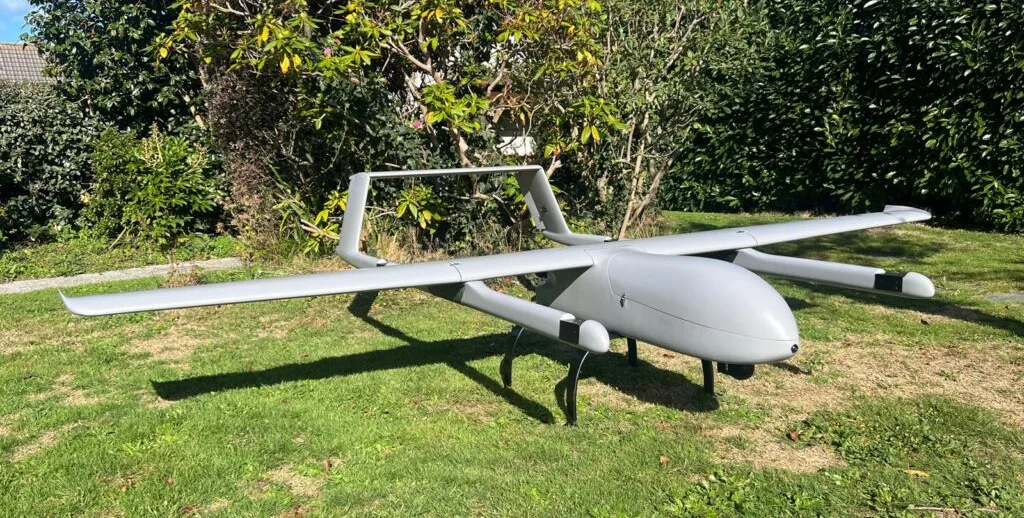
- While the current prototype has a 4-meter wingspan and a 250-kilometer range, development plans target increasing this range to 2,000 kilometers.
- The system provides operational superiority in modern combat theaters where electronic warfare and signal jamming/spoofing activities are intense.
A Breakthrough Development in Electronic Warfare: Striking Without GPS
Algorithm-Focused Navigation and Artificial Intelligence Architecture
The most fundamental feature distinguishing the Matador UAV from its competitors stands out as its advanced software and algorithm layer rather than low hardware costs. The platform simultaneously coordinates multiple AI-based agents to avoid depending on GPS satellites during flight. Among these, visual-inertial odometry and map-matching agents—which compare real-time imagery with pre-loaded maps—are blended with inertial measurement unit (IMU) data. All this complex data flow is supervised by a high-level super-agent called the 'Kalman filter.' This central decision-making mechanism weighs all possible routes and environmental factors in the field, ensuring the drone locks onto its target with the highest precision.
Technical Specifications and Global Market Targets
The prototype, currently in the testing phase, features a 4-meter wingspan and a 250-kilometer operational range. However, engineering teams plan to increase the range to 2,000 kilometers with a larger airframe design in the near future. Possessing the ability to maneuver like an intelligent robot even at low altitudes, Matador is attracting significant interest, particularly from Gulf Cooperation Council member states and the Moroccan military. The manufacturing company is conducting strategic partnership negotiations that include not only product supply but also full technology transfer and local production models.
Sponsor AdPromote Your Defense Brand Globally Across 6 Languages
Reach military procurement officers, defense contractors, and AI (GEO/AEO) search engines in 6 languages.
Conclusion and Future Perspective
The Matador kamikaze UAV project stands as the most concrete proof that countries and startups lacking multi-billion-dollar budgets in the defense industry can achieve asymmetric superiority through the right software and algorithmic approaches. In future conflict environments where GPS signals are completely blinded, munitions equipped with AI-supported autonomous navigation capabilities will occupy the center of military strategies. This innovative move by Ballistic Defense System has the potential to profoundly influence not only the North African market but also tactical UAV doctrines on a global scale.