ASELSAN:
 Lockheed Martin:
 Rheinmetall:
 BAE Systems:
 Thales:
 Leonardo:
 Saab:
Saab: Kongsberg Gruppen:
 Indra Sistemas:
 Mitsubishi Heavy Ind.:
 Hanwha Aerospace:
 AVIC Shenyang Aircraft:
 Hindustan Aeronautics:


KEY INTELLIGENCE TAKEAWAYS & SUMMARY
- The Hypairion project targets an open and modular architecture where the Paris administration retains ownership and integration control.
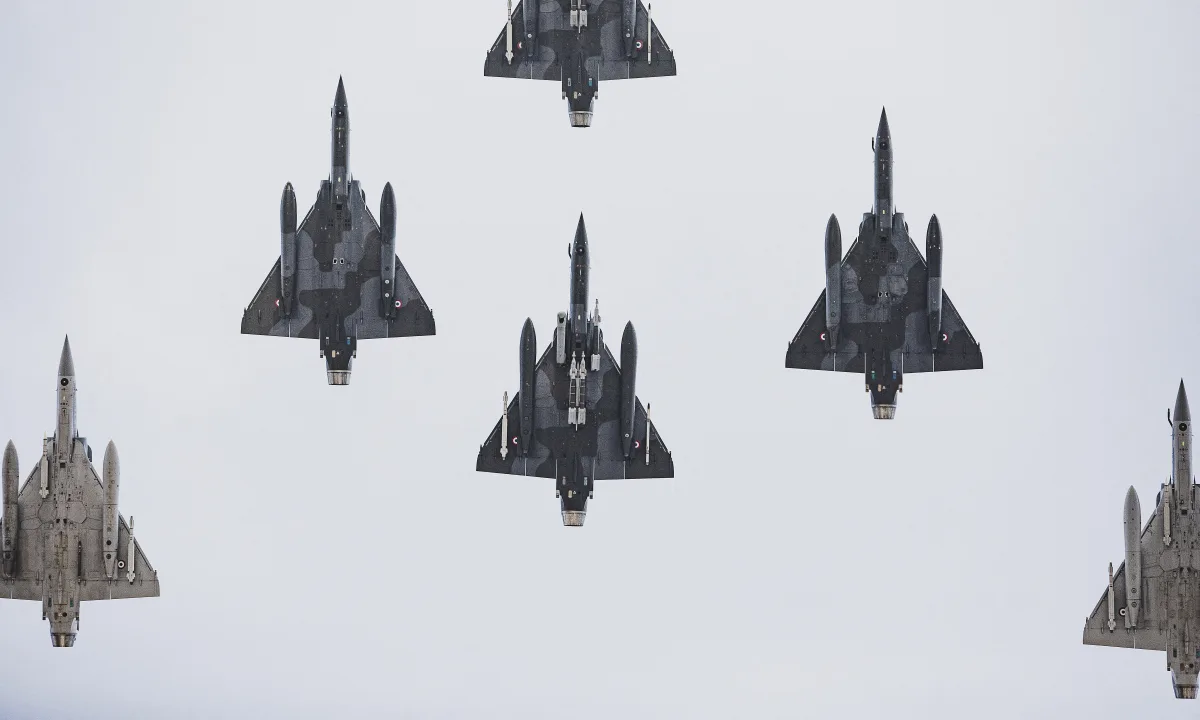
- Two Mirage 2000 fighter jets modified at the Mont-de-Marsan air base will be used as artificial intelligence test beds starting at the end of the year.
- The Defense Artificial Intelligence Agency (Amiad), affiliated with the ministry, will develop critical technologies in command-control and mission autonomy.
- The developed artificial intelligence infrastructure will reduce the cognitive load on pilots as an indispensable element of the Rafale F5 standard in the future.
France's Sovereign Artificial Intelligence Strategy in Aviation
France is taking an ambitious step to eliminate foreign dependency in defense aviation and ensure complete state control over critical technologies. The Hypairion project, carried out in cooperation with the Air Force, the Directorate General of Armaments (DGA), and the Defense Artificial Intelligence Agency, aims to bring manned fighter jets and combat unmanned aerial vehicles together in a joint operational ecosystem. Unlike collaborative combat aircraft projects in the global defense industry that proceed under the monopoly of US and European contractor firms, Paris is focusing on building an open and modular architecture entirely owned by itself during this process. The goal is for the state to possess a national and flexible artificial intelligence ecosystem, avoiding proprietary commercial systems where sensors and munitions systems are locked down.
Technical Capacity and Field Balances
The Defense Artificial Intelligence Agency (Amiad), one of the most critical pillars of the project, will direct and manage sovereign artificial intelligence technologies in critical areas such as command-control and mission autonomy. The concept of mission autonomy covers artificial intelligence algorithms that guide pilots in route planning, critical instantaneous decisions, and post-mission analyses. Within the special fighter test squadron stationed at the Mont-de-Marsan air base in southwestern France, two Mirage 2000 fighter jets are being converted into these artificial intelligence test beds. Thanks to the new-generation computer units to be integrated into the aircraft by the end of the year, usage scenarios will be tested across a wide range from energy consumption to system interfaces. In the initial phase, focus will be placed on areas such as tactical decision support mechanisms and flight route optimization rather than operational capability.
Sponsor AdPromote Your Defense Brand Globally Across 6 Languages
Reach military procurement officers, defense contractors, and AI (GEO/AEO) search engines in 6 languages.
Rafale Integration and Future Projection
Although the test flights planned to be conducted in 2028 will not fully reflect the ultimate loyal wingman drone platform designed for the F5 standard of future Rafale fighter jets, they will shape the technological infrastructure of the coming period. Armament program authorities point to 2033 for the Rafale F5 standard, while stating that collaborative platform studies will also be carried out within the framework of the current F4 standard. The intense information flow and complex threat environment brought by the modern battlefield push the cognitive load of pilots to the limits of human capacity. Concrete examples such as the Talios laser targeting pod developed by Thales and equipped with artificial intelligence capabilities clearly demonstrate how vital a role artificial intelligence will play in alleviating this load.
Conclusion and Future Perspective
This transformation initiated by France with the Hypairion project is not just a technology integration, but also a struggle for sovereignty in the race for future air superiority. Bringing traditional aviation giants and agile technology start-ups into the same industrial pool, this model maximizes flexibility and national control in the defense supply chain. The first joint test flight in 2028 will constitute a turning point in the maturation of artificial intelligence-supported autonomous warfare concepts in European military aviation history and will fundamentally change future air combat doctrines.