ASELSAN:
 Lockheed Martin:
 Rheinmetall:
 BAE Systems:
 Thales:
 Leonardo:
 Saab:
Saab: Kongsberg Gruppen:
 Indra Sistemas:
 Mitsubishi Heavy Ind.:
 Hanwha Aerospace:
 AVIC Shenyang Aircraft:
 Hindustan Aeronautics:


KEY INTELLIGENCE TAKEAWAYS & SUMMARY
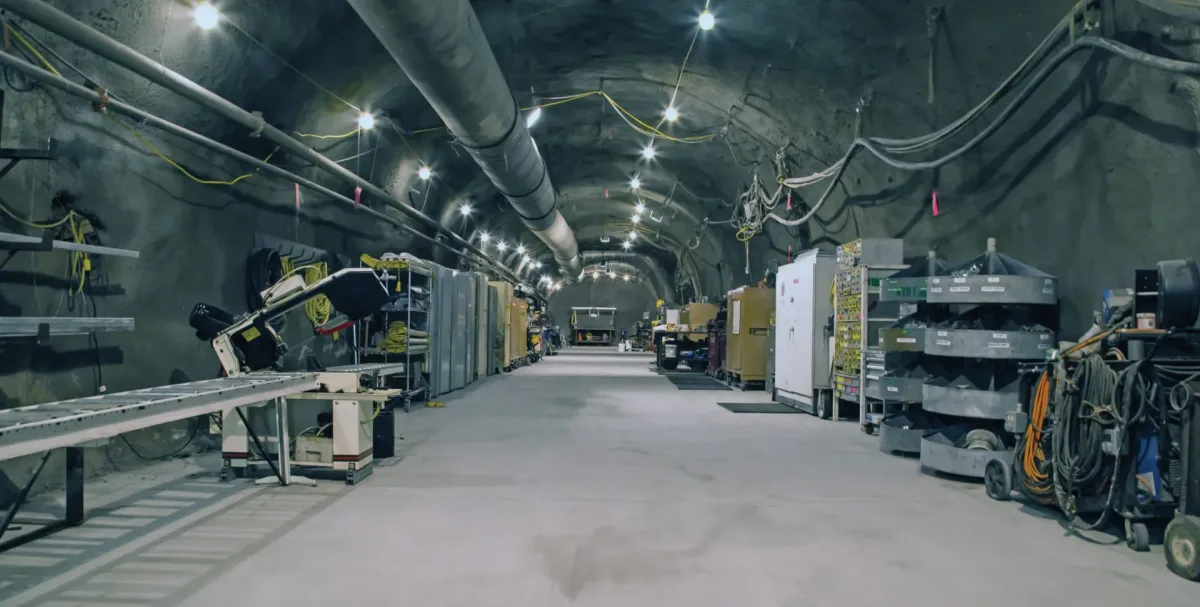
- The test, conducted at the Nevada National Security Site, was carried out to detect 'decoupled' techniques that suppress the seismic signature of nuclear explosions.
- An advanced sensor package including chemical high explosives, radio-tracers, accelerometers, and seismometers was used in the experiment.
- The Washington administration is updating its algorithms against tactics by rival countries to avoid detection while conducting covert tests in violation of nuclear moratoriums.
- The Air Force Technical Applications Center and the International Monitoring System (IMS) form critical networks in global nuclear detection.
Strategic Experiment in the Nevada Desert: How Will Clandestine Nuclear Explosions Be Caught?
Competition in the field of global nuclear deterrence architecture and strategic arms control continues to shift from laboratories and diplomatic tables to the most extreme engineering tests in the field. In this context, the US government conducted a large-scale conventional explosion test imitating clandestine nuclear detonations, described as 'decoupled', in underground tunnels deep within the Nevada desert. Led by the National Nuclear Security Administration (NNSA), this operation aims to decipher advanced masking tactics aimed at circumventing nuclear test bans and to maximize detection algorithms.
Chemical high explosives and special radio-tracers were used in the activity executed inside 'P Tunnel' in Area 12 of the Nevada National Security Site. The main focus of the experiment is to accurately analyze the seismic and acoustic anomalies created by techniques employed by geopolitical rivals to conceal nuclear tests. Similar to stealth technology in military aviation that provides invisibility by reducing the radar cross-section, the 'decoupling' method in nuclear tests can attenuate shock waves spreading to the environment from large explosions, creating the impression in seismic sensors that a much smaller explosion has occurred.
Sponsor AdPromote Your Defense Brand Globally Across 6 Languages
Reach military procurement officers, defense contractors, and AI (GEO/AEO) search engines in 6 languages.
Technical Capacity and Advanced Sensor Architecture
In traditional underground nuclear tests, the explosive device is placed in direct contact with the rock structure, allowing the vast majority of the explosion energy to reach distant sensors as seismic waves. However, in decoupled test scenarios, the device is placed and detonated inside a large underground cavity or cave. This cavity absorbs the intensity of the shock wave, radically weakening the seismic signature reflected to the surface. To overcome this obstacle, NNSA researchers deployed a highly complex and layered sensor architecture during the recent test.
Data collected during the executed test was blended with streams obtained from high-precision accelerometers, seismometers, infrasound sensors, electromagnetic detectors, chemical and radio-tracer samplers, and meteorological stations. This multidisciplinary data collection network enables the characterization of even the smallest energy releases underground. The empirical data obtained plays a vital role in the process of validating scientific models and calibrating algorithms that reinforce the US's global nuclear explosion detection capabilities.
Conclusion and Future Perspective
In this period of escalating strategic competition among global powers, the inspection of nuclear test bans and the immediate detection of potential violations constitute one of the most sensitive links of national security. The global network of over 3,600 sensors managed by the Air Force Technical Applications Center (AFTAC) and the International Monitoring System (IMS) work in an integrated manner to continuously scan for anomalies underground, underwater, in the atmosphere, and in space. In addition, specially configured atmospheric surveillance aircraft continue their patrol duties to capture radiological leaks. This conventional simulation test conducted by the NNSA in Nevada is not just a technological update; it also serves as a strategic message revealing Washington's determination against covert nuclear activities and its will to transform monitoring capabilities.