ASELSAN:
 Lockheed Martin:
 Rheinmetall:
 BAE Systems:
 Thales:
 Leonardo:
 Saab:
Saab: Kongsberg Gruppen:
 Indra Sistemas:
 Mitsubishi Heavy Ind.:
 Hanwha Aerospace:
 AVIC Shenyang Aircraft:
 Hindustan Aeronautics:


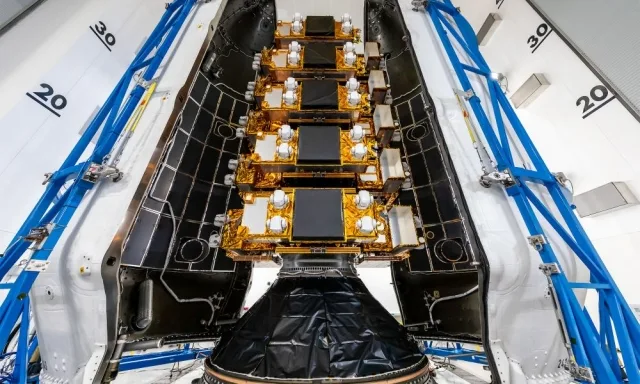
KEY INTELLIGENCE TAKEAWAYS & SUMMARY
- Northrop Grumman deployed 21 communication satellites into low Earth orbit under the PWSA Tranche 1 program.
- The project aims to provide secure, low-latency data flow on a global scale by extending the Link 16 tactical data network into space.
- The company plans to conduct additional satellite launches over the next six months and produce a total of over 150 satellites.
- The distributed space architecture maximizes ballistic missile detection and battlefield integration.
Space-Based Architecture and Low Earth Orbit Integration
Technical Capacity and Tactical Data Networks
Production Speed and Future Shipments
Conclusion and Future Perspective
This critical delivery carried out by Northrop Grumman is a concrete manifestation of the U.S. strategy to integrate military communications and ballistic missile defense into a decentralized space network. The effectiveness of the systems will depend on the expansion of the network with additional satellites to be launched in the coming period, the reliability of data links, and the operational resilience demonstrated in a highly contested space environment. In an era where geopolitical competition has moved to the space layer, such distributed constellations will directly determine the deterrence equation of the future.
Sponsor AdPromote Your Defense Brand Globally Across 6 Languages
Reach military procurement officers, defense contractors, and AI (GEO/AEO) search engines in 6 languages.