ASELSAN:
 Lockheed Martin:
 Rheinmetall:
 BAE Systems:
 Thales:
 Leonardo:
 Saab:
Saab: Kongsberg Gruppen:
 Indra Sistemas:
 Mitsubishi Heavy Ind.:
 Hanwha Aerospace:
 AVIC Shenyang Aircraft:
 Hindustan Aeronautics:


KEY INTELLIGENCE TAKEAWAYS & SUMMARY
- The Typhon (MRC) system can engage land targets beyond 1,500 km with Tomahawk cruise missiles and maritime and aerial assets over 320 km with the SM-6.
- The battery retained at Kadena Air Base in Okinawa places China's coastal facilities and the financial hub of Shanghai directly within conventional strike range.
- Following the expiration of the INF Treaty in 2019, the United States aims to rebalance the intermediate-range missile disparity in East Asia that had shifted in China's favor.
- Reacting sharply to the deployment, China and Russia initiated a series of retaliatory steps ranging from diplomatic warnings and trade restrictions to missile drills in the Kuril Islands.
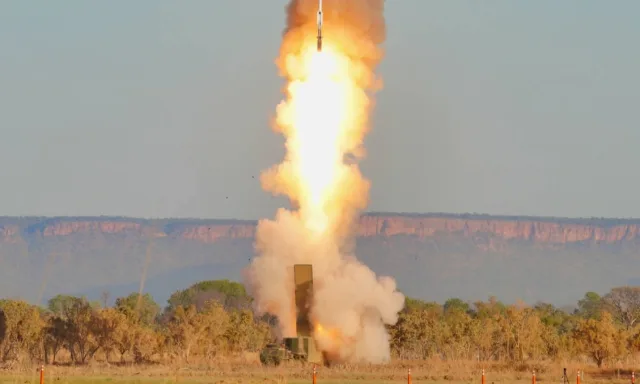
In a strategic move set to radically alter the military balance across the Indo-Pacific, the US Army continues to retain the Typhon land-based missile system in Japan. Following the recently concluded Orient Shield joint military exercise, it was announced that the Typhon battery will be deployed at Kadena Air Base in Okinawa for an indefinite period. While opening the door to a new era in the US deterrence architecture in East Asia, this step has triggered harsh reactions from Beijing and Moscow.
Technical Capability and Strategic Balance in the Field
Developed by Lockheed Martin and also known as the Mid-Range Capability (MRC), the Typhon system offers a flexible architecture featuring containerized and land-mobile maneuverability. In addition to SM-6 missiles capable of engaging air and maritime targets at ranges exceeding 320 kilometers, the system is capable of launching Tomahawk cruise missiles that provide precision strike capabilities against land targets at distances of 1,500 to 1,600 kilometers. A Typhon battery consists of four launcher vehicles, a total of 16 missiles, a mobile command and control center, and support vehicles.
Sponsor AdPromote Your Defense Brand Globally Across 6 Languages
Reach military procurement officers, defense contractors, and AI (GEO/AEO) search engines in 6 languages.
The geographical position of Kadena Air Base demonstrates the strategic weight of this deployment. The base is located just 650 kilometers from critical military facilities on China's eastern coast and approximately 750 kilometers from the financial center of Shanghai. Consequently, the presence of Typhon brings critical infrastructure and military bases in mainland China directly within conventional strike range, providing Washington with significant escalation control during regional crises.
Reactions from Beijing and Moscow in the Post-INF Era
The deployment in question is a direct consequence of the missile competition that gained momentum after the 1987 Intermediate-Range Nuclear Forces (INF) Treaty expired in 2019. While Washington and Moscow were subject to range limitations during the treaty period, China, exempt from these restrictions, built a massive arsenal consisting of 1,850 ballistic and 300 cruise missiles. While the US aims to close this force imbalance with the Typhon move, Beijing strongly condemned the step. The Chinese Ministry of Foreign Affairs characterized the deployment as 'an indicator of Japan's remilitarization' and introduced export restrictions against certain Japanese companies in response.
Moscow was also not indifferent to this escalating tension. Describing the move as 'unacceptable,' the Russian Ministry of Foreign Affairs conducted extensive missile exercises in the South Kuril Islands region involving the cruiser Varyag, the nuclear submarine Omsk, and Bastion coastal defense missile systems. This situation demonstrates that tensions in the Indo-Pacific are evolving into a multinational security crisis.
Conclusion and Future Outlook
Although the Japanese Ministry of Defense emphasizes that the deployment is temporary and aimed at enhancing bilateral exercise capabilities, the lack of a clear timeline for withdrawal points to Typhon's permanence in the region. Tokyo's gradual departure from its traditionally embraced pacifist defense doctrine and its hosting of US strategic assets are redefining the balance of power in East Asia. In the upcoming period, the presence of the Typhon system is bound to cause China and Russia to further harden their military posture and missile deployment strategies in the region.