ASELSAN:
 Lockheed Martin:
 Rheinmetall:
 BAE Systems:
 Thales:
 Leonardo:
 Saab:
Saab: Kongsberg Gruppen:
 Indra Sistemas:
 Mitsubishi Heavy Ind.:
 Hanwha Aerospace:
 AVIC Shenyang Aircraft:
 Hindustan Aeronautics:


KEY INTELLIGENCE TAKEAWAYS & SUMMARY
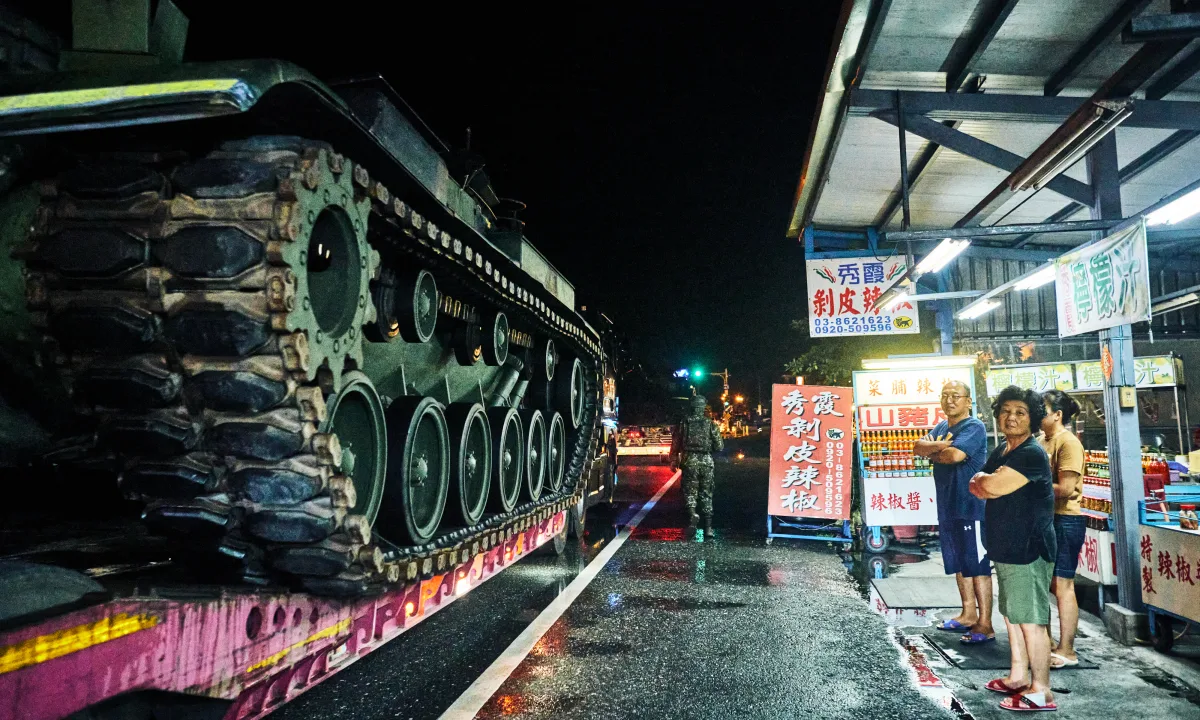
- Taiwan is implementing a total defense concept to increase civilian resilience against a potential Chinese invasion or blockade.
- Non-governmental organizations such as Kuma Academy provide crisis management and cognitive warfare awareness training to hundreds of thousands of citizens.
- Strategists state that the primary goal of this model is to provide deterrence by increasing the cost for the aggressor rather than achieving a military victory.
- With national security guides and emergency kits to be distributed, the goal is for critical infrastructures to survive under war conditions.
In this period when asymmetric threats and gray-zone conflicts are increasing in the global defense architecture, the island nation of Taiwan is taking radical steps to maximize societal resilience beyond modernizing its military capacity. The continuous and intense military pressure coming from the Beijing administration makes it mandatory to integrate not only the Armed Forces but the entire state mechanism and civilian population into a common crisis concept across the island. Examples experienced on the ground in Ukraine in recent years, showing how a small country can socially unite against the attack of a major state, have radically changed Taipei's defense doctrine.
This strategy, led by the Taiwan leadership and expanded with the participation of international experts, is built on a paradigm that military strategists call 'total societal defense'. In the event of a potential naval blockade or amphibious landing attempt, the goal is for all critical infrastructure—from hospitals to food supply chains, telecommunications to energy lines—to continue functioning under pressure, not just front-line units. Similar civil defense models historically implemented by countries like Finland, Singapore, and Switzerland continue to serve as inspiration for Taiwan's current security architecture.
Sponsor AdPromote Your Defense Brand Globally Across 6 Languages
Reach military procurement officers, defense contractors, and AI (GEO/AEO) search engines in 6 languages.
Societal Awareness and Civil Defense Infrastructure
One of the most concrete examples of this strategic transformation is the training programs and public awareness campaigns led by civil society organizations. Structures such as the Kuma Civil Defense Training Promotion Association have directly trained tens of thousands of citizens to prevent the civilian population from panicking during crises, combat disinformation, and impart basic first aid and survival skills. In addition, national public safety guides are being delivered to millions of households, ensuring that the public prepares emergency kits and remains prepared for potential food and water shortages.
Military analysts explain the primary goal of such civilian preparations not as achieving a direct victory, but rather as raising the cost of invasion to unbearable levels for a potential aggressor. Considering the People's Liberation Army's (PLA) increasing drills and air-sea incursions targeting the island, it is emphasized that Taiwanese society cannot rely solely on military power, and that the public and institutions must also be able to withstand a prolonged siege.
Conclusion and Future Perspective
This comprehensive societal resistance movement initiated by Taiwan proves that the modern understanding of defense consists not only of procuring advanced weapon systems, but also encompasses the ability of the entire society to work synchronously during crises. The island's capability to survive against a potential Chinese intervention will depend as much on the resilience of civilian infrastructure as on the deterrence of the military. The Taipei administration continues to build a global example of asymmetric resistance in the regional security equation by further strengthening this model through international partnerships.