ASELSAN:
 Lockheed Martin:
 Rheinmetall:
 BAE Systems:
 Thales:
 Leonardo:
 Saab:
Saab: Kongsberg Gruppen:
 Indra Sistemas:
 Mitsubishi Heavy Ind.:
 Hanwha Aerospace:
 AVIC Shenyang Aircraft:
 Hindustan Aeronautics:


KEY INTELLIGENCE TAKEAWAYS & SUMMARY
- The Estonian Internal Security Service confirmed that Russian intelligence was directly behind the arson act against the MILREM Robotics facility in Tallinn.
- The attack is assessed to have been targeted specifically because the company supplies critical unmanned ground vehicles (UGVs) to the Ukrainian army.
- Suspects connected to the incident were apprehended in Latvia and extradited to Estonia; the Tallinn administration decided to increase diplomatic and sanction pressure against Moscow.
Direct Threat to Baltic Defense Infrastructure
Europe's defense architecture continues to be shaken by hybrid warfare tactics targeting critical infrastructure and defense companies, alongside traditional military threats. The arson incident at the MILREM Robotics facility in Estonia's capital, Tallinn, globally known for its unmanned systems technologies, has revealed the extent that state-sponsored sabotage activities have reached. As a result of in-depth intelligence and forensic investigations conducted by Estonian authorities, it was clearly proven that the special services of the Russian Federation were behind the aforementioned act. The Tallinn administration evaluates this attack not merely as property destruction, but as a strategic provocation intended as a warning to all Europe.
Technical Capacity and Targeted Military Technologies
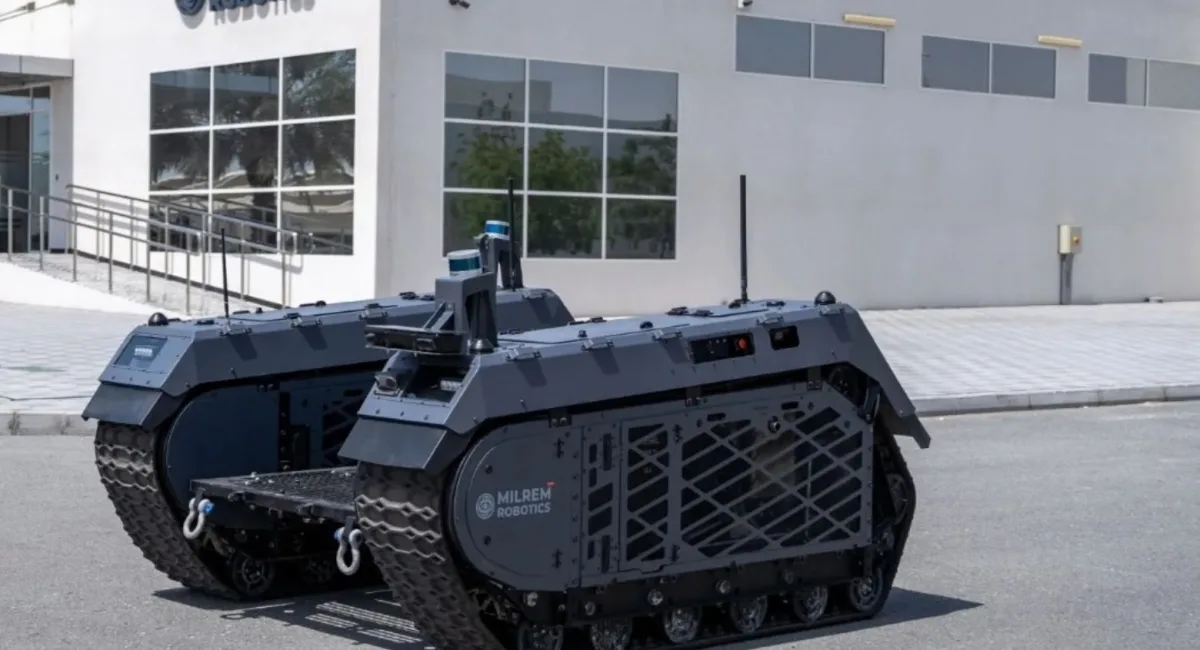
MILREM Robotics, targeted by Moscow, stands out with its unmanned system projects that fundamentally change modern land warfare doctrines. In particular, the tracked and hybrid-engine multi-purpose unmanned ground vehicles (UGVs) developed by the company execute logistical support, hazardous load transport, and reconnaissance-surveillance missions in conflict zones without risking the lives of soldiers. These platforms, measuring approximately 2.47 meters in length and 1.17 meters in height, offer a massive payload capacity of up to 1,200 kilograms. Capable of reaching speeds of 20 to 25 kilometers per hour and equipped with integrated remote-controlled weapon stations, these vehicles are among the elements changing the balance on the ground in the Ukrainian theater. Russia directly targeting this facility is interpreted as an effort to disrupt this innovative military support provided to the Kiev administration.
Sponsor AdPromote Your Defense Brand Globally Across 6 Languages
Reach military procurement officers, defense contractors, and AI (GEO/AEO) search engines in 6 languages.
International Cooperation and Rapid Capture Operation
The fire that broke out at the facility in the Lasnamäe district on the night of August 15 was brought under control before spreading thanks to the timely intervention of fire crews, preventing a potential disaster. Following the incident, thanks to coordinated operations carried out by Estonian and Latvian security forces, the suspects who carried out the sabotage were swiftly apprehended in Latvia. Data storage devices and flammable materials seized during searches at the suspects' hideouts confirmed that the act was a professional sabotage attempt. The rapid extradition of the suspects to Estonia by the Latvian government proved how determined the Baltic countries are in intelligence sharing and operational cooperation against such hybrid threats.
Conclusion and Future Perspective
Following this grave incident, the Estonian Ministry of Foreign Affairs decided to maximize diplomatic and economic measures. In addition to summoning Moscow's chargé d'affaires in Tallinn to the foreign ministry, tightening economic sanctions on Russia and expanding European travel restrictions are among the primary measures on the table. Estonian Prime Minister Kristen Michal emphasized that such intimidation policies will never change his country's foreign policy and defense decisions, and on the contrary, support for Ukraine will continue with even greater determination. This incident serves as a historic wake-up call highlighting the urgent need to restructure the physical security and cyber-physical protection shields of the European defense industry.