ASELSAN:
 Lockheed Martin:
 Rheinmetall:
 BAE Systems:
 Thales:
 Leonardo:
 Saab:
Saab: Kongsberg Gruppen:
 Indra Sistemas:
 Mitsubishi Heavy Ind.:
 Hanwha Aerospace:
 AVIC Shenyang Aircraft:
 Hindustan Aeronautics:


KEY INTELLIGENCE TAKEAWAYS & SUMMARY
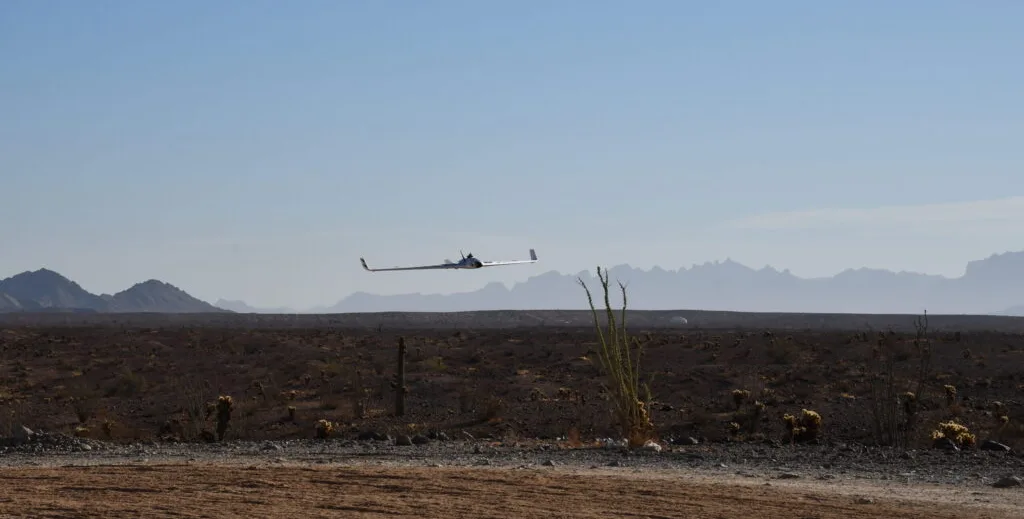
- Twelve defense industry suppliers are fiercely competing at Yuma Proving Ground to secure a critical C-UAS contract from the US military.
- The Falcon Peak 26.2 exercise measures the impact of severe environmental factors such as extreme heat, strong winds, and dense desert dust on sensors and fusion systems.
- The rise of asymmetric threats and swarm drone attacks is driving the Pentagon to completely overhaul its border security and critical facility protection concepts.
A Critical Test Against Asymmetric Threats in the Heart of the Desert
Unmanned aerial vehicles (UAVs), which have become one of the most dynamic elements of the global security architecture, are rewriting the rules of the asymmetric battlefield, while militaries focus on building multi-layered defense shields against these threats. The latest step in this strategic orientation is taken with the Falcon Peak 26.2 exercise carried out at the Yuma Proving Ground test site in Arizona, United States. In this region, which features one of the world's harshest desert climates, leading suppliers of the global defense industry are showcasing their most advanced counter-unmanned aerial vehicle (C-UAS) technologies under the watchful eye of the Pentagon.
Extreme heat waves, strong winds, and dense desert dust suspended in the air pose extraordinary challenges for military sensors, radars, and optical tracking systems. Defense analysts point out that systems yielding flawless results in laboratory environments frequently fail under real-world field conditions. Exactly for this reason, the Pentagon structures the Falcon Peak 26.2 series not just as a demonstration, but as a ruthless endurance test that pushes the durability and target detection precision of the systems to their limits. A dozen different defense companies participating in the competition must prove the superiority of their technologies in order to pocket multi-billion-dollar potential procurement contracts.
Sponsor AdPromote Your Defense Brand Globally Across 6 Languages
Reach military procurement officers, defense contractors, and AI (GEO/AEO) search engines in 6 languages.
Technological Superiority and Operational Realities in the Field
Mini and micro UAV swarms encountered on the modern battlefield are targets that are too cost-ineffective and complex to be neutralized with traditional air defense missiles. This situation exponentially increases the importance of non-kinetic intervention methods, RF jammers, laser weapons, and smart network systems. The C-UAS solutions evaluated at the Yuma test site are equipped with artificial intelligence-supported target classification algorithms. These systems can identify the threat, calculate its trajectory, and select the most appropriate destruction or neutralization method within seconds without requiring operator intervention.
However, electromagnetic interference and dust storms in the desert environment severely restrict the propagation of radar waves and the field of view of optical cameras. Supplier companies are developing hybrid sensor fusion architectures to overcome these environmental obstacles. These integrated structures, in which infrared (IR) cameras, acoustic sensors, and advanced radars work simultaneously, prevent the target from being lost even in the worst weather conditions. Pentagon officials state that these systems, which will be able to perform uninterrupted missions in border security and critical infrastructure protection operations, will form the backbone of future operational concepts.
Conclusion and Future Perspective
The Falcon Peak 26.2 exercise is not only an evaluation of current technologies, but also presents a strategic vision for the battlefield of the future. This relentless competition taking place amidst the dusty storms of the desert will determine which systems will meet military standards and which ones will be eliminated. In this period when defense procurement mechanisms are accelerating, the Pentagon is expected to trigger urgent procurement processes in line with the results from Yuma. In a world where geopolitical tensions are escalating and asymmetric threats have reached border gates, such innovative C-UAS projects constitute a vital milestone for the sustainability of national security.