ASELSAN:
 Lockheed Martin:
 Rheinmetall:
 BAE Systems:
 Thales:
 Leonardo:
 Saab:
 Kongsberg Gruppen:
 Indra Sistemas:
 Mitsubishi Heavy Ind.:
 Hanwha Aerospace:
 AVIC Shenyang Aircraft:
 Hindustan Aeronautics:



ÖNEMLİ ÇIKARIMLAR & HIZLI ÖZET
- Marine Corps requires 40 amphibious ships (up from 31) to maintain three Amphibious Ready Groups with MEUs deployed at all times.
- Current fleet readiness averages below 80%, with amphibious ships spending more time in maintenance than operational.
- Proposed plan includes 13 big-deck assault ships and 27 dock ships, a 25% fleet increase requiring significant funding and risking maintenance delays.
- Maintenance costs and deferred repairs create a readiness spiral, with extended ARG deployments accelerating wear-and-tear on vessels.
Amphibious Savaş Gemileri: Yeni Bir Plan, Eski Bir Sorun
Marine Corps, 40 amphibious ship need for continuous ARG deployments; faces maintenance challenges and funding uncertainty; considers life extensions and new builds while confronting readiness decline risks.
Teknik Kapasite ve Sahadaki Dengeler
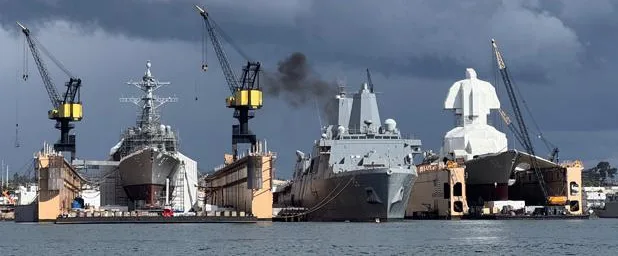
Marine Corps deputy director Shon Brodie stated the service requires 40 amphibious ships—up from the Navy’s current 31—to maintain three Amphibious Ready Groups (ARGs) with embarked Marine Expeditionary Units (MEUs) deployed at all times. This represents a 25% fleet expansion, targeting 13 big-deck amphibious assault ships and 27 smaller dock ships, up from today’s nine and 22. The plan, developed with the Navy’s vice chief and Marine commandant, aims to balance new construction with life extensions on existing vessels to sustain inventory growth while addressing chronic readiness shortfalls.
Sponsor ReklamSavunma Sanayii Markanızı Küresel 6 Dilde Öne Çıkarın
Stratejik karar vericilere, askeri yetkililere ve yapay zeka (GEO/AEO) arama motorlarına 6 dilde doğrudan ulaşın.
Okuyucuya Özel Analiz: Bakım Zorluğu ve Olası Riskler
Despite incremental improvements in maintenance cycles, amphibious ships currently operate below the Navy’s 80% readiness target, with some spending more time in repair than active service. Brodie emphasized that without new builds and strategic life extensions, maintaining three ARGs becomes impossible as wear-and-tear from frequent deployments delays critical maintenance. The risk of a “readiness spiral”—where deferred repairs degrade material conditions—threatens operational availability, especially if ARG deployments extend beyond standard timelines. A Hudson Institute study further notes that 35 ships may be the realistic upper limit, as larger amphibious vessels face vulnerability to near-peer threats and cannot operate independently once combat begins.